

A walk on a Texas beach can bring the usual sights, rolling waves, seashells, and maybe a few shorebirds picking through the sand. Then every so often, something turns up that looks almost too strange to be real. It is small, bright blue, and shaped like a tiny sea creature from another world. This is the blue dragon, and despite its almost magical look, there is a very real reason it sometimes appears along the Texas coast.
These rare visitors do not live on the beach. They do not even spend much time near shore. So when they suddenly show up in the sand, it raises an interesting question. Why here? Why now? The answer starts far out on the open ocean and depends on a mix of currents, wind, weather, and the blue dragon’s unusual way of life.
What Exactly Is a Blue Dragon?
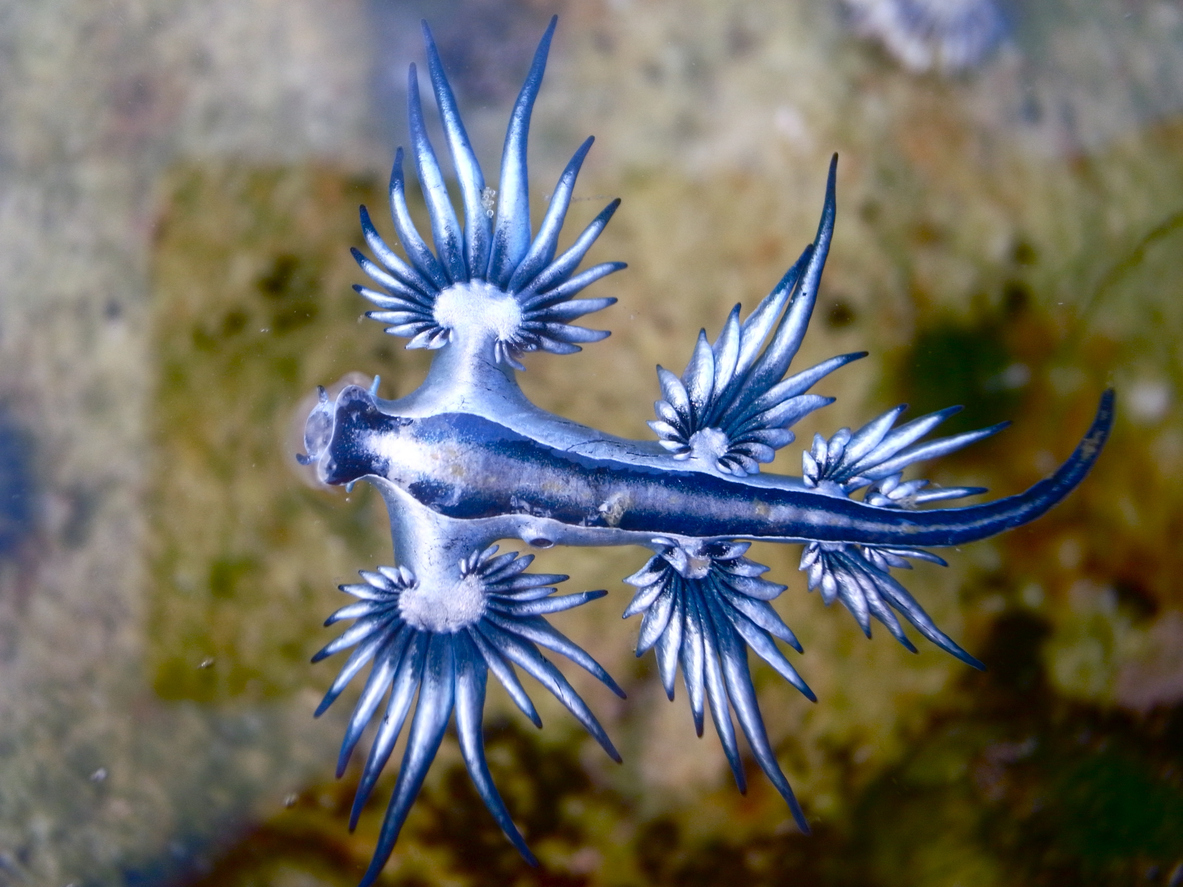
The blue dragon, or Glaucus atlanticus, is a type of sea slug. That may sound plain at first, but this is no ordinary slug. It has a silver-and-blue body with long, finger-like appendages that spread out from its sides, giving it a shape that looks a little like wings or flames.
Most blue dragons are tiny, often only about an inch long, which makes their bold color even more surprising. Their brilliant blue backs and silvery undersides are not there by accident. The colors help them blend into their surroundings. From above, the blue matches the water. From below, the pale side blends with the light coming through the surface.
That alone would make the blue dragon unusual. But its feeding habits make it even more remarkable.
A Creature That Steals Venom
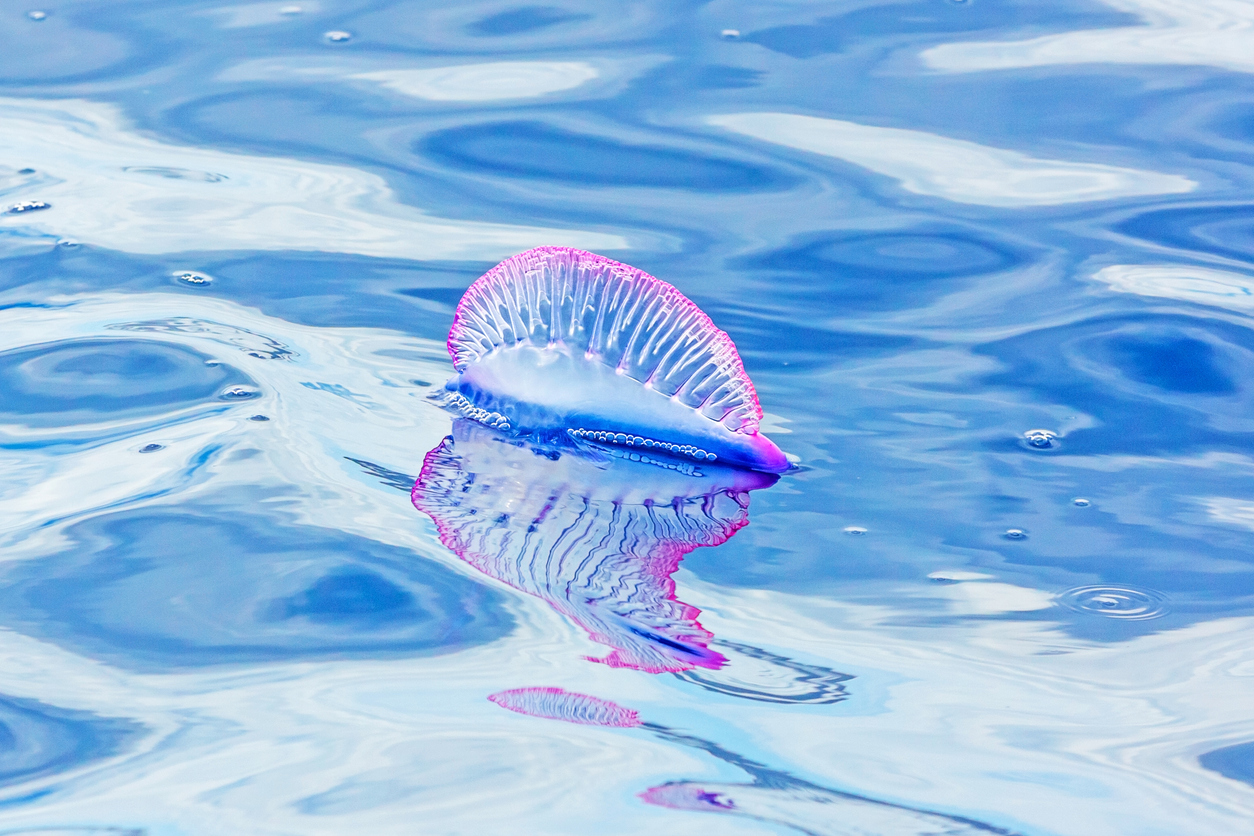
The blue dragon feeds on venomous floating animals, especially the Portuguese man o’ war. Anyone familiar with Gulf beaches knows the man o’ war has a nasty reputation. Its tentacles can deliver a painful sting, even after it washes ashore.
The blue dragon, though, has found a way to turn that danger into an advantage.
As it feeds, it stores the stinging cells from its prey inside its own body. Then it uses those same cells as a defense against predators. In other words, it does not simply survive venomous prey. It borrows the weapon and keeps it.
That is one reason beachgoers should never touch a blue dragon. It may look delicate, but it can still sting, and the sting can be serious.
Where Blue Dragons Normally Live
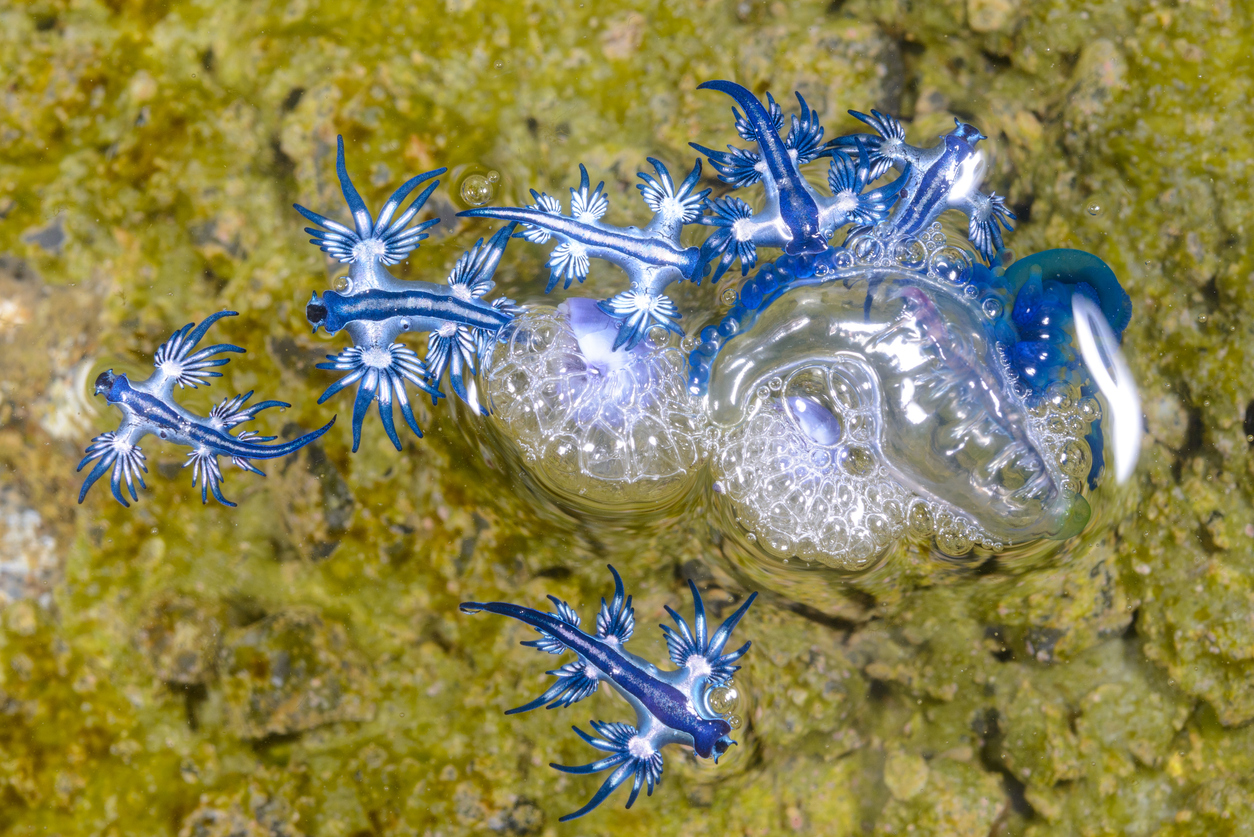
Blue dragons are not regular residents of Texas beaches. They belong to the open ocean. They are found in warm waters in parts of the Atlantic, Pacific, and Indian Oceans, where they drift along the surface far from shore.
Unlike fish that can actively swim where they want to go, blue dragons mostly travel by floating. A gas-filled sac in their body helps them stay at the surface, where they drift along with currents and winds. Their lives are shaped by motion they do not fully control.
That drifting lifestyle is the key to understanding why they occasionally end up on the Texas coast.
The Role of Ocean Currents
The Gulf of Mexico is not cut off from the rest of the ocean. It is connected to larger Atlantic circulation patterns, and those moving waters can carry all kinds of marine life over long distances.
One major player is the Loop Current, which brings warm water into the Gulf before curving back out. Along the way, eddies and smaller current systems can branch off and move floating organisms around the region.
Blue dragons, because they spend their lives riding the surface, can be swept along by these currents. They do not set a course for Texas. They simply follow the water.
If enough of them are carried into the Gulf, the next step in their journey depends on what is happening closer to the coast.
How Wind Pushes Them Ashore
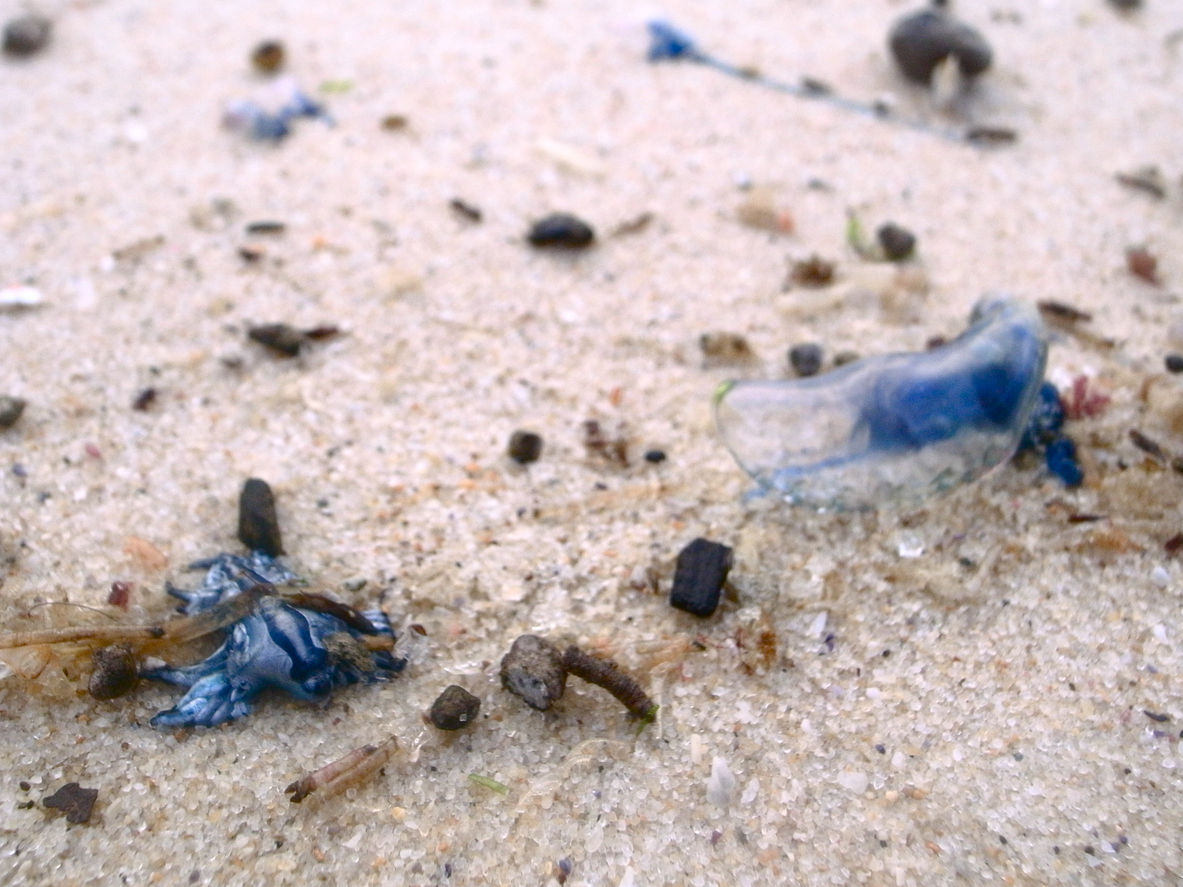
Once blue dragons reach the Gulf, wind becomes a major factor.
Because they float at the surface, they are especially vulnerable to steady onshore winds. When wind pushes surface water toward land for several days, the blue dragons move with it. The same thing can happen to Portuguese man o’ war and other floating creatures.
This is why blue dragon sightings often happen in bursts. It is usually not one random animal turning up on its own. It is a whole group of surface drifters being pushed shoreward by the same conditions.
To someone walking the beach, it may seem sudden. One day there is nothing unusual in sight. Then after a shift in wind and surf, these bright blue creatures appear along the sand.
The Influence of Weather Events
Weather can speed up this process.
Storms, strong fronts, and changing seasonal wind patterns can all rearrange the upper layer of the Gulf. For animals that float rather than swim, even a short period of rough conditions can completely change where they end up.
After storms, people often notice more strange marine life washed ashore. Blue dragons fit that pattern well. They are at the mercy of the sea, which means unusual weather can deliver them to places they were never likely to reach under calmer conditions.
Along the Texas coast, sightings often happen in spring. That season tends to bring warming water, changing winds, and shifting surf conditions, which can create the perfect setup for these rare wash-up events.
Why Texas Beaches See Them Only Sometimes
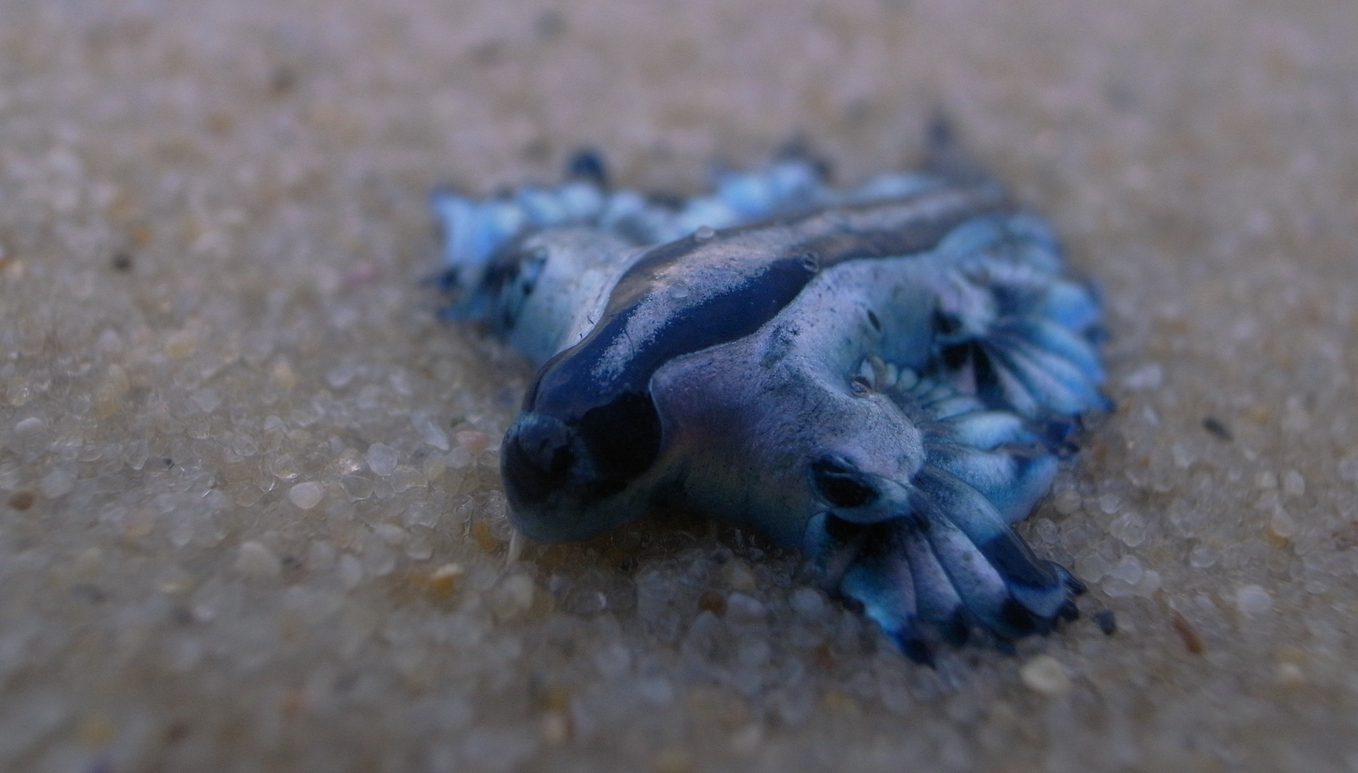
Blue dragons do not appear on Texas beaches on a regular schedule. Their arrival depends on several things happening at once.
They need to be present in the right offshore waters. Currents must carry them into the Gulf or move them within it. Winds must push them toward shore instead of away from it. Weather has to cooperate, or interfere, in just the right way.
That makes sightings uncommon and hard to predict.
This is also why one Texas beach may see them while another does not. Coastal conditions can vary from place to place. A slight difference in wind direction or surf patterns may be enough to concentrate floating marine life in one stretch of shoreline while leaving another area untouched.
The Connection to the Portuguese Man o’ War
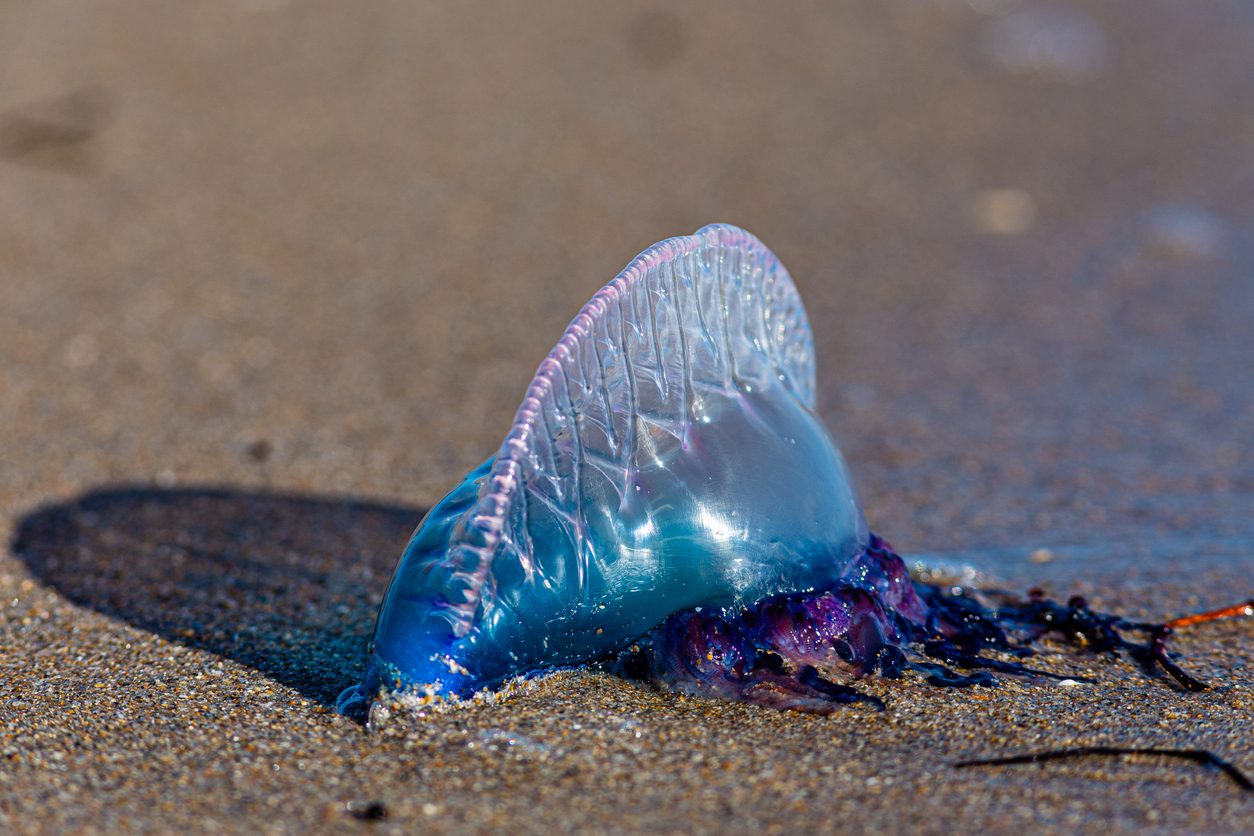
Where blue dragons go, their prey is often close behind, or already there.
Portuguese man o’ war float on the surface just like blue dragons do, so they are pushed around by many of the same forces. When man o’ war washes up on Texas beaches, blue dragons sometimes appear too.
That connection matters for two reasons. First, it helps explain why the blue dragons are there in the first place. They are following a food source. Second, it serves as a warning sign for beachgoers. If one dangerous drifter is present, another may be nearby.
A beach scattered with blue dragons may also have man o’ war, even if you do not spot them right away.
What to Do If You See One
The best response is simple. Admire it, but leave it alone.
A blue dragon may be tiny, but size means nothing when venom is involved. Even one that looks dried out or dead can still sting. That is why experts consistently warn people not to pick them up.
If you see one on the beach, keep a safe distance and point it out to others nearby. Children are especially likely to want a closer look because of the bright color and unusual shape.
If someone does get stung, symptoms can include sharp pain, swelling, and skin irritation. In some cases, a person may have a stronger reaction and need medical care.
The safest rule is easy to remember. If it is blue, beautiful, and lying on the sand, do not touch it.
Why These Sightings Matter
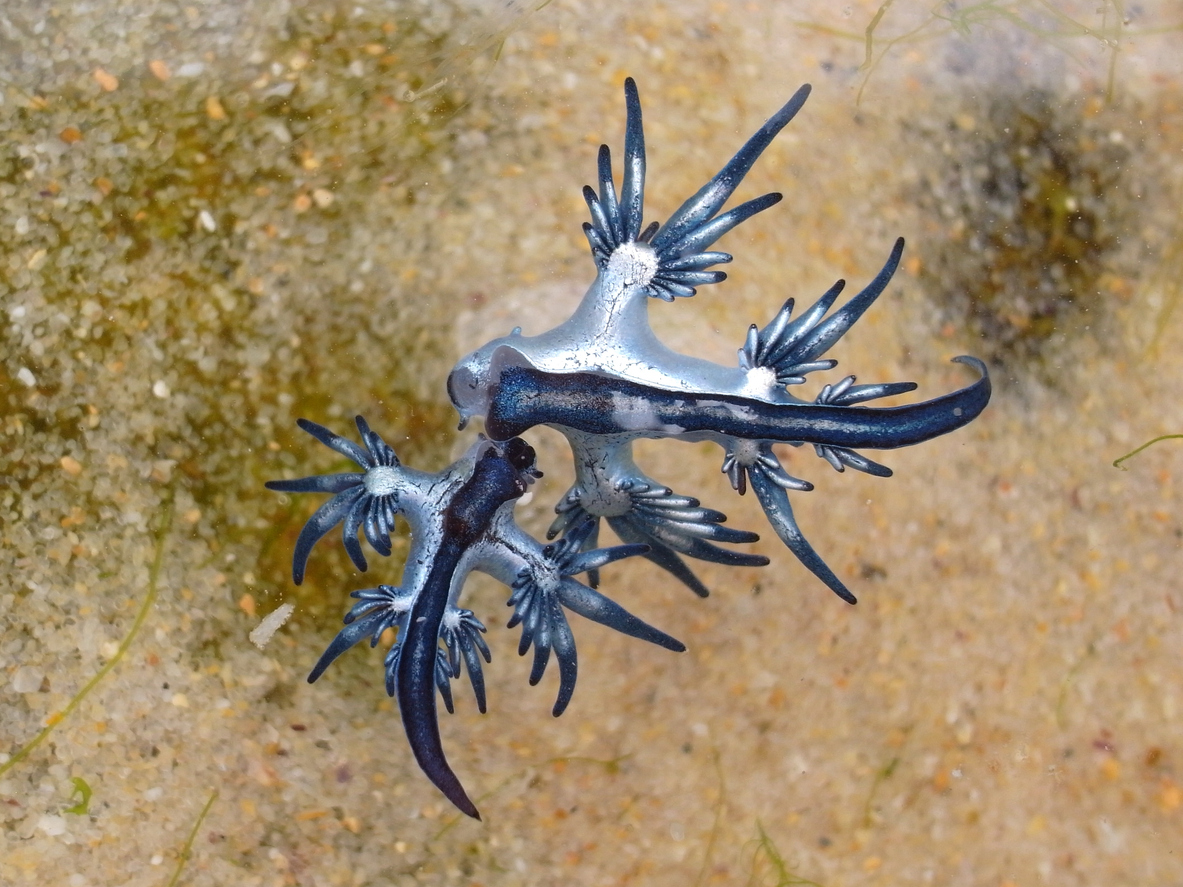
Blue dragon sightings are not only interesting for beach visitors. They also matter to scientists and coastal observers.
Because these creatures depend so heavily on ocean movement, their appearance can offer clues about what the water has been doing offshore. A wash-up may reflect recent wind patterns, current shifts, or the movement of surface ecosystems through the Gulf.
In that sense, blue dragons are more than a beach curiosity. They are signs of a much larger story playing out beyond the shoreline.
Their appearance can also remind people that the Texas coast is connected to distant parts of the ocean in ways that are easy to overlook. The beach may feel local, but the forces shaping it are often regional or even global.
A Reminder of the Ocean’s Reach
One of the most fascinating things about blue dragons is how far they can travel without meaning to. They do not choose a beach. They do not migrate toward a favorite shoreline. They drift, carried by systems much larger than themselves.
That makes their arrival on a Texas beach feel almost like a message from the open sea.
A creature that spent its life floating in warm offshore water can suddenly end up inches from someone’s flip-flops on a quiet morning walk. It is a strange crossing of two worlds, the deep, drifting life of the ocean surface and the familiar shoreline where people swim, fish, and collect shells.
That contrast is part of what makes blue dragons so captivating.
Respecting Wildlife on the Shore
It is easy to see a washed-up marine animal as something separate from its habitat, but it is still part of a living system. Blue dragons, like other creatures stranded by tides and winds, deserve space and respect.
Taking a photo from a safe distance is fine. Touching, collecting, or disturbing them is not worth the risk.
This is a good rule for all unfamiliar marine life on the Texas coast. Bright colors, odd shapes, and jelly-like bodies often signal that a creature has some form of chemical or venom-based defense. What looks harmless can turn painful in a hurry.
Beachcombing is fun, but caution should always come first.
The Bigger Picture
The story of the blue dragon is really a story about movement. It is about water flowing through the Gulf, wind pressing against the surface, storms stirring the sea, and tiny animals drifting wherever those forces carry them.
That is why blue dragons show up on certain Texas beaches. They are not appearing at random. Their arrival is the final step in a chain of natural events that may have started many miles offshore.
And because those events do not happen the same way every day, every season, or every year, blue dragon sightings remain rare enough to feel special.
Final Thoughts
Blue dragons show up on certain Texas beaches because warm ocean currents carry them into the Gulf, steady winds push them toward shore, and changing weather helps deliver them onto the sand. Their appearance may seem sudden, but it is part of a much larger pattern shaped by the ocean itself.
They are beautiful, unusual, and unforgettable. They are also a reminder that the Texas coast is linked to a wide, active marine world just beyond sight.
So if you ever come across one, take a closer look with your eyes, not your hands. You will be seeing one of the ocean’s strangest little drifters, brought to shore by a journey that started far beyond the beach.