

Texas beaches are full of surprises, but few are as strange or visually striking as the tiny sea creature commonly known as the blue dragon.
With its electric blue coloring, delicate wing-like appendages, and almost unreal appearance, the blue dragon looks more like something from a tropical coral reef documentary than an animal that could wash up on the Texas Gulf Coast. Yet in certain conditions, these rare marine creatures do occasionally appear along Texas beaches, especially after strong currents, storms, or shifting ocean conditions.
When sightings happen, they spread quickly online.
Beachgoers often photograph them because they look almost too unusual to be real. Their metallic blue coloration and intricate body shape stand out sharply against sand and seaweed, making them one of the most visually fascinating creatures that can appear on the Gulf Coast.
But blue dragons are not just beautiful.
They are also venomous sea slugs capable of delivering painful stings under the right circumstances. That combination of beauty, rarity, and danger has made them increasingly famous among coastal travelers, marine enthusiasts, and photographers.
For anyone hoping to understand where blue dragons might appear in Texas, it helps to first understand what they actually are and why they occasionally end up on Gulf Coast beaches in the first place.
What Exactly Is a Blue Dragon?
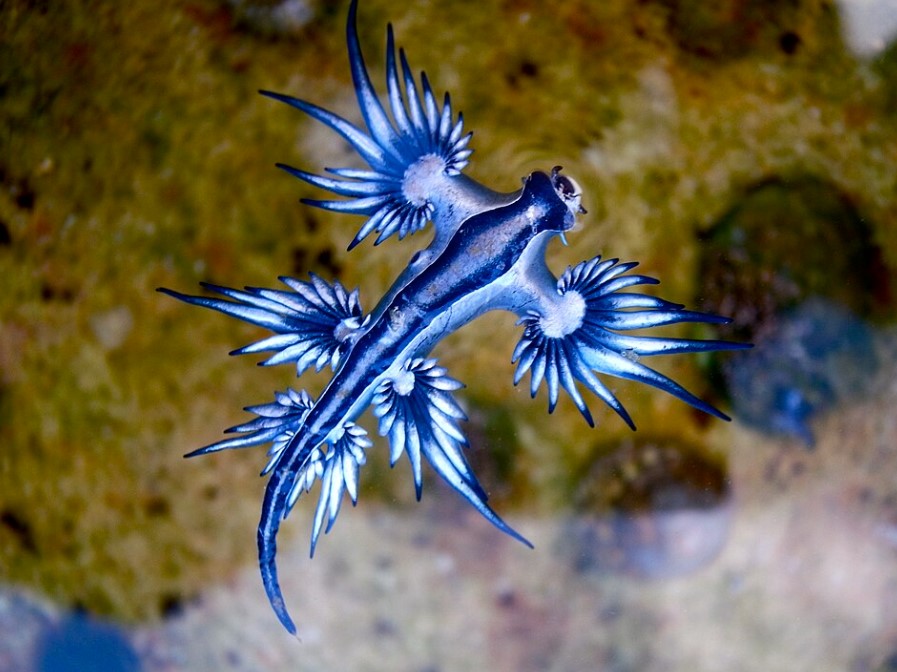
Sylke Rohrlach from Sydney, Blue dragon-glaucus atlanticus (8599051974), CC BY-SA 2.0
The creature commonly called a blue dragon is a species of sea slug known scientifically as Glaucus atlanticus.
Despite the nickname, it is not a dragon at all. It is a pelagic nudibranch, meaning it spends most of its life floating in open ocean environments rather than crawling along reefs or shallow coastal waters like many other sea slugs.
Blue dragons are relatively small, usually measuring only about one to one-and-a-half inches long.
Their appearance is what makes them so memorable. They feature silver undersides and brilliant blue appendages that branch outward like tiny aquatic wings. That coloration actually serves as camouflage.
When viewed from above, the blue blends with ocean water. When viewed from below, the silvery underside helps them blend with sunlight reflecting off the surface.
Blue dragons drift upside down at the ocean surface using air bubbles stored in their stomachs to stay buoyant.
One reason they attract so much scientific interest is their unusual feeding behavior.
They prey on venomous creatures such as the Portuguese man o’ war, siphonophores, and other floating jelly-like organisms. Even more remarkably, blue dragons can store venom from those animals inside specialized tissues and reuse it defensively against predators.
That means a blue dragon’s sting can potentially be even more concentrated than the sting of the creatures it eats.
Why Blue Dragons Occasionally Reach Texas Beaches
Blue dragons are not permanent residents of Texas beaches.
Instead, they are offshore drifters carried by currents, winds, and floating surface ecosystems. Under certain environmental conditions, those ocean currents push them closer to shore.
This is why sightings tend to happen suddenly and somewhat unpredictably.
Strong onshore winds, tropical weather systems, Gulf current shifts, and seasonal water movement can all contribute to blue dragons washing ashore along the Texas coast.
They are often found alongside:
- Portuguese man o’ wars,
- seaweed mats,
- floating debris,
- and other pelagic organisms carried inland by currents.
Most sightings happen after weather changes or rough surf conditions.
In many cases, beachgoers discover them stranded in groups because the same current systems carrying one blue dragon often carry many.
Texas is not the only Gulf Coast state where this happens, but the state’s long coastline and warm Gulf waters make occasional appearances entirely possible.
Texas Beaches Where Blue Dragons Are Most Likely to Appear
Blue dragons can theoretically wash ashore anywhere along the Texas Gulf Coast, but some beaches are more likely to experience sightings because of their location, current exposure, and connection to Gulf circulation patterns.
Padre Island National Seashore
View this post on Instagram
One of the most likely places for blue dragon sightings in Texas is Padre Island National Seashore.
Stretching for more than 60 miles along the Gulf Coast, the protected barrier island frequently collects unusual marine life carried by Gulf currents. The undeveloped shoreline allows beachcombers to notice stranded sea creatures more easily than heavily groomed urban beaches.
The national seashore is already known for:
- sea turtle activity,
- jellyfish blooms,
- migratory birds,
- washed-up deepwater species,
- and seasonal marine debris carried inland.
Because the shoreline remains relatively natural, it acts almost like a collection zone for drifting ocean organisms.
After storms or strong Gulf currents, beachgoers occasionally report unusual pelagic species there, including blue dragons and Portuguese man o’ wars.
The area’s remoteness also attracts photographers and wildlife enthusiasts specifically searching for rare coastal sightings.
South Padre Island
View this post on Instagram
South Padre Island is another major hotspot for unusual Gulf marine life.
Its southern location places it closer to Gulf current systems capable of carrying pelagic species toward shore. Warm water temperatures and open Gulf exposure also increase the likelihood of rare drifting organisms reaching the beaches.
Blue dragon sightings in South Padre are still uncommon, but they are realistic enough that coastal naturalists and marine observers actively watch for them during certain conditions.
The island’s strong beach tourism culture also means sightings spread quickly when they occur.
Beachcombers often notice:
- blue buttons,
- Portuguese man o’ wars,
- jellyfish,
- sea slugs,
- and floating ocean organisms after strong surf or storm activity.
Because blue dragons frequently travel alongside Portuguese man o’ wars, areas where man o’ war strandings occur may also present opportunities for blue dragon appearances.
Galveston Island
Although Galveston’s beaches are more urbanized than some other parts of the Texas coast, the island still occasionally receives unusual Gulf marine life washed in by storms and shifting currents.
Strong weather systems moving through the Gulf can push offshore organisms toward Galveston’s shoreline surprisingly quickly.
Blue dragons are still considered rare there, but the conditions that occasionally bring Portuguese man o’ wars ashore can theoretically bring blue dragons as well.
The island’s popularity also increases the chance that sightings are noticed and photographed.
With thousands of visitors regularly walking Galveston beaches, unusual marine life rarely goes unnoticed for long.
Mustang Island and Port Aransas
The beaches near Mustang Island and Port Aransas are also worth watching.
These coastal areas sit near productive Gulf ecosystems and frequently experience changing surf conditions tied to weather and seasonal current patterns.
Like Padre Island National Seashore, these beaches often accumulate seaweed lines and drifting marine material where small pelagic organisms can become stranded.
The region’s strong birding and beachcombing communities also help increase documentation of unusual sightings.
Naturalists in the area regularly monitor washed-up marine life after storms, making it one of the better regions for spotting unusual Gulf species.
Why Blue Dragons Fascinate So Many People
Part of the fascination comes from contrast.
Blue dragons look tropical and exotic, yet they occasionally appear on ordinary public beaches where families are walking, fishing, or collecting shells.
Their appearance also feels strangely prehistoric and alien.
The branching appendages, bright coloration, and tiny floating bodies make them look dramatically different from the marine animals most people expect to encounter along the Texas coast.
Social media has amplified that fascination enormously.
Photos of blue dragons regularly go viral because many people initially assume the images are fake or AI-generated. Their appearance feels almost too colorful and intricate to exist naturally in Gulf waters.
At the same time, their rarity keeps them intriguing.
Unlike dolphins, sea turtles, or even jellyfish, blue dragons are not something most beachgoers expect to see during an ordinary coastal trip.
Why You Should Never Touch One
One of the most important things beachgoers should understand is that blue dragons are not harmless.
Even after washing ashore, they may still contain concentrated venom collected from Portuguese man o’ wars and similar prey species.
Touching one can potentially cause:
- painful stings,
- skin irritation,
- nausea,
- swelling,
- or allergic reactions.
Children are especially vulnerable because the creatures appear small and visually appealing.
Wildlife experts strongly recommend observing them without physical contact and notifying local park staff or marine educators if large numbers appear onshore.
The same warning applies to Portuguese man o’ wars nearby.
If blue dragons are present, venomous floating organisms may also be in the area.
What Blue Dragon Sightings Reveal About the Gulf
The occasional appearance of blue dragons along Texas beaches highlights how connected the Gulf ecosystem truly is.
These tiny sea slugs spend most of their lives drifting across enormous stretches of open ocean, carried entirely by currents and weather patterns. When they appear on Texas beaches, they provide a visible reminder that Gulf Coast shorelines are deeply linked to much larger marine systems offshore.
Their presence also reflects the incredible biodiversity hidden beneath the Gulf’s surface.
Many Texans think of Gulf waters mainly in terms of fishing, boating, tourism, or beaches, but the ecosystem supports an enormous range of marine life — including species that many people never realize exist at all.
And every once in a while, ocean currents bring one of the Gulf’s strangest little creatures directly onto the sand.