

Texas is famous for its wildflowers. Each spring, highways, ranch roads, prairies, hillsides, and open fields fill with color. Some blooms are tiny and easy to miss. Others spread across the land in thick waves that stop drivers in their tracks.
The best-known Texas wildflower is the bluebonnet, but it is only one part of the story. Texas has thousands of native flowering plants, and many of them can be grouped by color. Looking at wildflowers this way makes it easier to identify them, appreciate their beauty, and understand the role they play in the landscape.
Wildflowers are not only pretty. They help support bees, butterflies, moths, birds, and other wildlife. Many also protect soil, survive drought, and return year after year with little help from people. From deep blues to bright yellows, soft whites, fiery reds, and bold purples, Texas wildflowers create one of the most colorful natural displays in the country.
Blue Wildflowers
Blue wildflowers are among the most loved blooms in Texas. They often stand out because true blue is less common in nature than yellow, white, or pink.
Bluebonnet
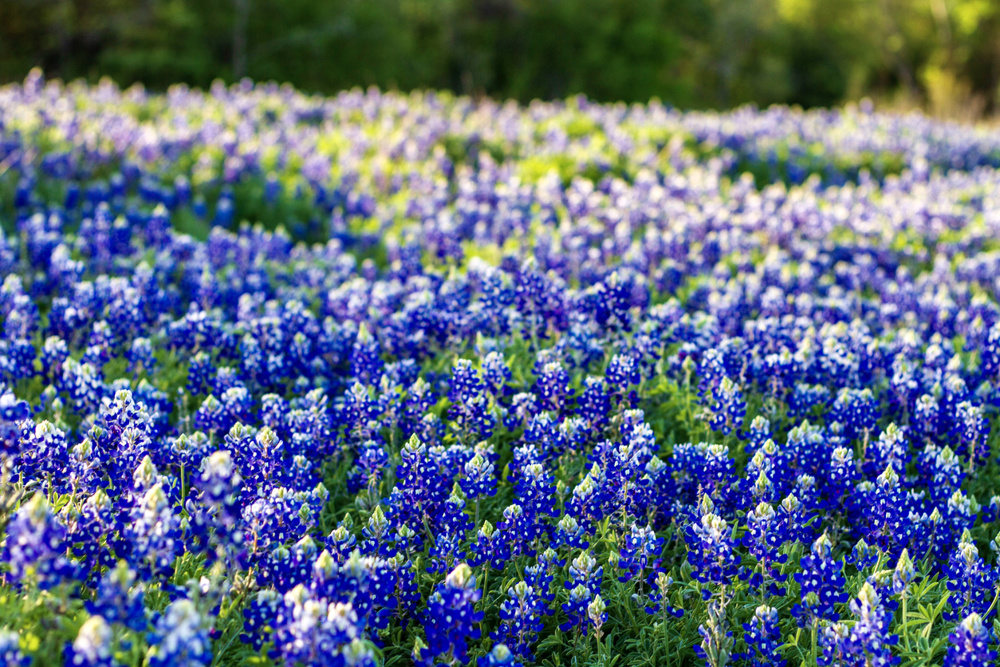
The bluebonnet is the state flower of Texas and the most famous wildflower in the state. It usually blooms in spring, often from March into April, depending on weather and location.
Bluebonnets grow in fields, along roadsides, and across open sunny spaces. Their blue petals often have white tips, giving each flower spike a soft, layered look. In good years, they can cover large areas and create the classic Texas spring scene.
There are several species of bluebonnets in Texas. The most familiar is the Texas bluebonnet, known for its deep blue color and upright flower clusters.
Prairie Verbena
Prairie verbena can appear blue-purple or lavender, depending on the plant and lighting. It grows low to the ground and produces rounded clusters of small flowers.
This wildflower is common in open areas, prairies, and roadsides. It can bloom for a long period, especially when rainfall is steady. Butterflies are often drawn to it, making it a valuable flower for pollinator-friendly landscapes.
Mealy Blue Sage
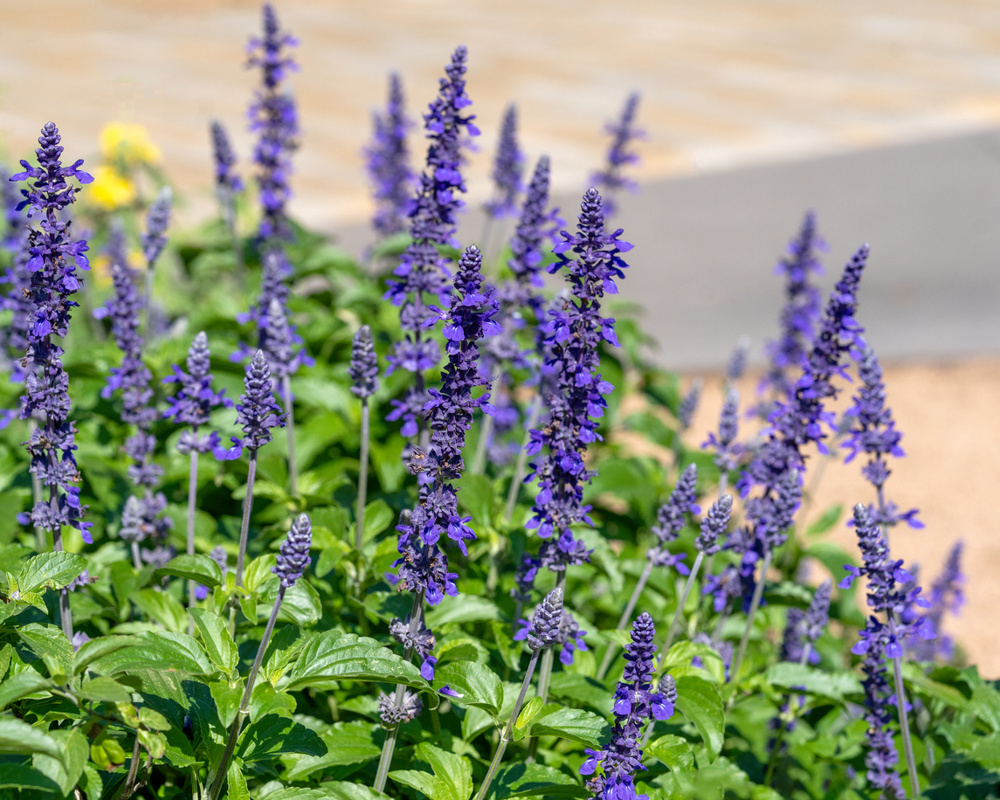
Mealy blue sage produces tall spikes of blue to violet flowers. It is a tough plant that handles heat well, which makes it a good fit for many parts of Texas.
This wildflower is popular in native gardens because it attracts bees, butterflies, and hummingbirds. It also adds height and structure to wildflower areas.
Red Wildflowers
Red wildflowers bring bold color to the Texas landscape. Many red blooms are especially attractive to hummingbirds, which are drawn to bright tubular flowers.
Indian Paintbrush
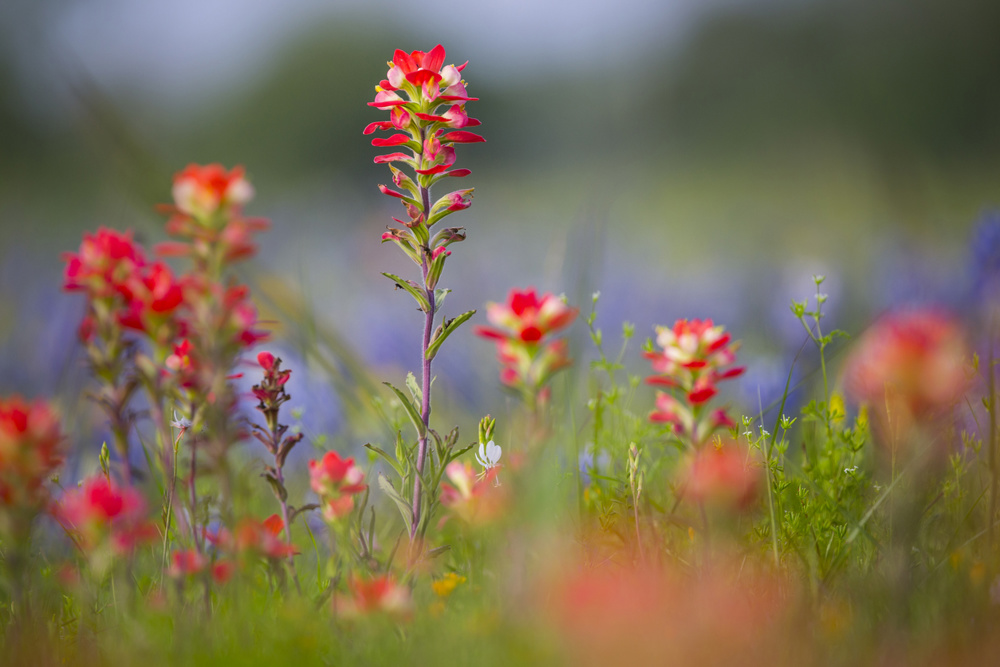
Indian paintbrush is one of the most recognizable red wildflowers in Texas. It often blooms at the same time as bluebonnets, creating colorful spring fields.
The red parts that people notice are actually bracts, which are leaf-like structures around the small flowers. The plant often appears in shades of red, orange-red, or scarlet.
Indian paintbrush grows in open fields, roadsides, and grassy areas. It is partly parasitic, meaning it connects to the roots of nearby plants to take in some nutrients. This unusual trait helps it survive in natural grassland settings.
Standing Cypress
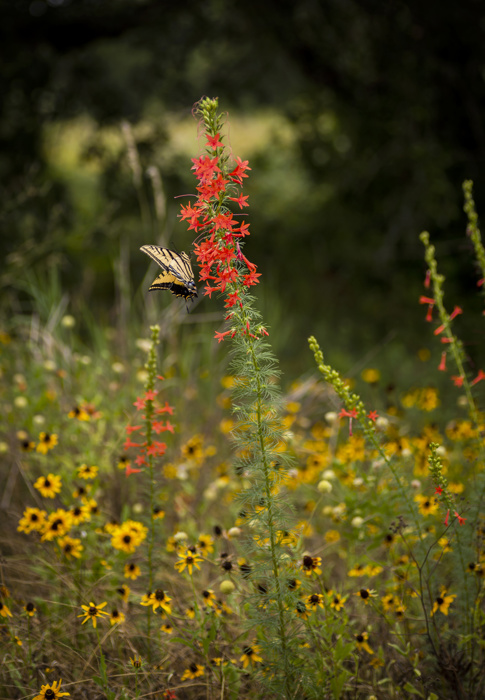
Standing cypress is a tall wildflower with bright red tubular flowers. It often grows in rocky or sandy soils and can reach impressive heights.
Its red blooms are especially attractive to hummingbirds. The plant may take more than one year to bloom, but when it does, it adds a dramatic vertical accent to the landscape without needing a crowded flower bed.
Turk’s Cap
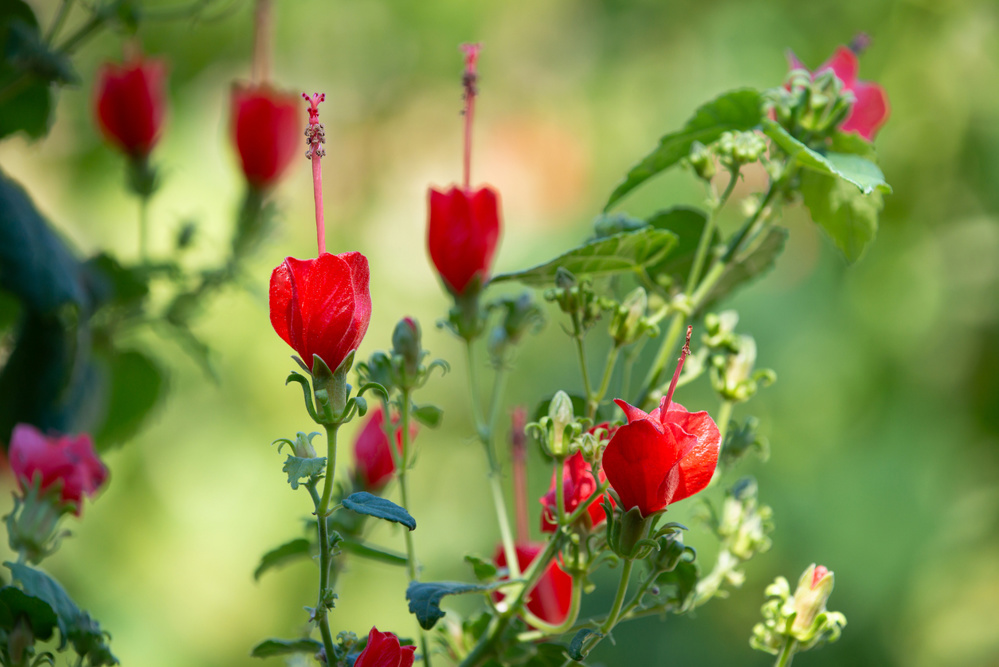
Turk’s cap is a Texas native plant with red, twisted flowers that never fully open. The blooms have a unique shape that resembles a small turban or cap.
This plant often grows in partial shade, making it useful in areas where many sun-loving wildflowers struggle. It attracts hummingbirds and butterflies and can also produce small red fruits that wildlife may eat.
Yellow Wildflowers
Yellow wildflowers are some of the easiest to spot in Texas. They bring a bright, sunny look to fields and roadsides and are often among the first colors people notice.
Coreopsis
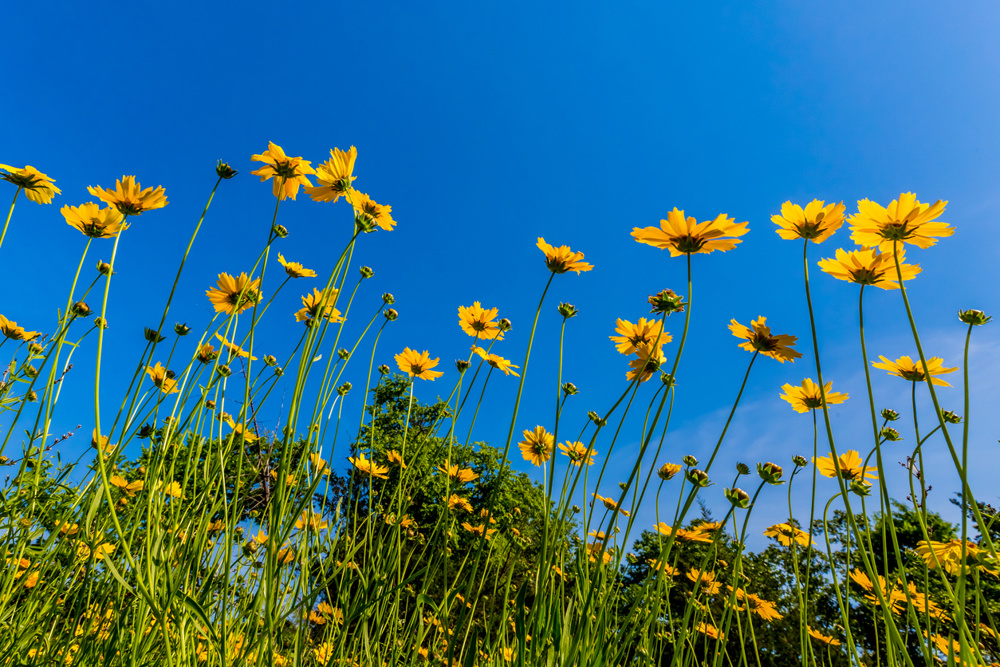
Coreopsis, often called tickseed, produces cheerful yellow flowers that look similar to small daisies. Some types have darker centers or reddish markings near the middle.
These flowers grow well in sunny locations and can spread beautifully across meadows and disturbed areas. They are also popular in wildflower seed mixes because they are reliable bloomers and easy to recognize.
Engelmann Daisy
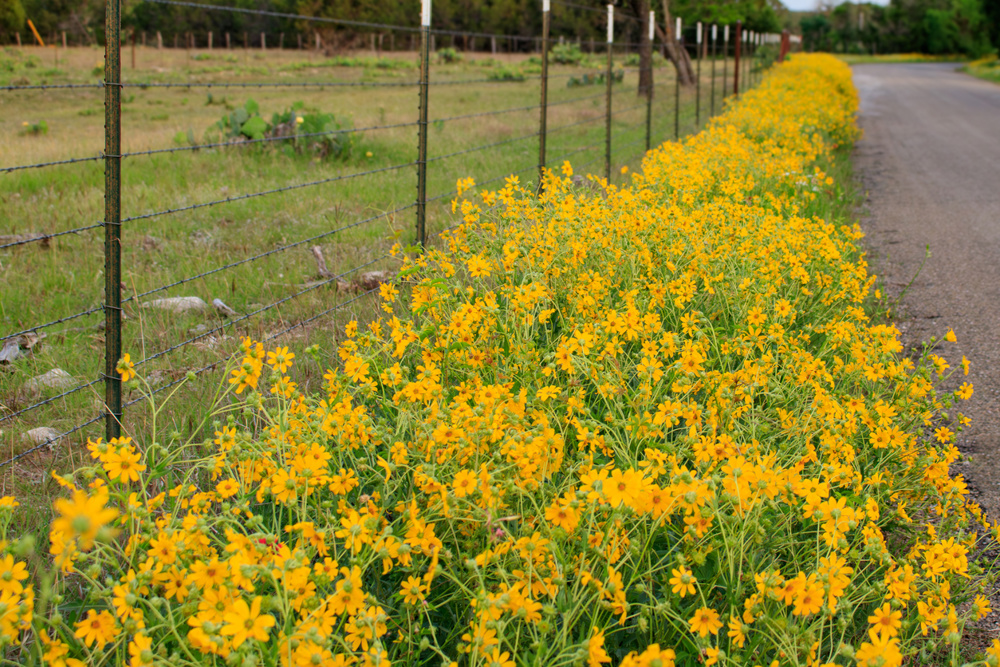
Engelmann daisy is a tough Texas native with yellow flowers and deeply cut leaves. It blooms in spring and may continue into summer when conditions are favorable.
This plant is common in prairies, pastures, and open grasslands. It is drought-tolerant and useful for native plant gardens because it can survive hot, dry conditions once established.
Greenthread
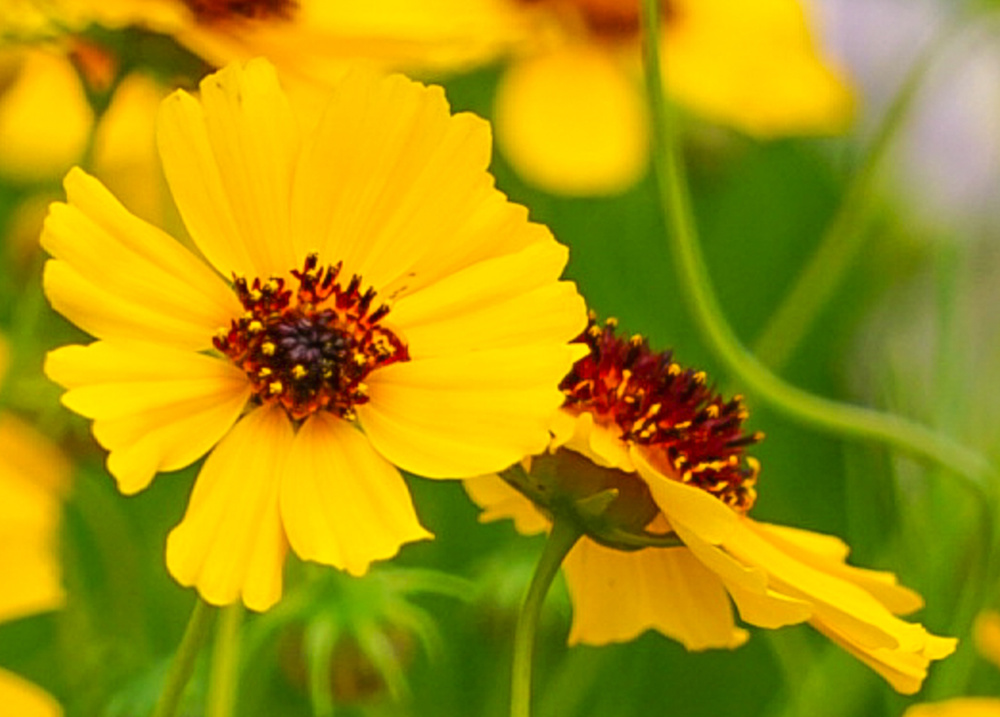
Greenthread is a delicate yellow wildflower with thin, thread-like leaves. Its bright yellow flower heads often appear in spring and early summer.
It grows in open sunny places and can form soft blankets of yellow across fields. The plant gets its name from its fine green foliage, which gives it a light and airy look.
Pink Wildflowers
Pink wildflowers add a softer touch to the Texas landscape. They often appear in open fields, sandy soils, and prairies.
Winecup
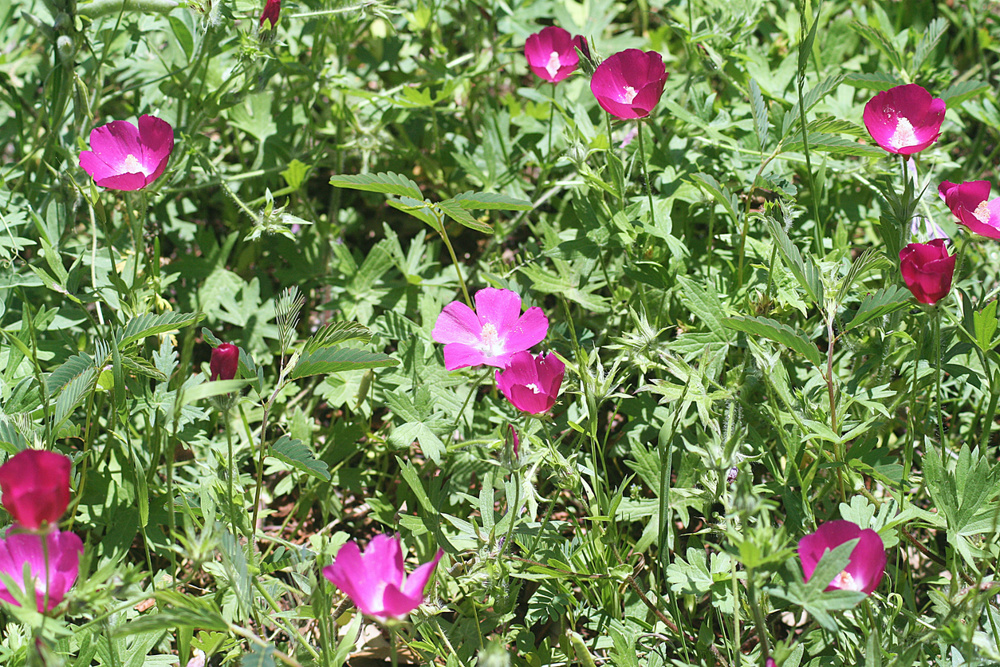
Winecup is a low-growing wildflower with cup-shaped blooms that range from deep pink to magenta. The flowers often open wide in the sun and close in the evening or during cloudy weather.
This plant spreads along the ground, creating colorful patches in spring and early summer. It grows well in sunny spots and is often used in native gardens.
Pink Evening Primrose
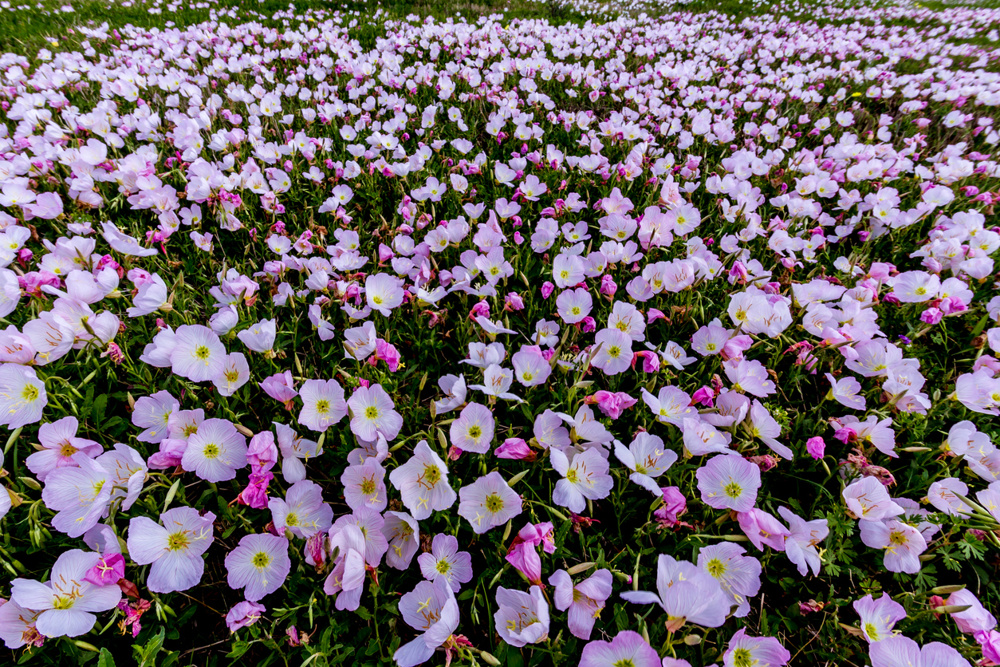
Pink evening primrose is a familiar Texas wildflower with pale pink petals and a yellow center. It often grows along roadsides, in fields, and in open spaces.
Despite the name, the flowers may stay open during the day, especially in mild weather. This plant can spread quickly, so it often forms loose colonies. Its soft color makes it easy to spot among grasses and other spring blooms.
Prairie Rose Gentian
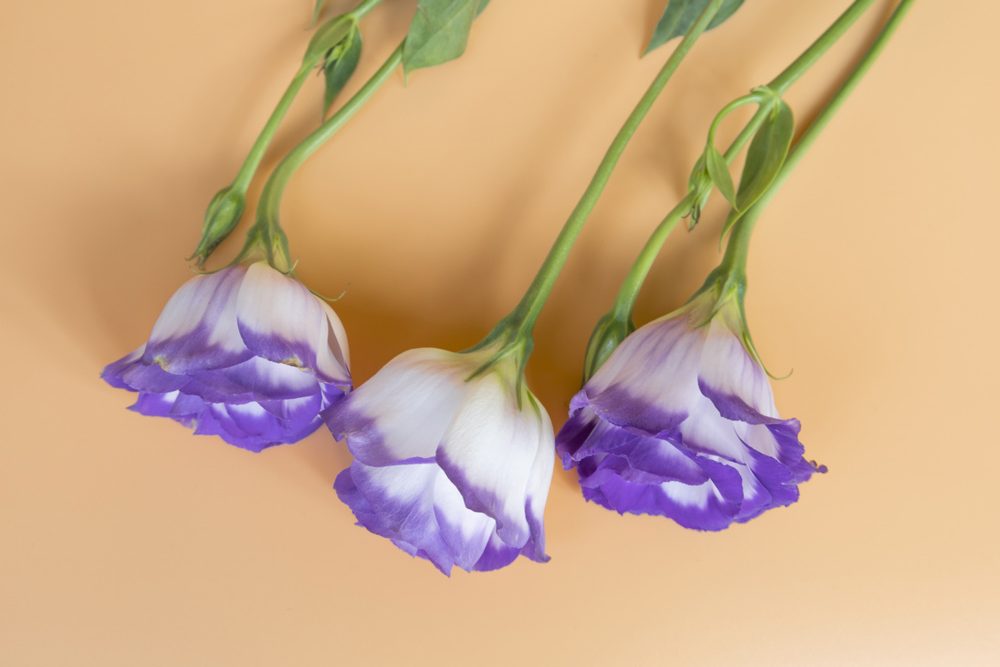
Prairie rose gentian produces pink flowers that often have a yellow center. It is commonly found in prairies, meadows, and open grasslands.
Its flowers have a simple, clean shape, which gives the plant a graceful look. It is not always as famous as bluebonnets or paintbrushes, but it adds lovely color to native landscapes.
Purple Wildflowers
Purple wildflowers are common across Texas and can range from pale lavender to deep violet. Many purple blooms are important nectar sources for pollinators.
Gayfeather
Gayfeather, also known as blazing star, produces tall spikes of purple flowers. The blooms usually open from the top down, which is different from many other flowering plants.
This wildflower attracts butterflies and bees. It grows well in prairies and sunny open areas. Its tall form makes it easy to notice even when mixed with grasses.
Purple Coneflower
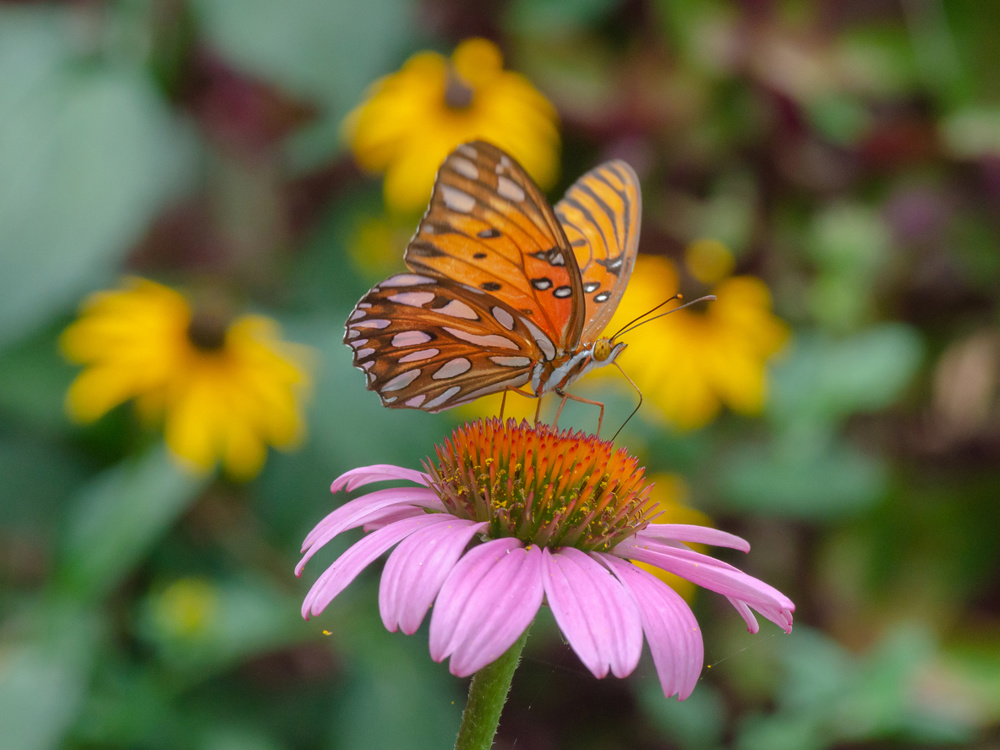
Purple coneflower has lavender-purple petals that droop slightly around a raised central cone. It is a well-known native plant used in gardens and natural areas.
The flowers attract bees and butterflies. Later in the season, the seed heads can provide food for birds. This makes purple coneflower useful beyond its blooming period.
Horsemint
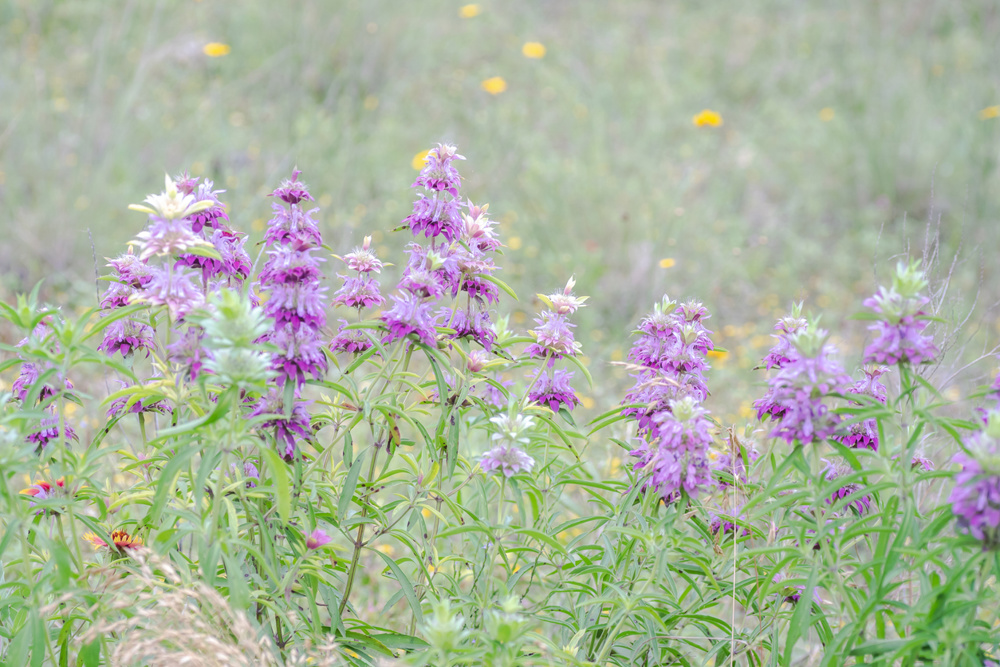
Horsemint, also called lemon beebalm, produces unusual purple, lavender, or pinkish flower clusters. The plant often has spotted petals and a strong scent.
It is common in prairies, fields, and roadsides. Bees and butterflies visit it often. Its shape and fragrance make it one of the more interesting Texas wildflowers to examine up close.
White Wildflowers
White wildflowers may seem simple at first, but they can brighten shaded areas, soften meadows, and stand out beautifully against green grasses.
Blackfoot Daisy
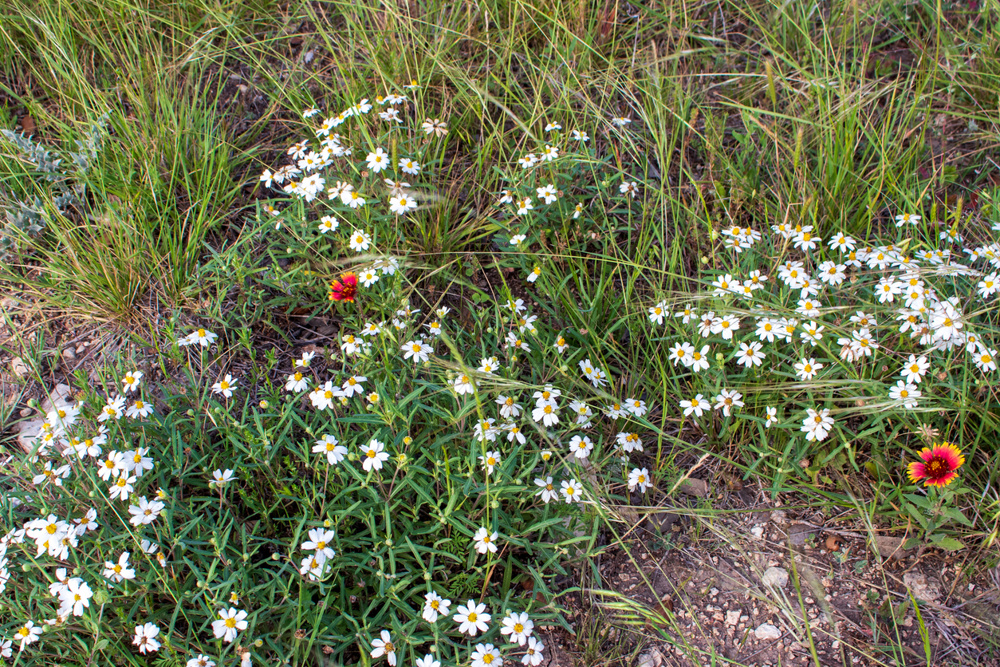
Blackfoot daisy is a low-growing plant with white petals and yellow centers. It is drought-tolerant and often grows in rocky or dry soils.
This flower blooms over a long season when conditions are right. It is a good example of how delicate-looking flowers can still be tough enough for Texas heat.
White Prickly Poppy
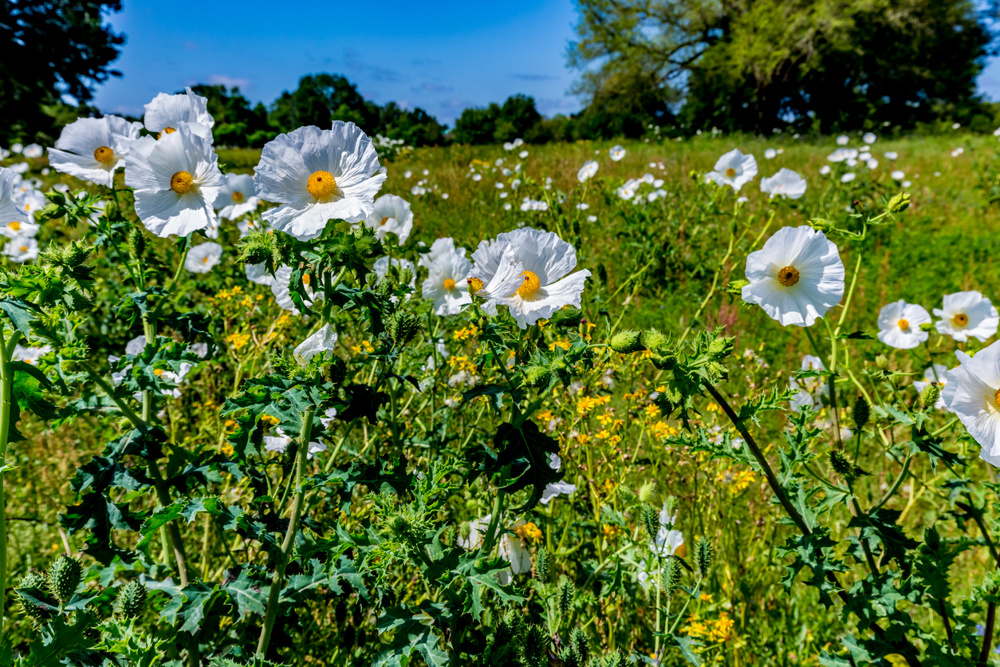
White prickly poppy has large white flowers with yellow centers. The leaves are spiny, and the plant has a bold, rugged appearance.
It often grows in dry, open areas and disturbed soils. While the flowers are beautiful, the plant should be handled with care because of its prickly leaves and stems.
Prairie Bishop’s Weed
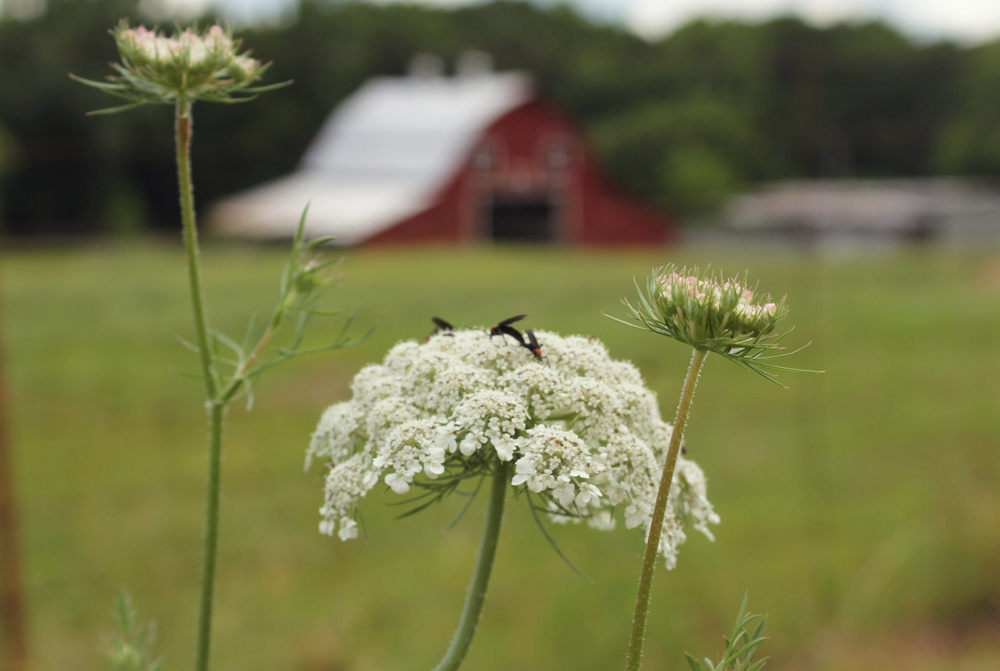
Prairie bishop’s weed produces clusters of small white flowers. The flower heads have a delicate, lace-like look.
This plant can be found in prairies and open grasslands. It may not be as bold as some other wildflowers, but it adds texture and lightness to native plant communities.
Orange Wildflowers
Orange wildflowers bring warmth to the landscape. Some appear close to red, while others lean toward gold or copper.
Butterfly Weed
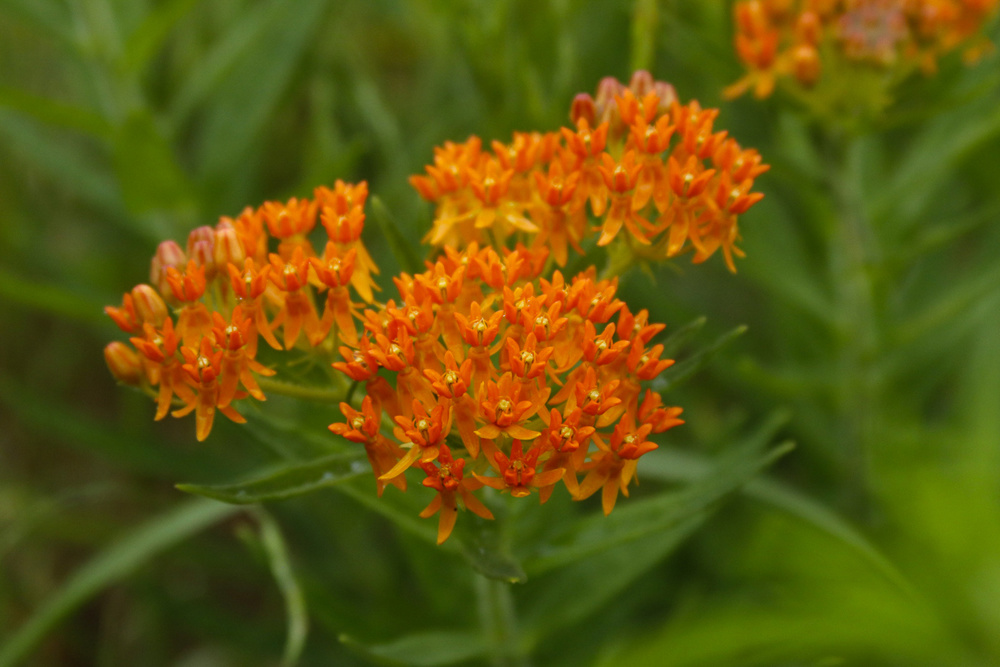
Butterfly weed is a type of milkweed with bright orange flower clusters. It is especially important because milkweeds support monarch butterflies.
This plant grows in sunny areas and is often used in pollinator gardens. Its orange flowers attract butterflies, bees, and other insects. Unlike some milkweeds, butterfly weed has clear sap rather than milky white sap.
Mexican Hat
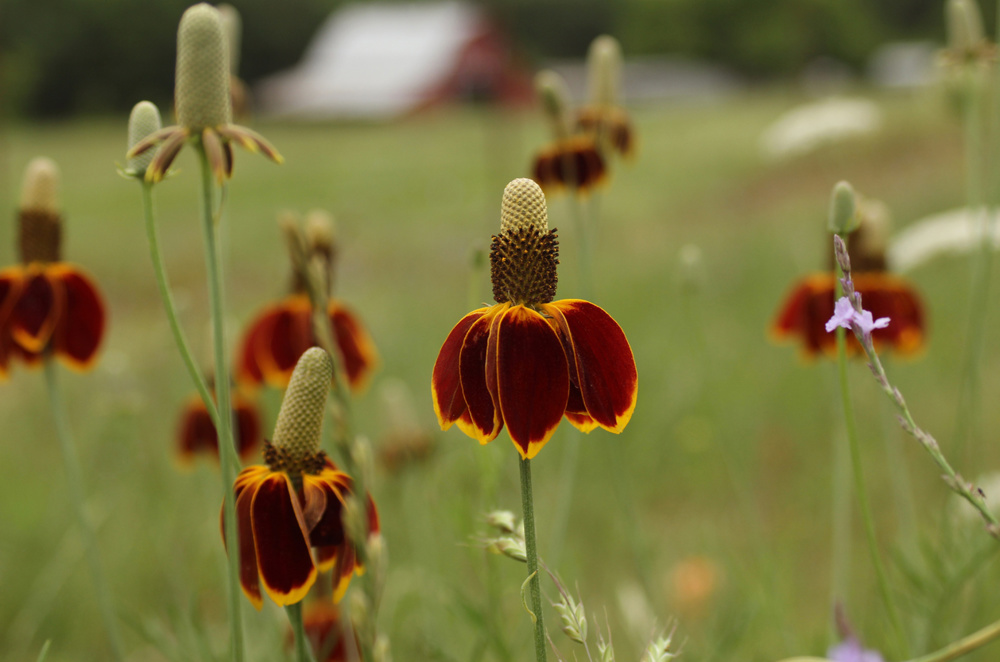
Mexican hats have drooping petals that may be yellow, reddish-brown, or orange. The raised center gives the flower its common name because it can resemble a small sombrero.
This wildflower is common in prairies, roadsides, and open spaces. It is hardy, drought-tolerant, and easy to recognize once you know its shape.
Texas Lantana
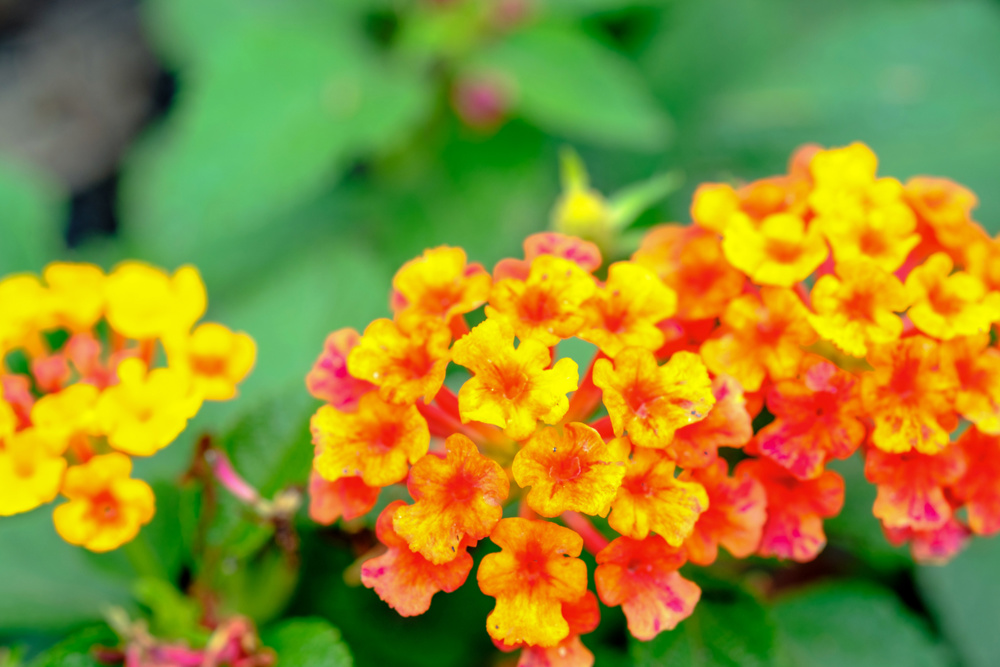
Texas lantana produces clusters of small flowers that may include orange, yellow, and red tones. It is a tough native plant that handles heat well.
Butterflies are strongly attracted to lantana. The plant can bloom for a long season, especially in warm areas. Its small flower clusters add steady color when some spring wildflowers have already faded.
Mixed-Color Wildflowers
Some Texas wildflowers do not fit neatly into one color group. Their blooms may change as they age or include several colors on the same flower.
Firewheel
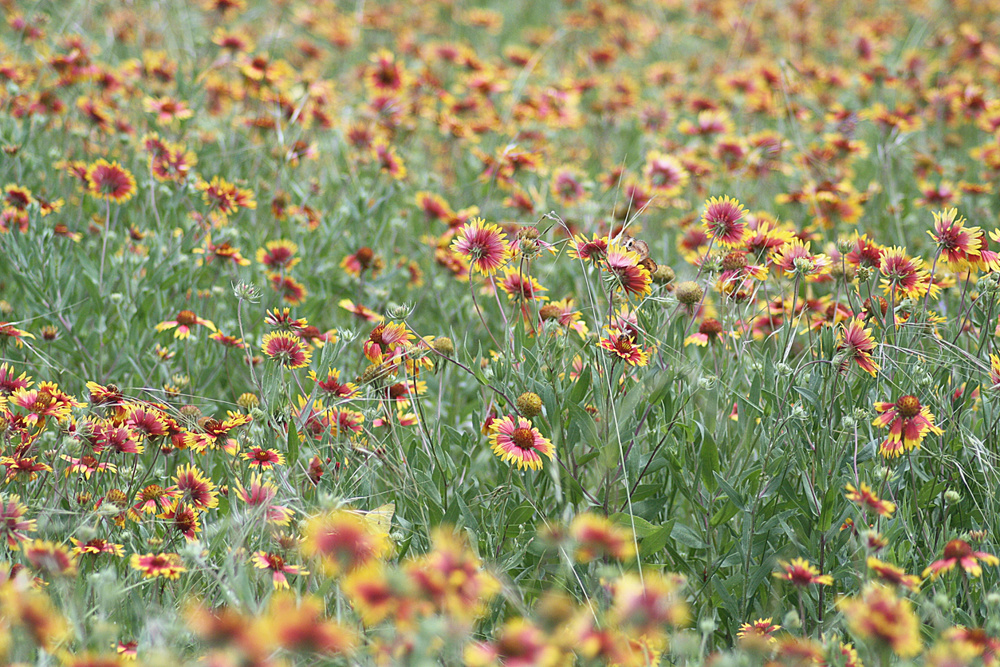
Firewheel, also known as Indian blanket, is one of the most striking mixed-color wildflowers in Texas. It usually has red petals with yellow tips, creating a bold circular pattern.
This flower blooms in sunny areas and is common along roadsides and in fields. It handles heat well and often appears after bluebonnets and other early spring flowers begin to fade.
Texas Star Hibiscus
Texas star hibiscus can produce large red flowers, but some related hibiscus varieties may appear in different shades. Its star-shaped blooms make it easy to recognize.
This plant often grows in moist areas, including near streams, ditches, and wetlands. It shows that Texas wildflowers are not limited to dry fields and prairies.
Drummond Phlox
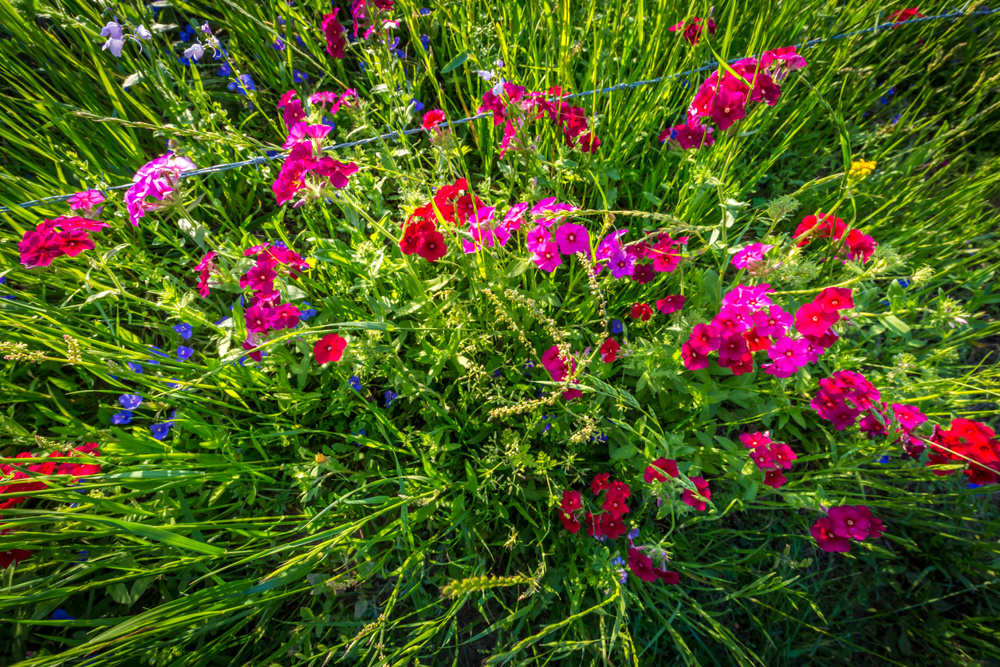
Drummond phlox can appear in pink, red, lavender, white, or mixed shades. It is a colorful spring wildflower often found in fields and roadsides.
Its rounded flower clusters make it easy to notice. Because it comes in several colors, it can add variety to a wildflower display even within a small area.
Why Wildflower Colors Matter
Wildflower colors are not random. Color can help attract specific pollinators. Bees often notice blue, purple, yellow, and white flowers. Butterflies are drawn to many bright colors. Hummingbirds often visit red or orange tubular flowers.
Color also helps people identify plants. While color alone is not always enough for a positive identification, it is a helpful starting point. Flower shape, leaf pattern, bloom season, plant height, and growing location all matter too.
For example, a blue flower in a roadside field might be a bluebonnet, but it could also be a type of sage or verbena. A red flower might be an Indian paintbrush, standing cypress, or Turk’s cap. Looking closely helps reveal the difference.
When to See Texas Wildflowers
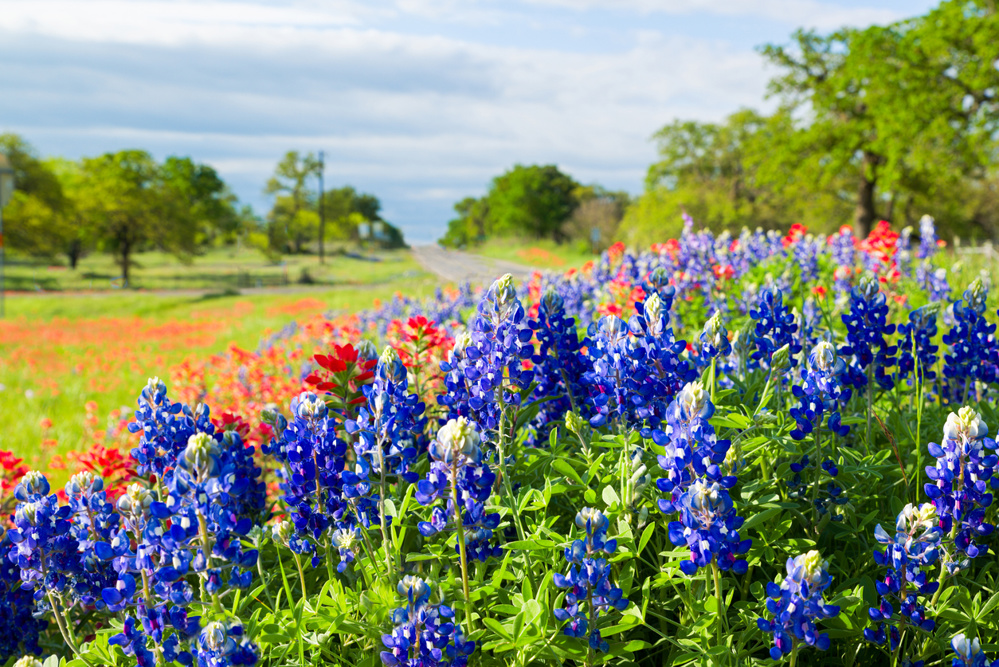
The Texas wildflower season depends on the region and weather. In many areas, spring is the main season, especially from March through May. Central Texas is especially famous for spring wildflower displays, but East Texas, North Texas, South Texas, West Texas, and the Gulf Coast all have their own native blooms.
Rainfall plays a major role. A wet fall and winter can lead to a strong spring bloom. A dry year may bring fewer flowers, shorter bloom times, or smaller displays.
Some wildflowers bloom later in summer or fall. Others may appear after seasonal rains. This means wildflower watching is not limited to one short window, although spring remains the most popular time.
Tips for Identifying Wildflowers by Color
Color is a great place to begin, but it works best when paired with other details. When trying to identify a Texas wildflower, notice the full plant, not only the bloom.
Pay attention to:
- Flower shape
- Leaf size and pattern
- Plant height
- Blooming season
- Soil type
- Sun or shade conditions
- Whether the flower grows alone or in clusters
Taking photos from different angles can help. A close-up of the flower is useful, but photos of the leaves and full plant are just as important.
Protecting Texas Wildflowers
Texas wildflowers are part of the state’s natural heritage. Picking a few flowers may seem harmless, but it can reduce seed production and affect future blooms. The better choice is to take photos and leave the plants in place.
It is also important to stay off private property unless permission is given. Many beautiful wildflower fields grow on ranches, farms, and family land. Roadside safety matters too. Pull over only where it is safe and legal.
Native wildflowers support insects, birds, and healthy ecosystems. Leaving them undisturbed helps them return year after year.
Bringing Texas Wildflower Colors Home
Many Texas wildflowers can be grown in home landscapes. Native plant gardens can provide seasonal color while supporting pollinators and conserving water.
Bluebonnets, coreopsis, winecup, blackfoot daisy, mealy blue sage, and butterfly weed are all good examples of plants that can work in natural-style gardens. The best choices depend on the region, soil, rainfall, and sunlight.
Planting native wildflowers also helps create habitat in neighborhoods and towns. Even a small patch of native flowers can attract bees and butterflies.
Final Thoughts
Texas wildflowers offer far more than a single springtime photo opportunity. Their colors tell a story about climate, soil, pollinators, and the natural character of the state.
Bluebonnets may get the most attention, but red Indian paintbrush, yellow coreopsis, pink evening primrose, purple gayfeather, white blackfoot daisy, and orange butterfly weed all deserve a closer look.
Learning wildflowers by color makes the Texas landscape easier to understand and more enjoyable to explore. Once you start noticing the details, every roadside field and prairie walk becomes a chance to see something new.