

When most people think of Civil War history, their minds go straight to famous sites in Virginia, Pennsylvania, or Georgia. What often gets overlooked is Texas, a state that played a strategic role in the conflict and still holds reminders of it today. Beyond the well-known battlegrounds, there are smaller sites scattered across the state that offer a quieter, more personal window into the past. These lesser-known battlefields may not draw the same crowds, but they carry stories of local communities, unexpected skirmishes, and the wider reach of the war. For anyone with an interest in history, they’re worth a stop and provide a different perspective on how the Civil War touched Texas soil.
Image: Pi3.124, Battle of Palmito Ranch marker, CC BY-SA 3.0
Palmito Ranch: The Forgotten Final Battle of the Civil War
While most people know that General Robert E. Lee’s surrender at Appomattox in April 1865 marked the effective end of the Civil War, few realize that the last clash of the war actually took place in Texas. On May 12–13, 1865, Union and Confederate forces met on the coastal plains near Brownsville at what became known as the Battle of Palmito Ranch.
The skirmish was unusual because it happened more than a month after the main Confederate armies had laid down their arms. News traveled slowly to the far reaches of the South, and isolated units in Texas had not yet received—or in some cases, refused to accept—the orders to stop fighting. Union troops, hoping to secure the Rio Grande region, moved against Confederate camps. What followed was a two-day encounter that saw Confederate cavalry, bolstered by artillery, push back the Union forces and claim a tactical victory.
Though the battle had little impact on the outcome of the war, its timing makes it historically significant. Palmito Ranch is often described as the “last land battle of the Civil War.” Today, the site remains largely undeveloped, giving visitors a chance to see the landscape much as soldiers did in 1865. Standing there, it is easy to understand how Texas, distant from the main theaters of war, still carried the weight of the conflict until the very end.
For those interested in exploring more of Texas’s natural history, Copper Breaks State Park offers 1,900 acres of rugged terrain with evidence of earlier Native American inhabitants.
Fort Brown: a Strategic Border Outpost With Rich Military Heritage
Located in Brownsville, Fort Brown served as a vital military post long before and after the Civil War. Established in the 1840s during the U.S.–Mexican War, the fort was named after Major Jacob Brown, who died defending the site. Its position along the Rio Grande gave it lasting strategic importance, making it a focal point for both defense and diplomacy in South Texas.
During the Civil War, Fort Brown changed hands several times as Union and Confederate forces vied for control of the border. The Rio Grande was a lifeline for trade, especially for Confederate cotton exports, and whoever controlled the fort controlled access to critical routes into Mexico. This tug-of-war gave the site a reputation as one of the most contested points in the region.
After the war, Fort Brown remained active for decades. It housed troops during the Indian Wars, served as a base during conflicts along the border, and later became a training ground for U.S. soldiers. The fort also gained attention in the early 20th century for its role in the so-called Brownsville Affair, an event tied to racial tensions and the treatment of Black soldiers in the U.S. Army.
Today, portions of Fort Brown are preserved, and visitors can explore remnants of its earthworks and historic structures. The site offers a rare opportunity to connect not only with Civil War history but also with the broader military heritage that shaped the borderlands. Similar to Fort Martin Scott, it was part of a network of frontier forts established to provide defense and maintain diplomatic relations with local populations.
The Twin Battles of Galveston: Naval and Land Warfare on the Gulf Coast
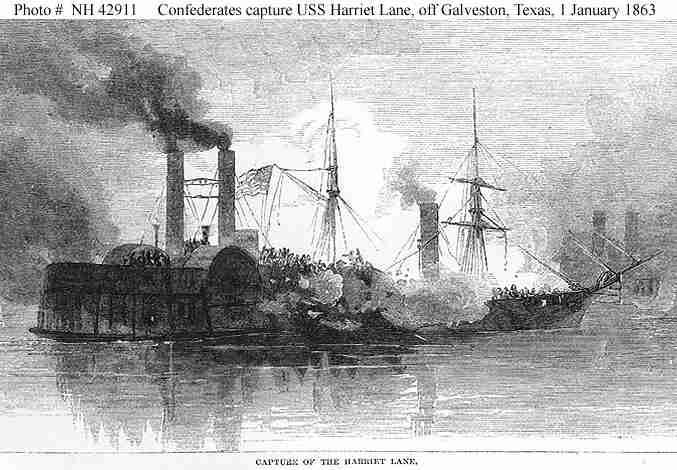
Galveston, a key port city on the Gulf of Mexico, became the stage for two major clashes during the Civil War. Its location made it vital to both Union and Confederate strategies: for the Confederacy, it was a gateway for trade and supplies; for the Union, it was a target to enforce the naval blockade and cut off southern exports.
The first battle occurred in October 1862, when Union naval forces captured the city with little resistance. For several months, Union troops controlled Galveston, but their hold proved temporary. On January 1, 1863, Confederate forces launched a daring counterattack by land and sea. Led by Major General John B. Magruder, Confederate troops coordinated with cotton-clad steamers—riverboats reinforced with bales of cotton—to drive Union ships out of the harbor. The operation was risky but successful, and Galveston returned to Confederate control for the remainder of the war.
The “twin battles” highlight both the naval and land dimensions of the Civil War in Texas. Few places on the Gulf Coast saw such dramatic swings in control. Today, visitors to Galveston can explore historic markers, museums, and the city’s harborfront to better understand how the battles shaped not just the Civil War, but the city’s identity as a strategic port. Today, visitors can explore Galveston Island State Park which preserves over 2,000 acres of the island’s western end, featuring diverse natural habitats that existed during the Civil War period.
Sabine Pass: Where 47 Texans Defeated a Federal Fleet
On September 8, 1863, the small port of Sabine Pass became the site of one of the most remarkable defensive victories of the Civil War. A Union fleet of more than a dozen vessels, carrying thousands of troops, attempted to capture the waterway and cut off Texas from the rest of the Confederacy. The attack was part of a larger Union strategy to secure the Gulf Coast and push inland.
Defending the pass was a tiny Confederate garrison of just 47 men, known as the Davis Guards, stationed at Fort Griffin. Armed with a few cannons but plenty of determination, they waited as Union gunboats entered the narrow channel. Using their knowledge of the terrain, the Texans fired with precision, quickly disabling two gunboats and forcing the rest of the fleet to retreat. The lopsided victory stunned Union commanders and became a celebrated moment for the Confederacy.
The Battle of Sabine Pass showed how a small, well-positioned force could outmaneuver a much larger opponent. Today, visitors can explore Sabine Pass Battleground State Historic Site, which preserves the location of the fort and commemorates the Davis Guards’ unlikely triumph. It offers a vivid reminder of how local knowledge and grit shaped the course of battles on Texas soil. Similar to Fort Leaton State Historic Site, this historical location charges $5 per person for visitors aged 13 and older, with children 12 and under admitted free.
Planning Your Texas Civil War Battlefield Road Trip: Routes and Tips
Exploring Civil War sites in Texas can be both a history lesson and a memorable travel experience. The battlefields are spread across the state, so planning your route in advance helps make the most of your trip.
Suggested Routes
-
Gulf Coast Trail: Start in Galveston, where the twin battles reshaped control of the port, then head south to Sabine Pass and Brownsville to see Fort Brown and Palmito Ranch. This route highlights the naval and border struggles that defined Texas’ role in the war.
-
Central Texas Loop: For those beginning in Houston or San Antonio, shorter drives can connect visitors to nearby sites and museums that tell the broader Civil War story, even if they’re not traditional battlefields.
Tips for Travelers
-
Timing: Texas summers can be extremely hot, so spring and fall offer more comfortable conditions for outdoor visits.
-
Guided Tours: Many sites have visitor centers or local historical groups that provide context you won’t get just by walking the grounds.
-
Combine with Local Culture: Pair your battlefield stops with nearby attractions, from coastal seafood in Galveston to the rich cultural mix of Brownsville. This makes the trip more enjoyable while deepening your connection to each location.
-
Preservation Etiquette: Stick to marked paths, respect historic markers, and avoid disturbing earthworks or artifacts. These sites are outdoor classrooms as well as memorials.
By combining history with thoughtful planning, a Texas Civil War battlefield trip can feel like stepping back into the 1860s while also discovering the character of modern Texas towns and landscapes. Include a stop at Goliad State Park where you can tour the reconstructed Mission Espíritu Santo while learning about Spanish colonial influence in Texas.