

Every year, one of North America’s most remarkable wildlife events passes through Texas almost unnoticed by many people. Millions of monarch butterflies travel thousands of miles between Mexico, the United States, and Canada, and Texas sits directly along one of their most important migration routes.
For nature lovers, birdwatchers, photographers, and families, seeing monarchs in the wild can be an unforgettable experience. Timing, however, is everything. Depending on the season, butterflies may simply be passing through, stopping briefly to feed, or laying eggs that will produce the next generation.
Understanding when monarchs move through Texas—and knowing where to look—greatly increases your chances of seeing large numbers of these iconic orange-and-black butterflies.
Why Texas Is So Important to Monarchs
Texas plays a unique role in the monarch butterfly’s annual migration.
Most monarchs east of the Rocky Mountains spend the winter in the mountains of central Mexico. Each spring they begin moving north, and Texas becomes one of the first major states they enter after crossing the border. In the fall, nearly the entire eastern migratory population passes through Texas again while returning to Mexico.
Because of this geographic position, Texas serves as both a migration corridor and a breeding ground.
The butterflies rely on Texas for nectar-rich flowers that provide energy during migration, while females also search for milkweed, the only plant on which monarch caterpillars can feed. Without healthy habitats across Texas, the annual migration would become much more difficult.
Spring Migration Begins in Late February
View this post on Instagram
The first monarchs usually begin entering South Texas during late February, although exact timing depends on weather conditions.
These butterflies are the same individuals that spent the winter in Mexico. After months of resting in mountain forests, they begin flying north as temperatures rise. Upon reaching Texas, they feed on blooming wildflowers before mating and laying eggs on milkweed.
For wildlife enthusiasts hoping to see the earliest migrants, South Texas often provides the first opportunities of the year.
March Is One of the Best Months
For much of Texas, March is one of the best months to observe monarch butterflies.
Large numbers move steadily through the state, especially across South Texas, Central Texas, and portions of East Texas. At this point, females are actively searching for milkweed while males patrol flowering areas looking for mates.
Warm, sunny mornings following cool nights often provide excellent viewing conditions. Butterflies become especially active once temperatures rise and flowers begin producing nectar.
March also coincides with the blooming of many native Texas wildflowers, creating beautiful settings for photography.
April Brings the Next Generation
By April, many of the monarchs that entered Texas earlier have completed their life cycle.
Eggs laid during spring hatch into caterpillars that feed exclusively on milkweed before forming chrysalises. Within a few weeks, a completely new generation of monarch butterflies emerges and continues flying north toward Oklahoma, Kansas, the Midwest, and eventually southern Canada.
This means April offers opportunities not only to see adult butterflies but also caterpillars and chrysalises if you know where to look.
Nature centers that maintain native milkweed gardens often become excellent destinations during this period.
Fall Migration Is Even More Spectacular
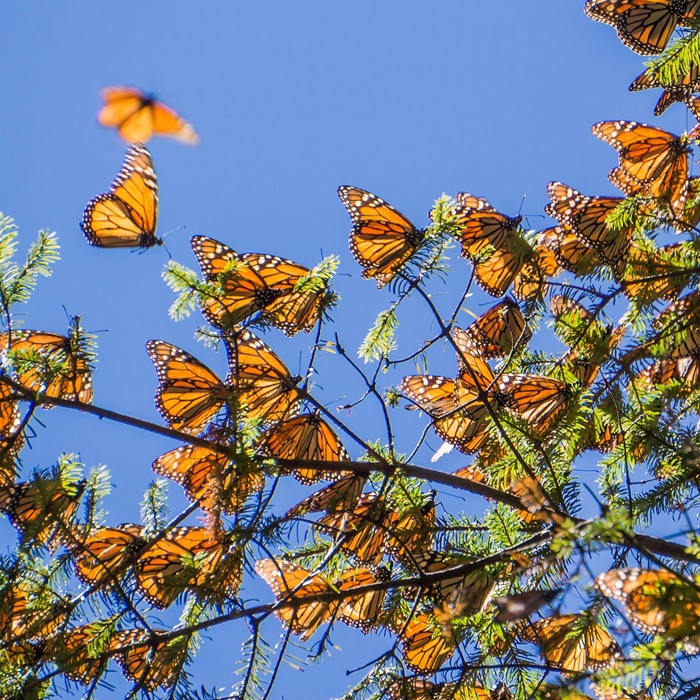
While spring migration is impressive, fall often produces the largest and most noticeable monarch movements.
Beginning in late September, butterflies from across the eastern United States and Canada begin traveling south toward Mexico. Throughout October, enormous numbers pass through Texas.
Unlike spring monarchs, these butterflies are part of the famous “super generation.”
Instead of living only a few weeks, they can survive for eight months or more. They do not reproduce immediately but instead focus entirely on reaching their wintering grounds in Mexico.
For many visitors, October offers the best opportunity to witness large concentrations of migrating monarchs.
October Is Peak Viewing Season
If you can only visit Texas once specifically to see monarch butterflies, October is generally your best choice.
Migration reaches its peak across much of the state, particularly during the first three weeks of the month. Butterflies may appear individually, in small groups, or in surprisingly large numbers depending on weather conditions.
Sunny days with light winds often produce the highest activity.
Following cold fronts, migrants sometimes gather in sheltered areas before continuing south once temperatures warm again.
Checking local migration reports can help identify periods of especially heavy movement.
South Texas Offers the Longest Viewing Season
South Texas provides one of the longest opportunities to observe monarchs.
Cities and regions including Mission, McAllen, Edinburg, Weslaco, Harlingen, Brownsville, and the surrounding Rio Grande Valley regularly see monarchs during both spring and fall migration.
Because butterflies spend more time feeding before crossing into Mexico, they may remain in these areas longer than farther north.
This extended season makes the Rio Grande Valley one of the premier destinations for monarch enthusiasts.
Visit the National Butterfly Center
One of Texas’ most famous butterfly destinations is the National Butterfly Center in Mission.
Located along the Rio Grande, the center protects more than 100 acres of native habitat specifically managed to support butterflies and other pollinators. Walking trails wind through gardens filled with nectar plants, native shrubs, and milkweed that attract monarchs during migration.
Although hundreds of butterfly species have been documented here, monarchs remain among the biggest seasonal attractions.
Because habitat conditions vary from year to year, it’s always helpful to check current butterfly reports before planning a visit.
Explore Bentsen-Rio Grande Valley State Park
Just a short distance from the National Butterfly Center sits Bentsen-Rio Grande Valley State Park.
The park forms part of the World Birding Center network and is internationally recognized for birdwatching, but its native habitat also supports impressive butterfly diversity. During migration, monarchs frequently stop here to feed among flowering plants before continuing south.
Visitors interested in both butterflies and birds often combine the two destinations into a single day.
Visit Lady Bird Johnson Wildflower Center
View this post on Instagram
In Central Texas, the Lady Bird Johnson Wildflower Center in Austin offers another excellent location.
The center’s extensive native plant gardens include numerous nectar-producing flowers and native milkweed species that attract monarchs throughout migration seasons. Educational displays explain the butterfly’s remarkable life cycle while demonstrating how native landscaping supports pollinators.
Spring and fall are especially rewarding times to visit, as both flowers and butterflies are abundant.
Explore Texas Discovery Gardens
Located inside Dallas’ historic Fair Park, Texas Discovery Gardens maintains one of North Texas’ best butterfly habitats.
Its native gardens, butterfly house, and pollinator plantings regularly attract monarchs during migration while also supporting many resident butterfly species. Educational exhibits explain conservation efforts, monarch biology, and the importance of planting native milkweed.
For visitors living in North Texas, it’s one of the easiest places to observe monarchs without traveling long distances.
Look for Native Milkweed
If your goal is seeing monarch caterpillars rather than only adult butterflies, learning to identify native milkweed is essential.
Female monarchs lay their eggs exclusively on milkweed because newly hatched caterpillars cannot survive on other plants. Texas supports more than 30 native milkweed species, including antelope horns milkweed, green milkweed, and zizotes milkweed.
Finding healthy milkweed patches dramatically improves your chances of observing eggs, caterpillars, chrysalises, and adult butterflies all in one location.
Choose Sunny, Calm Days
Weather plays a major role in butterfly activity.
Monarchs fly most actively on warm, sunny days with relatively light winds. Cool temperatures, heavy rain, or strong winds often reduce movement as butterflies conserve energy by resting in sheltered vegetation.
For the best viewing, plan to visit gardens or natural areas during late morning through early afternoon after temperatures have warmed.
Early mornings can also be rewarding for photographers because butterflies often remain still while warming their wings in the sunlight.
Aransas National Wildlife Refuge Offers Seasonal Opportunities
Although Aransas National Wildlife Refuge is best known for its wintering whooping cranes, it also provides excellent habitat for migrating monarch butterflies.
The refuge contains native coastal prairie, woodlands, and flowering plants that offer nectar during migration. Monarch numbers vary from year to year, but visitors exploring the refuge in spring or fall often encounter butterflies while hiking trails or driving the wildlife loop.
Combining butterfly watching with birding makes Aransas an excellent destination for nature enthusiasts who enjoy observing multiple species during the same trip.
Big Bend Can Surprise Butterfly Enthusiasts
West Texas may not be the first place people think of when searching for monarchs, but Big Bend National Park records hundreds of butterfly species, including monarchs during migration.
Because the park covers a wide range of elevations and habitats, butterfly activity changes throughout the year. While migration is generally lighter than in Central or South Texas, seeing monarchs against the dramatic desert landscapes creates a completely different experience.
Visitors should remember that Big Bend is a vast national park, so sightings are never guaranteed and often depend on seasonal rainfall and flowering plants.
Local Nature Centers Can Be Excellent Viewing Spots
You don’t always need to travel to a major wildlife refuge to see monarch butterflies.
Many Texas cities maintain botanical gardens, nature centers, and pollinator gardens that intentionally plant native milkweed and nectar-producing flowers. Places such as the Fort Worth Botanic Garden, Houston Arboretum & Nature Center, Mercer Botanic Gardens near Houston, and San Antonio Botanical Garden frequently attract monarchs during migration.
Checking bloom reports before visiting can improve your chances, since butterflies naturally concentrate where flowers are abundant.
Why Monarch Populations Need Our Help
Although monarch migration remains one of nature’s great spectacles, the eastern migratory population has faced significant challenges over the past several decades.
Habitat loss, declining milkweed availability, changing weather patterns, drought, and severe storms have all affected monarch numbers. Conservation organizations, landowners, public agencies, and volunteers across Texas continue working to restore habitat that supports both migrating adults and breeding populations.
Seeing monarchs in the wild is not only beautiful but also a reminder of the importance of protecting the landscapes that make this migration possible.