
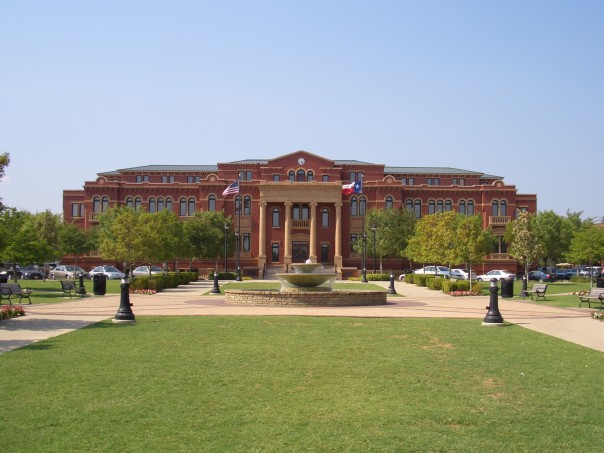
Southlake has become one of the most recognizable suburban communities in North Texas, but what makes the city stand out is not simply its wealth, schools, or real estate values. What separates Southlake from many fast-growing suburbs is how intentionally the city was planned around shared public space, walkability, and visual cohesion.
Located between Dallas and Fort Worth near DFW International Airport, Southlake spent much of its early history as a rural farming community. The city was officially incorporated in 1956, shortly after the completion of Grapevine Lake, and remained largely undeveloped until the rapid suburban growth tied to DFW Airport expansion transformed the region during the 1980s and 1990s.
As growth accelerated, city leaders and developers faced a challenge common across North Texas: how to create a suburban community that felt connected instead of fragmented by strip malls, oversized parking lots, and disconnected subdivisions. Southlake’s answer became one of the most influential suburban design projects in the region—Southlake Town Square.
Today, the city’s identity revolves around carefully designed public gathering areas, upscale but walkable commercial districts, expansive residential neighborhoods, parks, and a civic culture that places strong emphasis on community appearance and quality of life.
Southlake Town Square: The Centerpiece of the City
View this post on Instagram
Southlake Town Square is the clearest expression of the city’s planning philosophy and remains one of the most recognizable suburban mixed-use developments in Texas.
When planning began in the mid-1990s, the goal was not simply to build another shopping center. Developers and city planners wanted to create a true downtown district for a city that previously lacked a recognizable civic center. At the time, much of Southlake’s commercial development consisted primarily of isolated retail pads, chain restaurants, and suburban strip centers.
The final project was built around principles associated with New Urbanism and traditional town-center planning. Streets were arranged in a modified grid pattern inspired partly by older American downtowns such as Charleston and Savannah. Buildings were brought closer to sidewalks, blocks were shortened to improve pedestrian flow, and public parks were integrated directly into the development instead of pushed to the edges.
Unlike many suburban retail centers where visitors drive from store to store, Town Square encourages people to park once and spend time walking through the district.
That experience becomes especially visible during evenings and weekends. Families walk between restaurants and shops, children play near fountains and green spaces, and residents linger in outdoor seating areas long after finishing dinner.
Why Walkability Became So Important in Southlake
View this post on Instagram
Walkability is not usually the defining feature of suburban North Texas communities, especially in areas built during periods of rapid car-centered expansion. Southlake intentionally pushed against some of those patterns.
Town Square’s streets were designed with wider sidewalks, pedestrian-friendly crossings, landscaping, and outdoor gathering spaces meant to encourage movement on foot. Parking areas were carefully positioned to reduce the visual dominance of large surface lots, while retail storefronts were designed to face public streets instead of inward-facing shopping corridors.
The result feels noticeably different from many suburban commercial districts nearby.
Restaurants like Moxies, Mesero, Truluck’s, and Del Frisco’s Grille spill out onto patios where people regularly spend entire evenings walking between dinner, dessert, drinks, and shopping without needing to re-enter their vehicles.
Even national retailers such as Apple, Lululemon, Sephora, and Trader Joe’s integrate into the district in ways that maintain the overall pedestrian-focused layout.
Public Parks Built into Everyday Life
View this post on Instagram
One of the most distinctive parts of Southlake Town Square is how heavily public parks and green space were integrated into the overall design.
Instead of treating parks as separate recreational zones, planners built multiple smaller public spaces directly into the commercial and civic environment. Today, Town Square includes parks such as Rustin Park, McPherson Park, Central Park, Family Park, and Frank Edgar Cornish IV Park.
Rustin Park, with its pond, gazebo, and landscaping, creates one of the district’s quieter gathering spaces. McPherson Park adds walking paths and open green space near the Hilton Southlake, while Central Park serves as the focal lawn area for major community events.
These parks are not decorative afterthoughts. They actively shape how residents use the district.
Children play near fountains while parents gather nearby with coffee. Office workers eat lunch outdoors during the day. Seasonal festivals and concerts transform the parks into civic gathering areas throughout the year.
This constant public use helps Town Square feel more like a functioning downtown than a shopping complex.
Southlake’s growing network of trails and outdoor spaces also reflects the broader popularity of mountain biking and recreational trail systems across North Texas.
Community Events That Reinforce Local Identity
Southlake’s public events calendar plays a major role in how the city’s design functions socially.
Town Square regularly hosts major community events including:
- Art in the Square
- Oktoberfest Southlake
- Home for the Holidays
- Stars and Stripes Fourth of July celebrations
These events bring thousands of residents into the district while reinforcing the idea that Town Square serves as the city’s shared civic center rather than simply a retail destination.
During the Christmas season especially, the district becomes one of the busiest public gathering spaces in Northeast Tarrant County. Decorative lighting, outdoor performances, holiday markets, and public programming create an atmosphere that feels more like a traditional town center than a modern suburban development.
This constant programming is one reason Southlake’s public spaces stay active long after normal shopping hours end.
Residential Neighborhoods and the Upscale Southlake Identity
View this post on Instagram
Beyond Town Square, Southlake’s residential neighborhoods play a major role in shaping the city’s image.
Communities such as Timarron, Carillon, Clariden Ranch, and Estes Park helped establish Southlake’s reputation for upscale suburban living. Large homes, landscaped streets, and carefully maintained public infrastructure contribute heavily to the city’s visual identity.
Unlike denser urban neighborhoods, Southlake’s residential areas emphasize space and privacy while still attempting to maintain a sense of cohesion through architectural guidelines and neighborhood planning.
Tree-lined streets, walking trails, and neighborhood parks appear consistently throughout many developments, helping preserve the polished atmosphere associated with the city.
This attention to visual consistency extends even into commercial architecture, signage regulations, and landscaping requirements.
Carroll ISD and the Role of Schools in Community Design
View this post on Instagram
It is impossible to discuss Southlake’s community identity without discussing Carroll Independent School District.
Carroll ISD has become one of the city’s strongest defining institutions and a major reason families relocate to the area. The district serves most of Southlake and has consistently ranked among the top-rated public school systems in Texas.
School culture heavily influences daily life in Southlake. Friday night football games involving the Carroll Dragons regularly draw large crowds, while school events often function as broader community gatherings.
This close connection between schools and civic identity influences everything from neighborhood demand to recreational planning and public investment.
In many ways, Southlake’s community design was built around family-oriented suburban living tied directly to school-centered culture.
Trails, Parks, and Outdoor Recreation
Although Southlake is highly suburban, outdoor recreation remains an important part of city planning.
The city has expanded its network of sidewalks, pathways, and trails to improve connectivity between parks, schools, and neighborhoods.
Bicentennial Park remains one of the city’s most important recreational spaces, hosting youth sports leagues, playgrounds, tennis courts, and public events. The park regularly fills with families during weekends as baseball games, soccer matches, and outdoor activities take place simultaneously across the property.
For quieter outdoor experiences, Bob Jones Nature Center and Preserve offers wooded trails and protected green space near Grapevine Lake. The preserve feels noticeably different from Town Square’s urban-style environment and gives residents access to a more natural North Texas landscape without leaving the city.
These outdoor spaces help balance Southlake’s polished suburban environment with opportunities for recreation and nature access.
The Influence of Traditional Downtown Design
Part of what makes Southlake feel different from surrounding suburbs is that many aspects of the city were intentionally modeled after older downtown environments.
Town Square’s planners studied historic American town centers and Texas courthouse squares while developing the district. Features such as shorter blocks, connected streets, plazas, sidewalks, and mixed-use buildings were specifically chosen to create a stronger sense of place.
That design approach helped Southlake avoid feeling overly fragmented despite its suburban scale.
Instead of isolated commercial pockets separated by highways and parking lots, the city developed a recognizable center where civic, retail, dining, and public spaces overlap naturally.
Balancing Growth and Exclusivity
As Southlake has grown, the city has also faced challenges tied to rising home values, traffic pressure, and maintaining its carefully managed identity.
Housing prices have increased significantly over time, reinforcing Southlake’s reputation as one of the more affluent suburban communities in North Texas. At the same time, continued commercial growth and population increases create pressure on infrastructure and public space planning.
City leadership has generally responded by maintaining strict zoning standards, development guidelines, and long-term planning goals intended to preserve the community’s visual identity and suburban character.
That approach has helped Southlake maintain consistency even as surrounding areas continue developing rapidly.
Final Thoughts
Southlake’s community design reflects a larger shift in suburban planning across parts of North Texas. Instead of focusing solely on expansion and retail growth, the city invested heavily in creating public spaces, walkable districts, parks, and community-centered development that encourage people to spend time outside their homes and vehicles.
From the carefully planned streets of Southlake Town Square to the parks, trails, and residential neighborhoods surrounding it, the city offers a version of suburban Texas life built around appearance, convenience, and shared civic identity.
For visitors, Southlake provides one of the clearest examples of how modern suburban planning in Texas has evolved beyond traditional strip-center development. For residents, those planning decisions shape everyday life in ways that extend far beyond shopping or real estate values alone.