

Texas is home to many kinds of snakes, from harmless backyard visitors to venomous species that deserve extra caution. Because the state has deserts, forests, grasslands, wetlands, farms, suburbs, and coastal areas, snakes can be found almost anywhere.
Most Texas snakes are not dangerous to people. In fact, many are helpful because they eat rodents, insects, frogs, and other small animals. Still, knowing how to recognize common snakes can make hikes, yard work, camping trips, and everyday outdoor time safer and less stressful.
Why Snake Identification Matters in Texas
Texas has a large variety of snakes, and several venomous species live in the state. The good news is that snakes usually avoid people when they can. Most bites happen when someone accidentally steps too close, reaches into a hidden area, or tries to handle or kill the snake.
The safest rule is simple: if you are not completely sure what kind of snake it is, leave it alone. Watch from a safe distance, keep pets away, and give the snake a clear path to leave.
Western Diamondback Rattlesnake
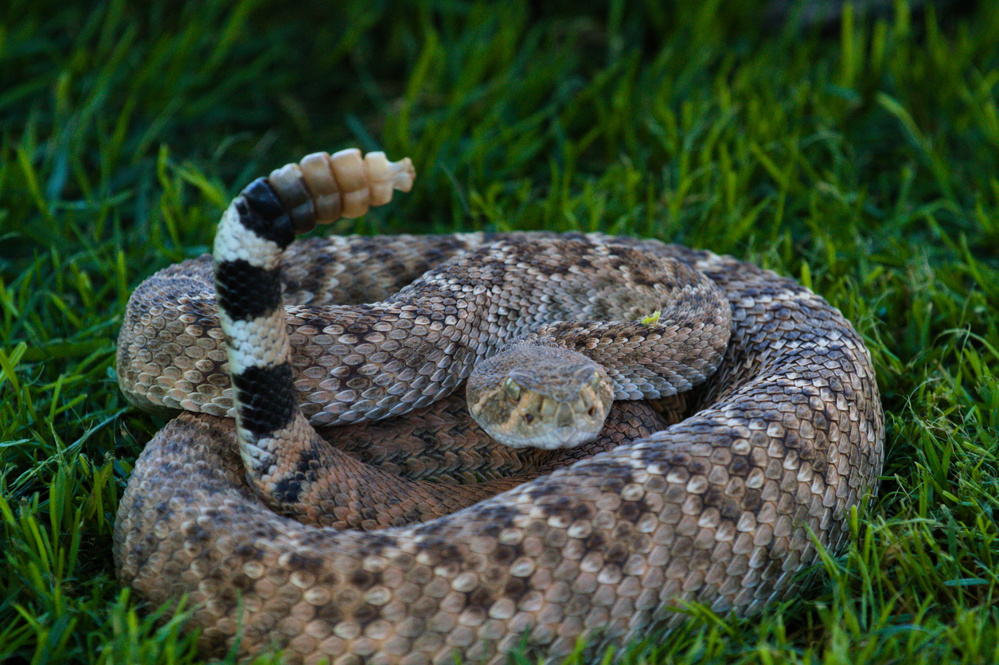
The western diamondback rattlesnake is one of the best-known venomous snakes in Texas. It is common across much of the state, especially in dry, rocky, brushy, or open areas.
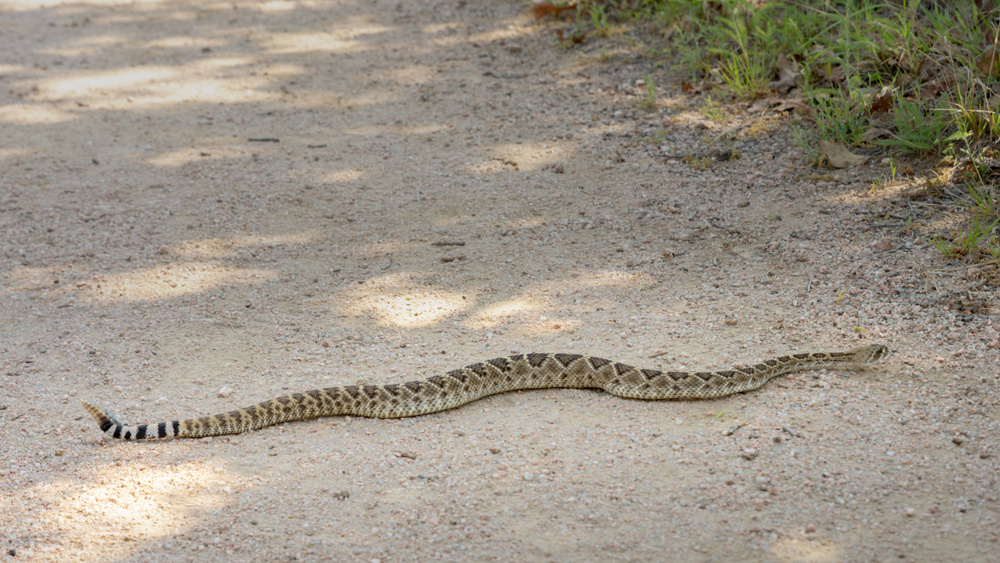
You can recognize it by the diamond-shaped markings along its back. These markings are usually dark brown or grayish brown with lighter borders. The tail often has black-and-white bands near the rattle.
Western diamondbacks are usually heavy-bodied snakes with broad heads. When threatened, they may coil, raise the front part of the body, and rattle as a warning. The rattle is useful, but it should not be your only clue. Young rattlesnakes may have small rattles, and a snake may not always rattle before striking.
Copperhead
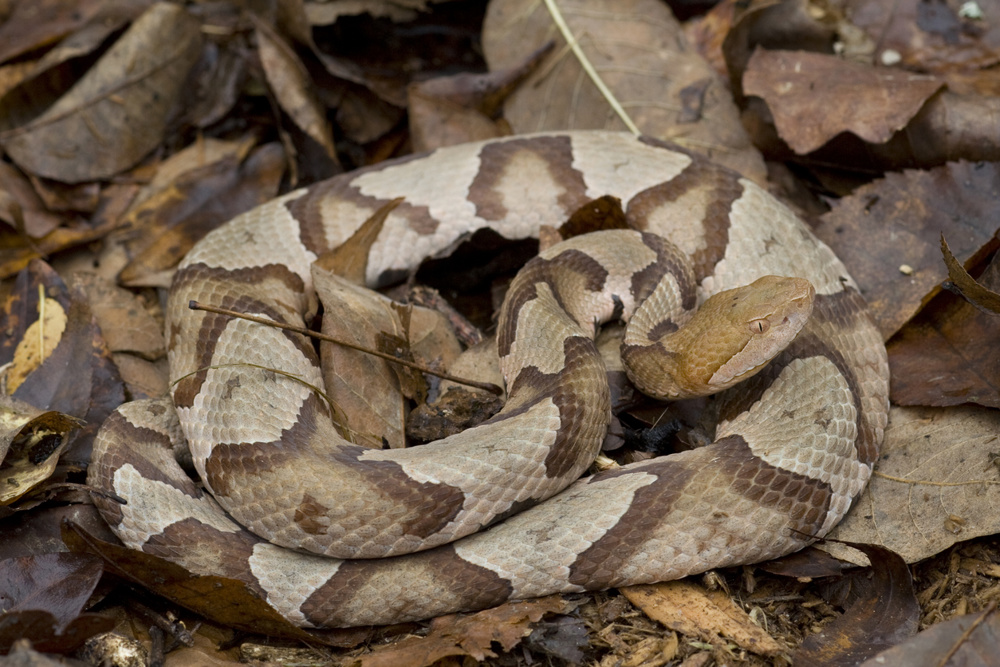
Copperheads are venomous snakes often found in wooded areas, rocky places, creek bottoms, and leafy ground cover. They are especially well camouflaged among fallen leaves.
The easiest way to recognize a copperhead is by its hourglass-shaped bands. These darker bands are usually wider on the sides of the body and narrower across the back. Their overall color may be tan, copper, light brown, or pinkish brown.
Copperheads are not usually aggressive, but their camouflage makes them easy to overlook. Many encounters happen when someone steps near one without seeing it. Wearing shoes outdoors and using a flashlight at night can reduce the risk of surprise encounters.
Cottonmouth
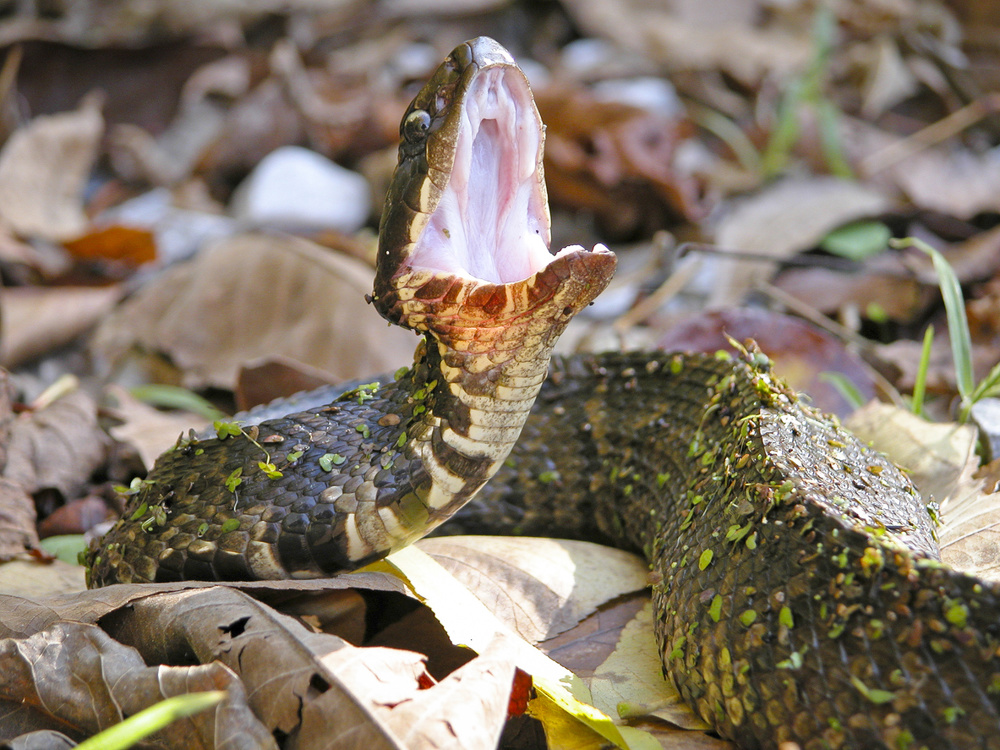
The cottonmouth, also called a water moccasin, is a venomous snake often found near water. It may live around swamps, ponds, lakes, marshes, creeks, drainage ditches, and slow-moving streams.
Cottonmouths are typically thick-bodied snakes. Their coloring can vary, but many are dark brown, olive, gray, or nearly black as adults. Younger cottonmouths often have more visible bands and may have yellowish tail tips.
One of the most famous warning signs is the open-mouth display. When threatened, a cottonmouth may hold its mouth open, showing the pale white interior that gives the snake its name. However, not every dark snake near water is a cottonmouth. Many harmless watersnakes are mistaken for them.
Texas Coral Snake

The Texas coral snake is venomous but usually secretive. It is often found under logs, leaves, loose soil, or debris. It is not commonly seen in the open compared with many other snakes.
Coral snakes have bright bands of red, yellow, and black. In Texas coral snakes, the red and yellow bands touch. Their head is small and not much wider than the neck, which can make them look less threatening than pit vipers such as rattlesnakes, copperheads, and cottonmouths.
Because several harmless snakes can look somewhat similar, color rhymes are not always the safest identification tool, especially outside the United States. In Texas, the red-and-yellow touching pattern is a useful warning sign, but the safest choice is still to avoid handling any brightly banded snake.
Texas Rat Snake
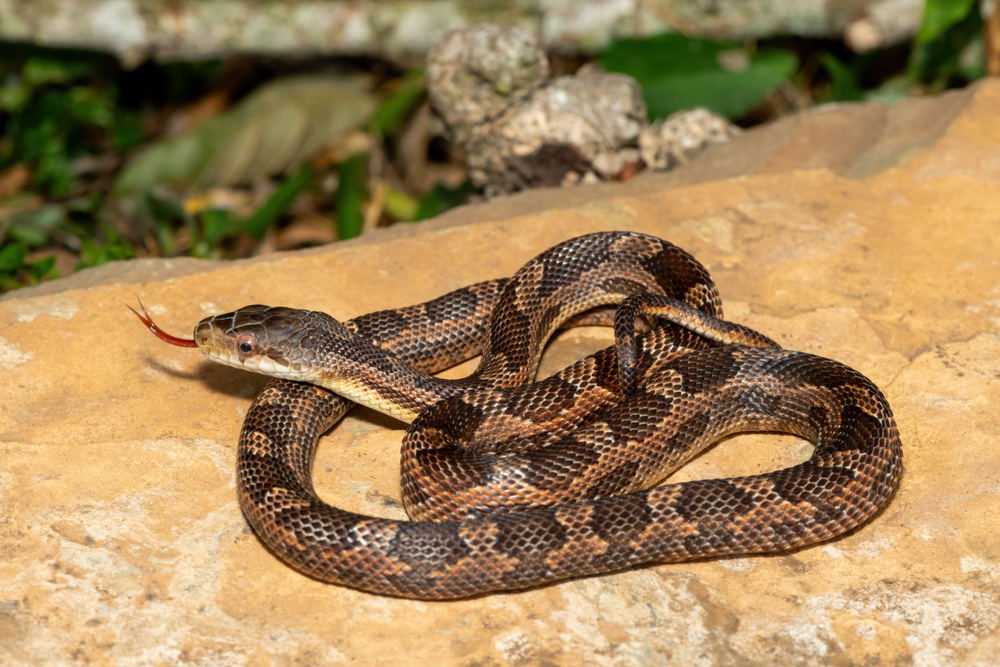
The Texas rat snake is one of the most common nonvenomous snakes in the state. It is often found around trees, fences, barns, sheds, garages, and suburban yards. It is a strong climber and may be seen near bird nests or rooflines.
Texas rat snakes can vary in color, but many have blotched patterns in gray, brown, yellowish, or olive tones. They usually have a slender to moderately thick body and a long tail. Their heads are not as broad and triangular-looking as those of many venomous pit vipers.
These snakes may act defensive when cornered. They may hiss, vibrate their tails, or strike if handled. Despite that behavior, they are nonvenomous and help control rats and mice.
Bullsnake
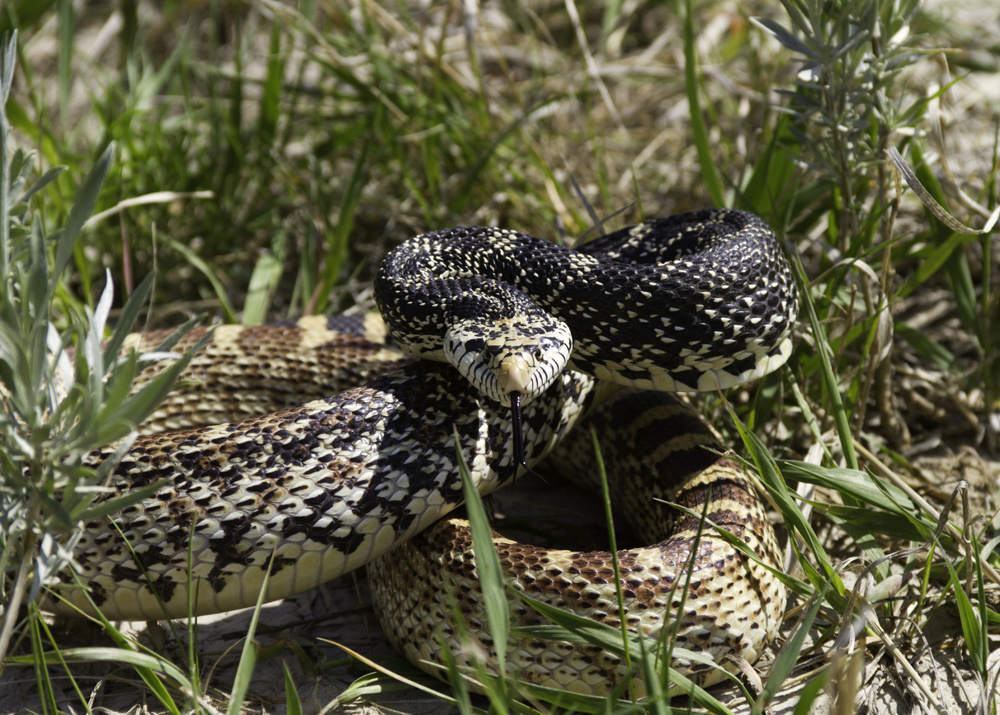
The bullsnake, also called a gopher snake in some areas, is a large nonvenomous snake found in many parts of Texas, especially open country, grasslands, farms, and dry regions.
Bullsnakes are often tan or yellowish with dark brown or black blotches. Because they can be large and may flatten their heads, hiss loudly, and vibrate their tails, they are sometimes mistaken for rattlesnakes.
Look for the lack of a rattle and the more slender body shape. Bullsnakes are useful predators of rodents and should not be killed simply because they look intimidating.
Garter Snake
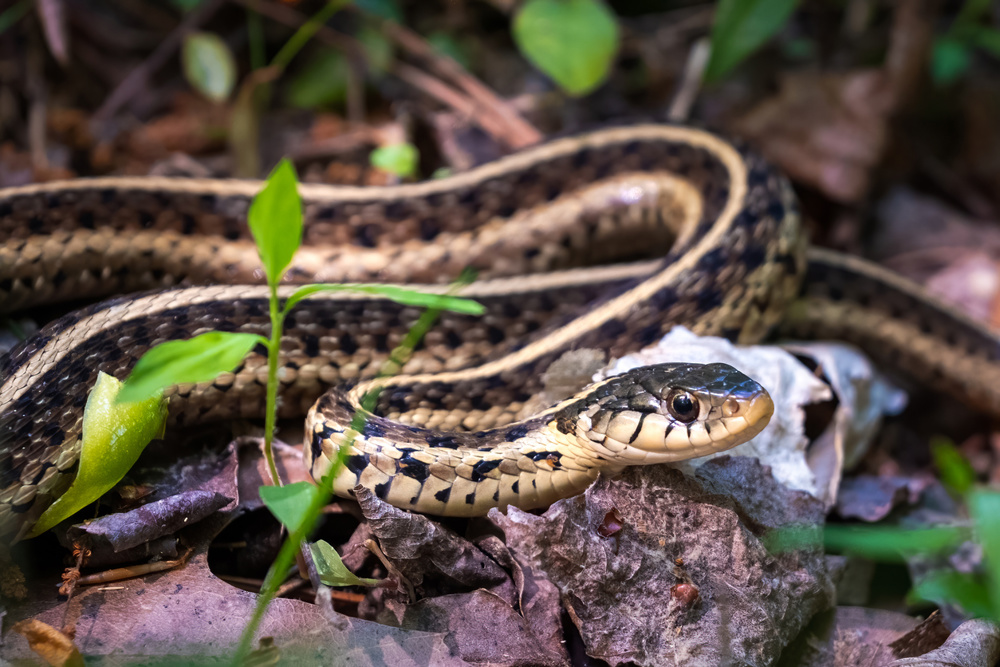
Garter snakes are common, harmless snakes found in yards, gardens, parks, damp areas, and grassy places. They are usually small to medium-sized and fairly slender.
Most garter snakes have lengthwise stripes running down the body. The stripes may be yellow, cream, greenish, or pale blue depending on the species and location. Their background color may be brown, olive, gray, or black.
Garter snakes often eat earthworms, frogs, small fish, insects, and other small prey. They may release a strong-smelling musk if picked up, but they are not dangerous to people.
Rough Green Snake
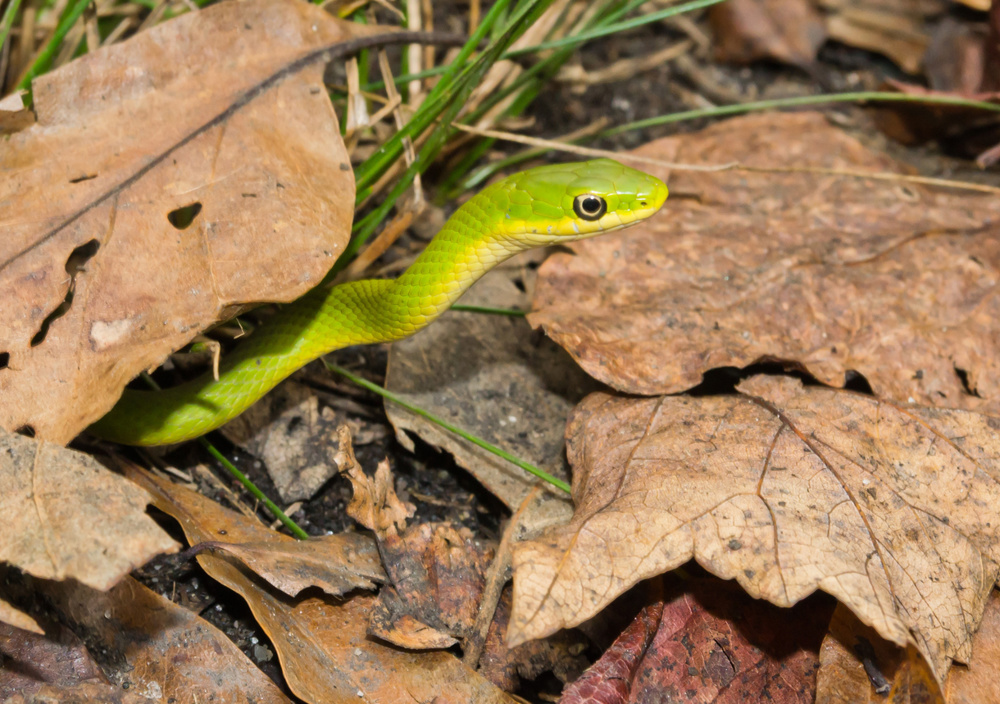
The rough green snake is easy to recognize because of its bright green color. It is a slender, nonvenomous snake often found in shrubs, vines, trees, and tall vegetation.
This snake blends in well with leaves and stems. Its belly is usually pale yellow, cream, or light green. Rough green snakes feed mostly on insects and spiders, making them beneficial in gardens and natural areas.
They are gentle compared with many other snakes and usually try to escape rather than defend themselves. Because of their color and slim body, they are one of the more distinctive snakes in Texas.
Plain-Bellied Watersnake
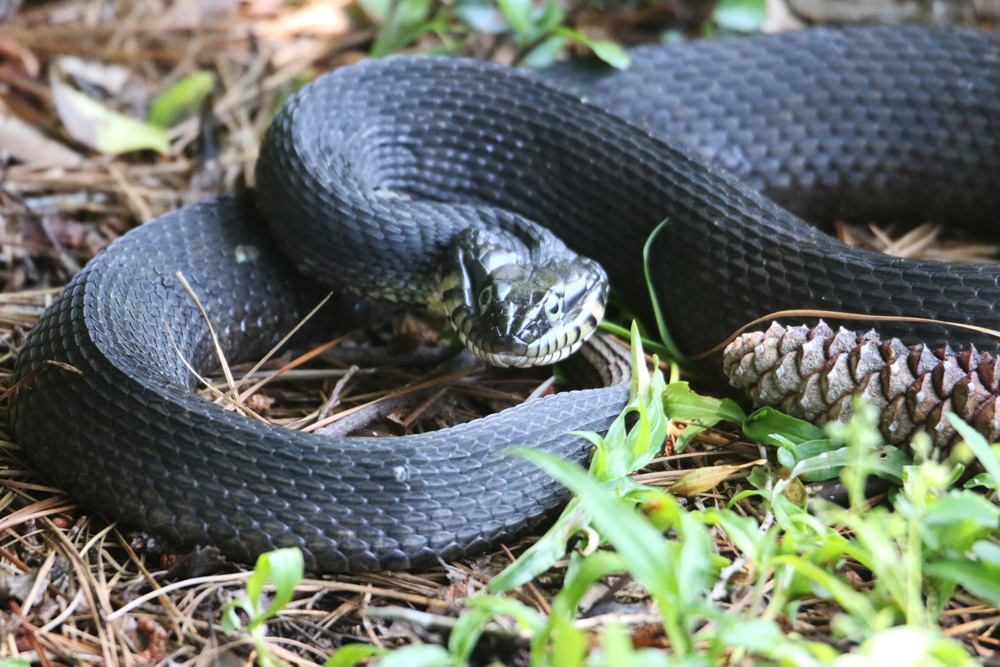
Plain-bellied watersnakes are nonvenomous snakes commonly found near rivers, lakes, ponds, and wetlands. They are often mistaken for cottonmouths because they share similar habitats.
These snakes may be brown, gray, olive, or dark-colored on top, with a plainer, lighter belly. They are strong swimmers and may bask on logs, rocks, or banks near water.
Unlike cottonmouths, plain-bellied watersnakes are not venomous. However, they can bite if handled. The best approach is to leave any watersnake alone and avoid assuming that every snake near water is dangerous.
Kingsnake
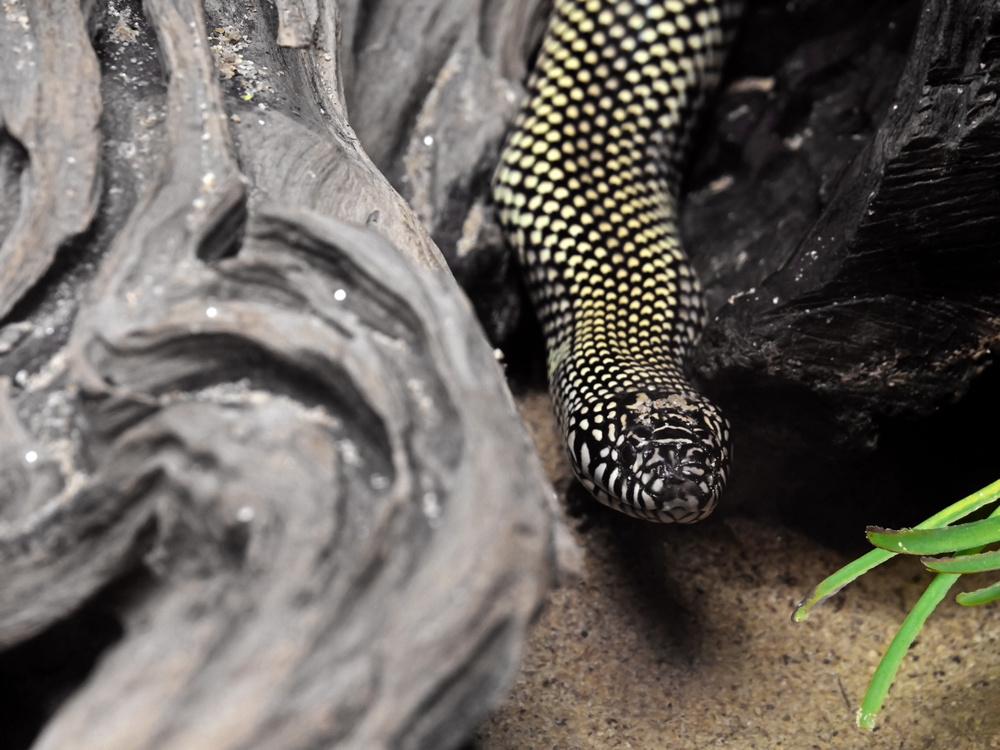
Kingsnakes are nonvenomous snakes known for eating rodents, lizards, birds, eggs, and even other snakes. Some species can eat venomous snakes, which makes them valuable in the ecosystem.
In Texas, kingsnakes may have bands, speckles, or chain-like patterns depending on the species. They often have smooth, shiny-looking scales and a strong body.
Because patterns vary, kingsnakes can be confused with other snakes. A common clue is the clean, bold patterning and relatively calm movement, though behavior alone should never be used as the only identification method.
Coachwhip
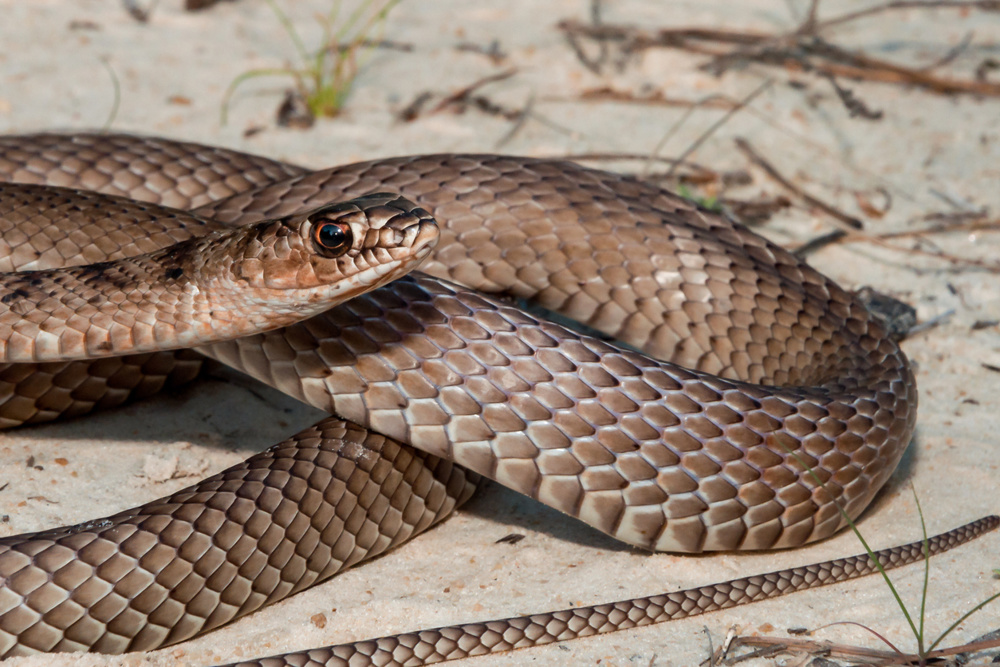
The coachwhip is a fast, slender, nonvenomous snake found in many parts of Texas. It often lives in open areas, brushland, sandy soils, grasslands, and rural roadsides.
Coachwhips can be tan, brown, reddish, black, or a mix of colors. Their long, thin body and whip-like tail give them their name. They have large eyes and are active hunters during the day.
These snakes may move quickly when startled. Because of their speed, people sometimes think they are aggressive, but they are usually just trying to escape.
How to Tell Venomous and Nonvenomous Snakes Apart
There is no single perfect rule for identifying every venomous snake in Texas. Some common clues can help, but they are not foolproof.
Many venomous pit vipers in Texas, including rattlesnakes, copperheads, and cottonmouths, have heavy bodies, broad heads, vertical pupils, and heat-sensing pits between the eyes and nostrils. Rattlesnakes also have rattles, though rattles can be broken or underdeveloped.
Coral snakes are different. They are slender, brightly banded snakes with red, yellow, and black markings. They do not have the broad head shape people often associate with venomous snakes.
Instead of relying on one feature, look at the whole snake: pattern, body shape, habitat, behavior, and location. Better yet, use a field guide or contact a local wildlife expert if you need help identifying one.
What to Do If You See a Snake
If you see a snake in Texas, the safest response is usually a calm distance. Do not try to pick it up, scare it, trap it, or kill it.
Helpful steps include:
- Step back slowly and give the snake room to leave.
- Keep children and pets away.
- Avoid reaching into tall grass, wood piles, brush, rock crevices, or outdoor storage areas without looking first.
- Use a flashlight when walking outside at night.
- Wear boots and gloves when doing yard work in snake habitat.
- Call a professional wildlife remover if a venomous snake is in a high-traffic area near your home.
If someone is bitten by a snake, seek medical help immediately. Do not cut the bite, apply ice, use a tourniquet, or try to suck out venom. Keep the person calm and still while getting emergency care.
Why Snakes Are Important
Snakes may make many people nervous, but they play an important role in Texas ecosystems. They help control mice, rats, insects, frogs, and other animals. They also serve as food for hawks, owls, roadrunners, coyotes, and other predators.
A healthy snake population is a sign of a working natural environment. Learning to recognize common species can replace fear with caution and respect.
Final Thoughts
Texas snakes are easier to understand when you know what to look for. Rattlesnakes, copperheads, cottonmouths, and coral snakes should be treated with extra caution, while many common snakes such as rat snakes, bullsnakes, garter snakes, green snakes, watersnakes, kingsnakes, and coachwhips are nonvenomous and helpful.
The best habit is simple: observe from a safe distance. Snakes do not need to be handled to be identified, and most do not want to be near people. With basic awareness, Texans can share the outdoors with snakes safely and responsibly.