

Texas is full of outdoor surprises. Walk through a shaded park after rain, step into a wooded trail, or look closely at an old fallen log, and you may notice mushrooms popping up in all kinds of shapes, colors, and sizes.
Some look like tiny umbrellas. Others look like shelves, balls, stars, coral, or bright orange fans. Mushrooms are easy to overlook, but once you start noticing them, they become one of the most interesting parts of the Texas outdoors.
This article is meant for learning and observation. Wild mushrooms can be difficult to identify, and some toxic species look similar to edible ones. Never eat a wild mushroom unless it has been identified with complete confidence by a qualified expert.
Why Texas Has So Many Mushrooms
Texas has a wide range of habitats. East Texas has pine forests and hardwood bottomlands. Central Texas has oak woodlands and limestone soils. Coastal areas have humid conditions, while North Texas and the Hill Country can produce mushrooms after seasonal rains.
Mushrooms usually appear when moisture, temperature, and food sources line up. That is why many people spot them after rainstorms, during mild weather, or in damp shaded areas.
The part we usually call a mushroom is only the fruiting body. Most of the fungus lives hidden underground, inside wood, or within decaying plant matter. When conditions are right, the fungus sends up mushrooms to release spores.
What Mushrooms Do in Nature
Mushrooms play an important role outdoors. Many break down dead leaves, fallen branches, and old logs. This helps return nutrients to the soil.
Other fungi form partnerships with trees and plants. These fungi connect with roots and help plants take in water and nutrients. In return, the fungi receive sugars from the plant.
Some fungi grow as parasites on weakened trees or plants. While that may sound harmful, it is part of the natural cycle. Fungi help recycle old growth and make room for new life.
Morels
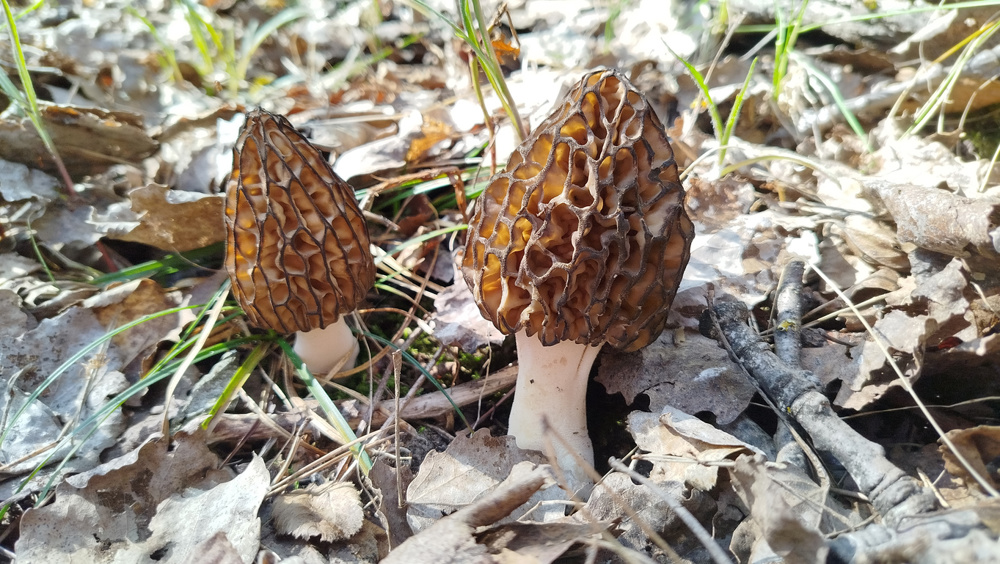
Morels are among the most famous wild mushrooms in North America. They have a honeycomb-like cap with deep pits and ridges. In Texas, they are more likely to appear in the cooler parts of spring, especially after rain.
You might spot them near hardwood trees, along creek bottoms, or in areas with rich soil. They can be tan, yellowish, gray, or dark brown depending on the species and age.
Morels are well known among foragers, but they also have dangerous lookalikes. False morels can cause serious illness. A true morel is hollow inside from the top of the cap down through the stem, but that detail alone should never be the only point used for identification.
For casual hikers, morels are best appreciated as one of spring’s stranger-looking forest finds.
Chanterelles
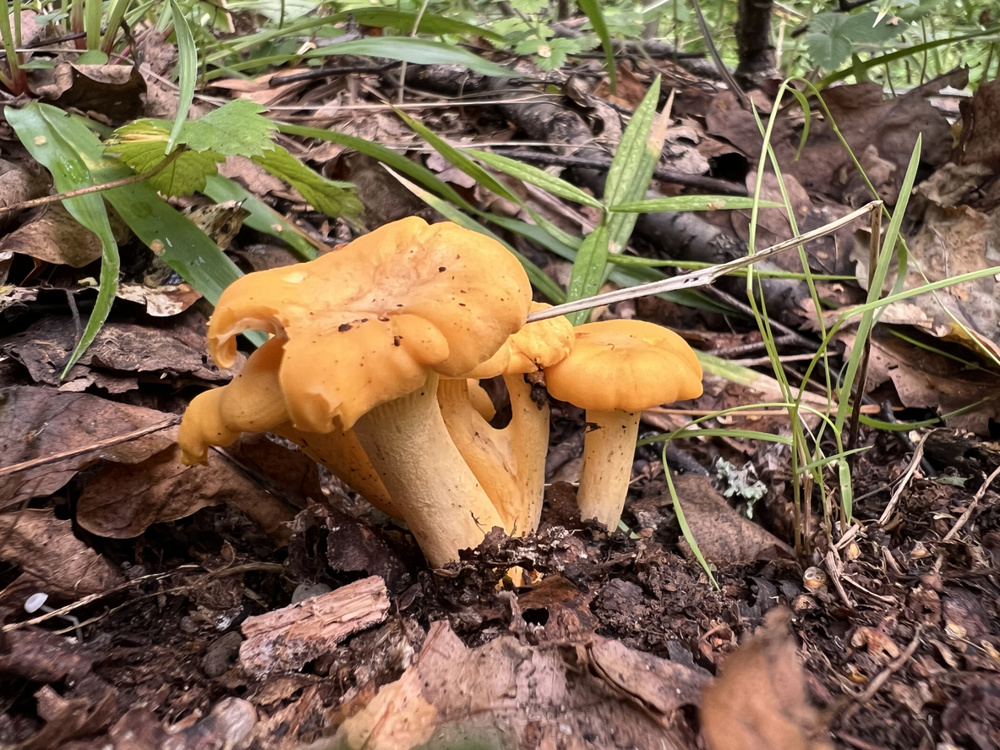
Chanterelles are bright, eye-catching mushrooms that may appear in parts of Texas during warm, wet periods. They are often yellow, orange, or golden in color.
One feature that makes chanterelles interesting is their shape. Many have wavy caps and blunt ridges running down the stem. These ridges are often called false gills because they are not thin, blade-like gills.
Chanterelles often grow near trees because they have a relationship with plant roots. You may see them in wooded areas, especially where oak or other hardwood trees grow.
A major caution is the jack-o’-lantern mushroom, which can look somewhat similar to beginners. Jack-o’-lantern mushrooms are toxic and often grow in clusters on wood or buried roots. This is one reason wild mushroom identification should be handled with care.
Oyster Mushrooms
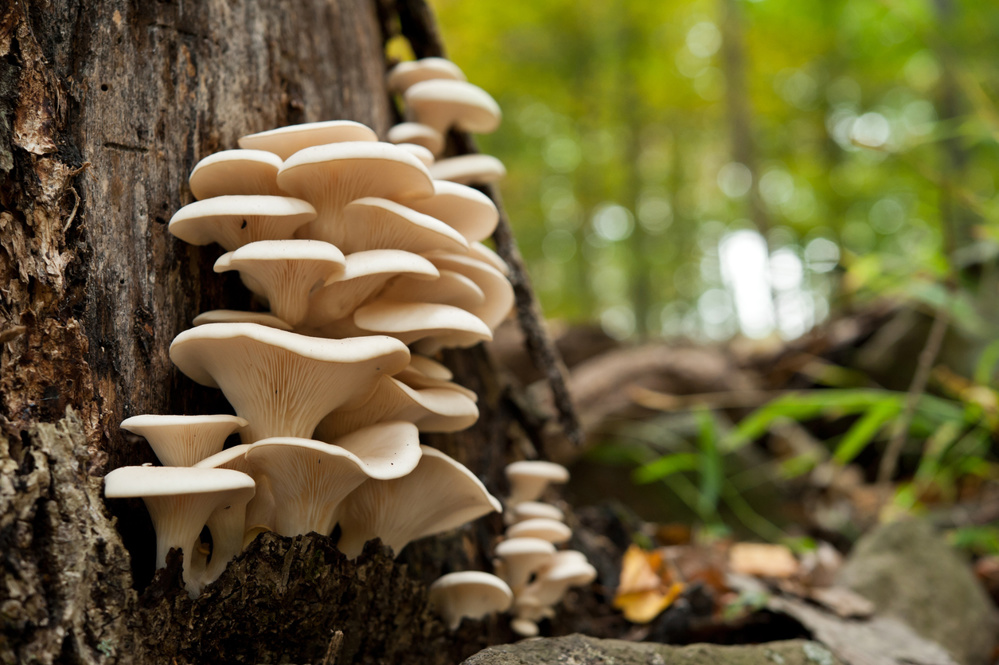
Oyster mushrooms often grow on dead or dying wood. They usually have broad, fan-shaped caps that can be white, gray, tan, or light brown.
You may spot them on logs, stumps, or weakened trees after rain. Their gills usually run down the short stem or the place where the mushroom attaches to wood.
Oyster mushrooms help break down wood and return nutrients to the environment. They can appear in overlapping clusters, giving them a layered look.
Although oyster mushrooms are widely known, wild specimens still require careful identification. Some mushrooms that grow on wood can cause illness, and age, location, smell, and spore color may all matter.
Turkey Tail
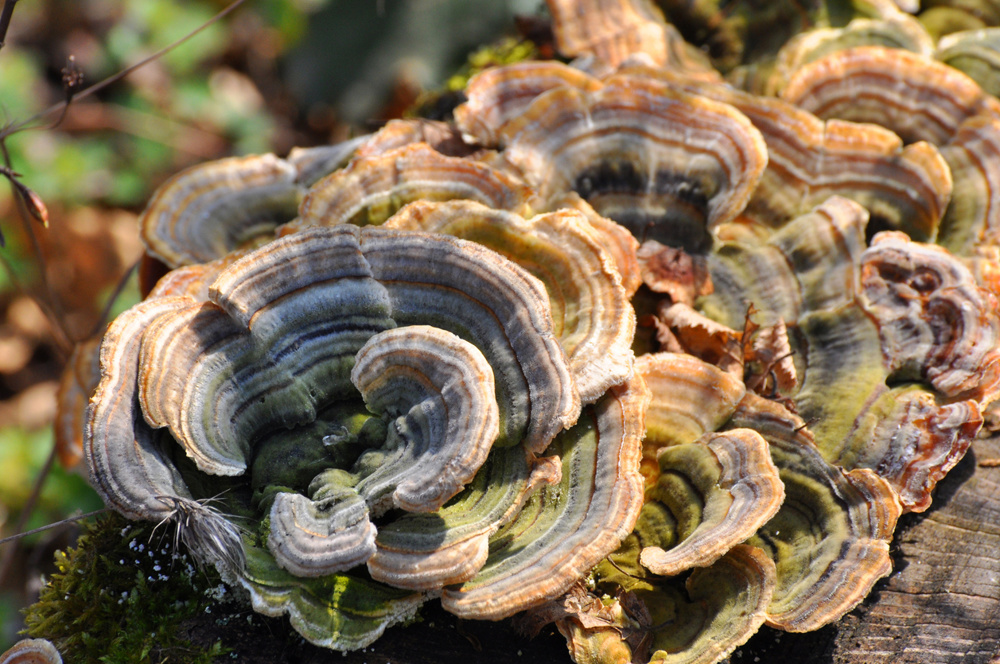
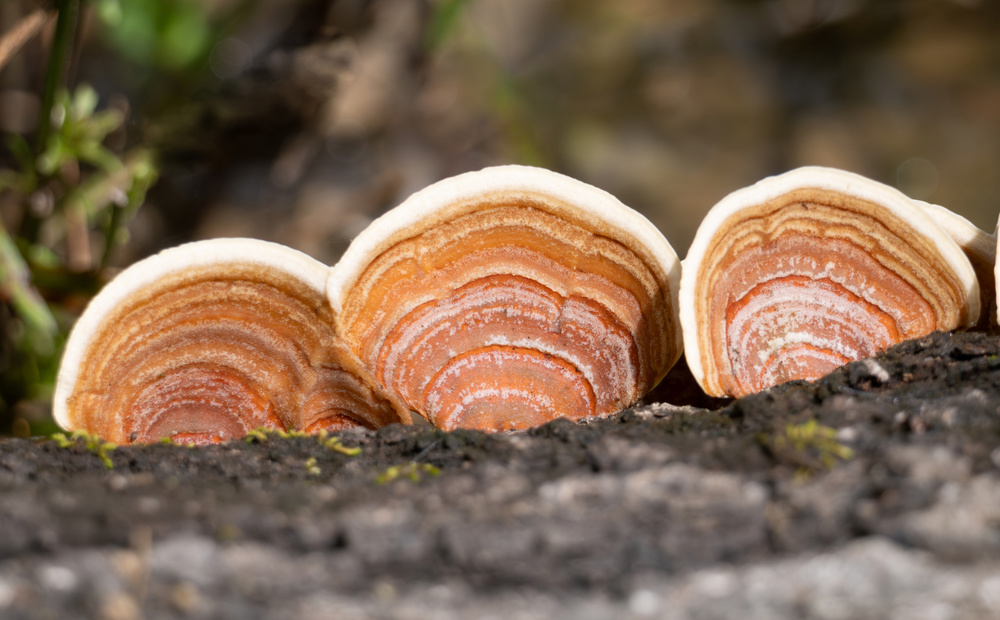
Turkey tail is a common bracket fungus that grows on dead wood. It does not look like a typical umbrella-shaped mushroom. Instead, it forms thin, fan-shaped layers that spread across logs and stumps.
Its name comes from its colorful bands, which can look like the pattern on a turkey’s tail feathers. The bands may include shades of brown, gray, cream, blue, or orange.
Turkey tail is especially common in wooded areas where fallen branches and old logs are present. It helps decompose wood and is one of the easier fungi to notice once you know what to look for.
There are several lookalike bracket fungi, so it is best viewed as a nature observation rather than something to collect.
Chicken of the Woods
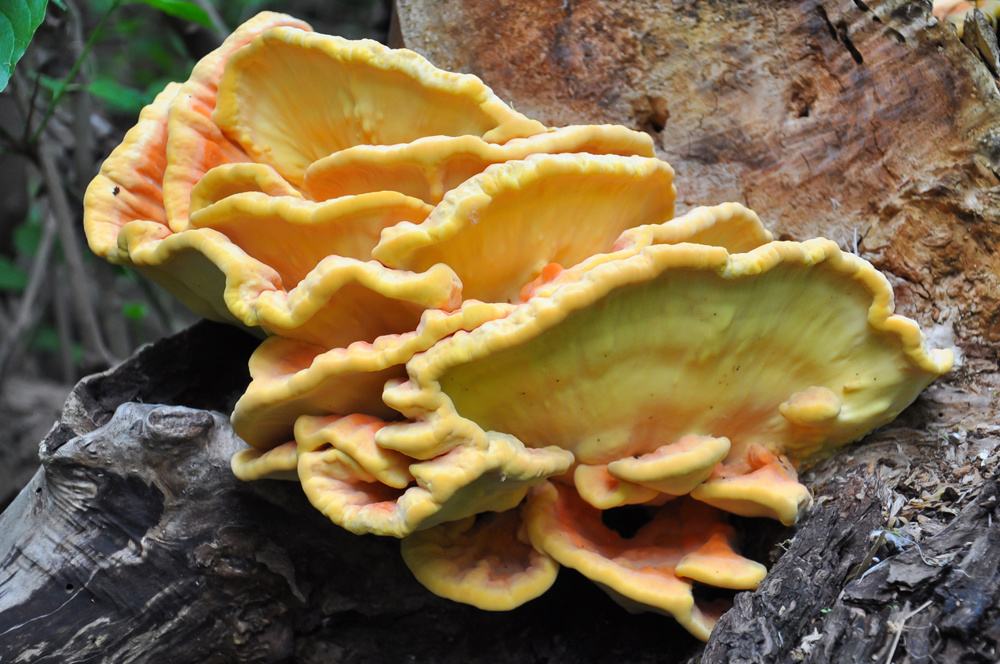
Chicken of the woods is a bright shelf fungus that can appear on trees, stumps, or logs. It often has bold orange and yellow coloring, making it one of the more noticeable mushrooms outdoors.
It grows in layered shelves rather than with a cap and stem. Fresh growth may look soft and thick, while older growth becomes tougher and faded.
This mushroom is often associated with hardwood trees, though related species can grow on different types of wood. Its bright color can make it exciting to find, especially on a shaded trail.
Even with a recognizable mushroom, caution matters. The tree it grows on, its age, and the exact species can affect safety. People can also react differently to wild mushrooms.
Puffballs
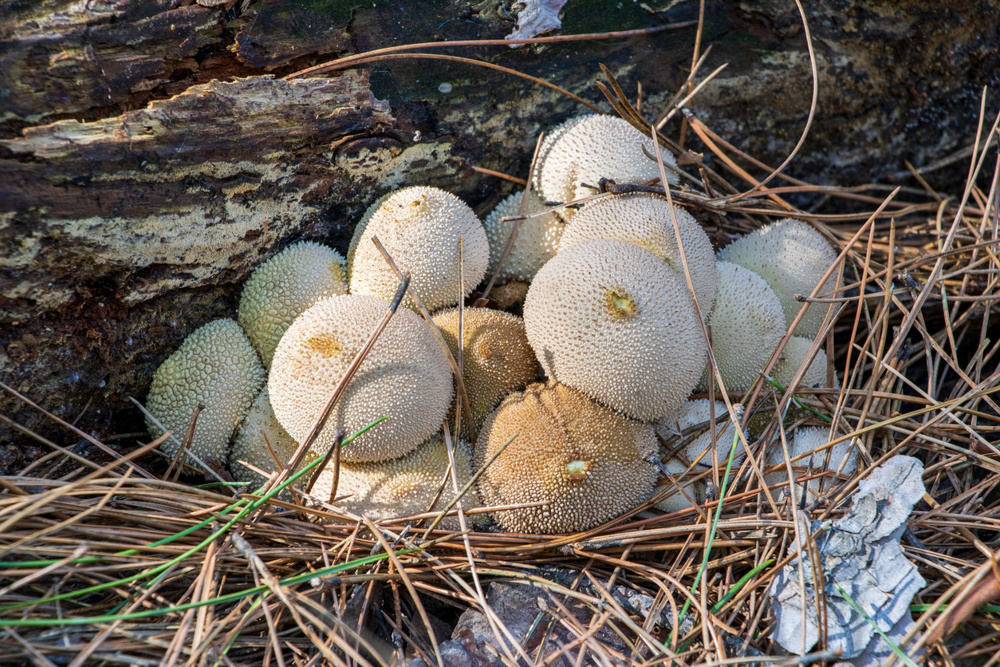
Puffballs are round or pear-shaped mushrooms that may appear in lawns, fields, open woods, and grassy areas after rain. Young puffballs are often white inside. As they mature, they turn powdery inside and release spores through openings or cracks.
Some puffballs are small. Others can grow quite large. Giant puffballs, when present, can look like pale balls sitting on the ground.
Puffballs are interesting because they do not have the usual cap, stem, and gill structure. Their spores develop inside the rounded body.
The big safety concern is that some young toxic mushrooms can look like small puffballs before their caps and stems fully develop. Cutting one open may reveal developing gills or other internal structures. Because of that risk, puffballs should never be eaten without expert confirmation.
Earthstars
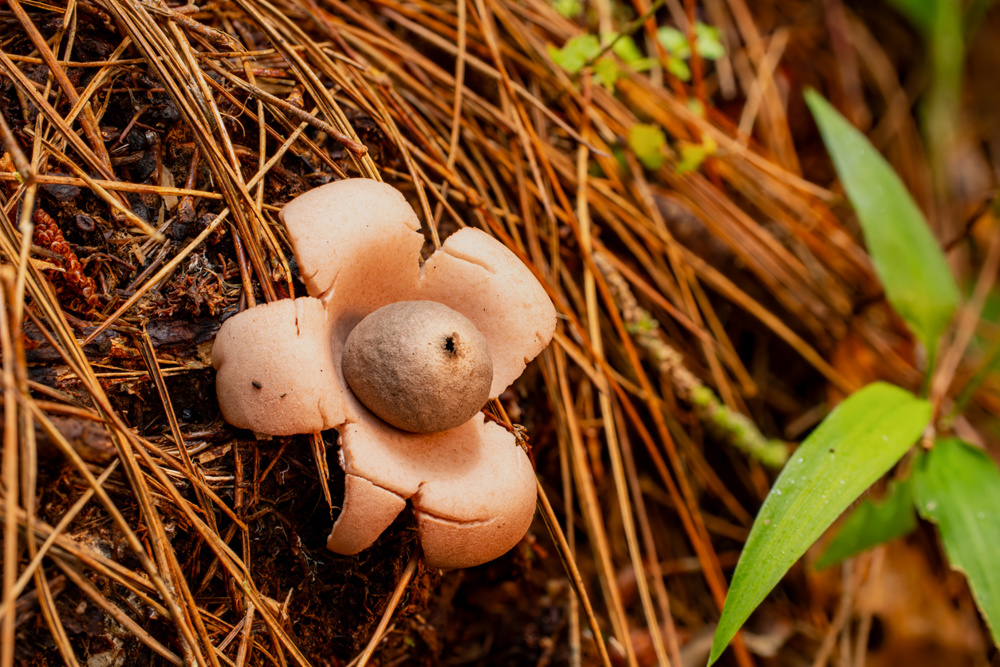
Earthstars are some of the most unusual mushrooms you might spot in Texas. At first glance, they can look like small stars scattered on soil or leaf litter.
The outer layer splits open and curls back into pointed rays. In the center sits a round spore sac. When raindrops or pressure hit the sac, spores puff out.
Earthstars are usually small, so they are easy to miss. Look for them in sandy soil, dry woods, or areas with leaf litter after damp weather.
They are a good reminder that mushrooms come in far more forms than the classic cap-and-stem shape.
Stinkhorns
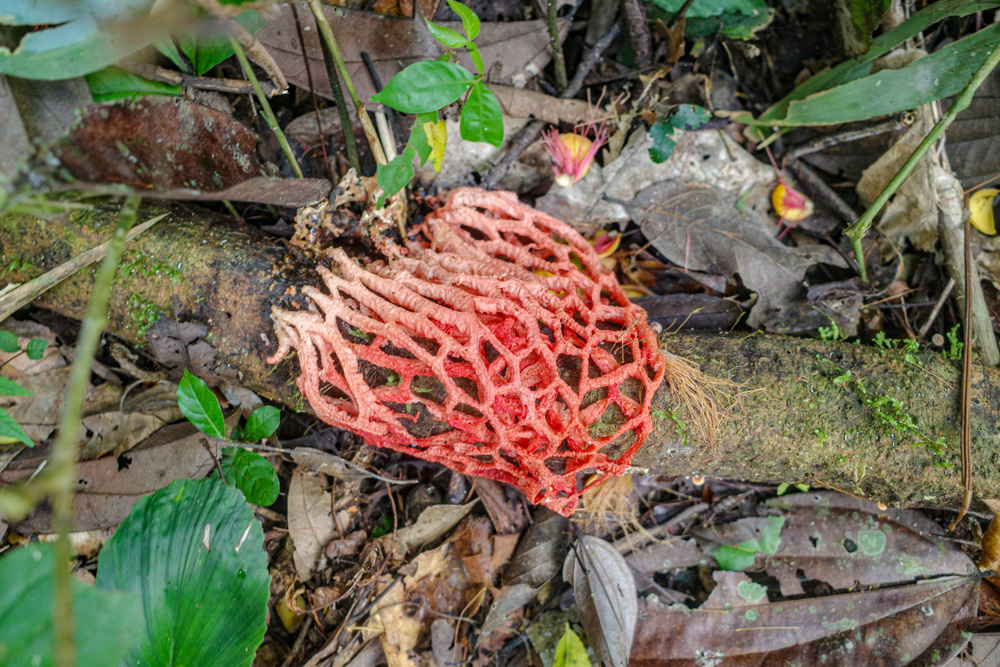
Stinkhorns are hard to ignore. They often appear suddenly after rain and can have strange shapes, bright colors, and a strong odor.
The smell is part of their survival strategy. Instead of relying only on wind to spread spores, stinkhorns attract flies and other insects. The insects visit the sticky spore mass and carry spores away.
Some stinkhorns look like narrow columns. Others have net-like skirts or cage-like forms. Their colors can include white, orange, red, or brown.
They may not be pretty in the usual sense, but they are fascinating. They show how creative nature can be when it comes to reproduction and survival.
Inky Caps
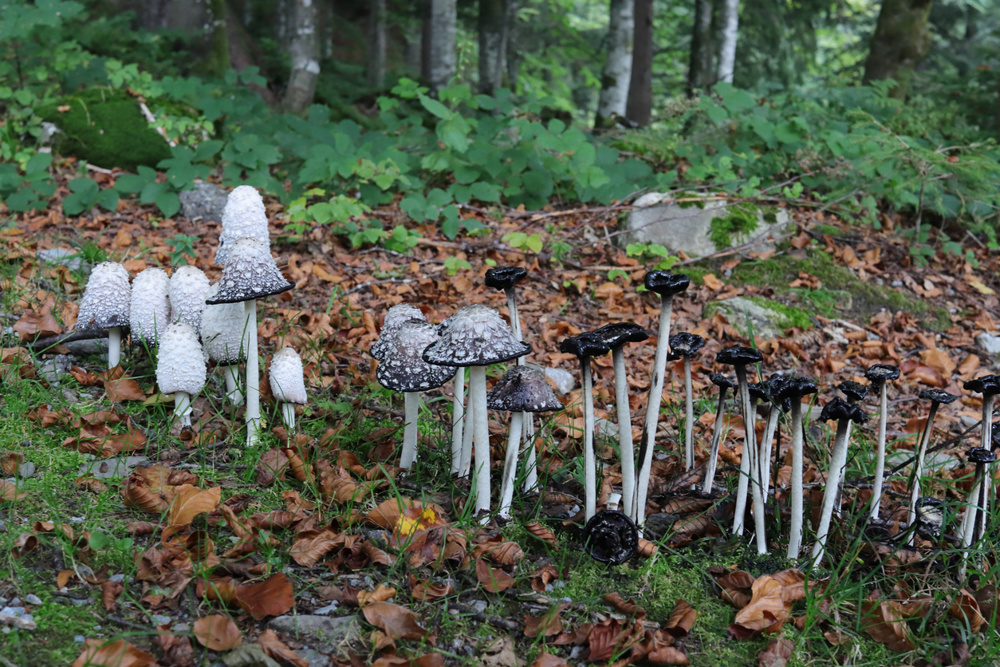
Inky caps are delicate mushrooms that often appear in lawns, disturbed soil, wood chips, or near buried wood. Some species have bell-shaped caps with thin gills.
One of their most interesting traits is how they break down. Many inky caps dissolve into a dark, ink-like liquid as they mature. This process helps release spores.
Because they can appear overnight and disappear quickly, they are fun to notice during morning walks. A patch that looks fresh at sunrise may look melted by afternoon.
Some inky caps have complicated safety concerns, especially when alcohol is involved with certain species. They are best left alone unless studied with expert guidance.
Boletes
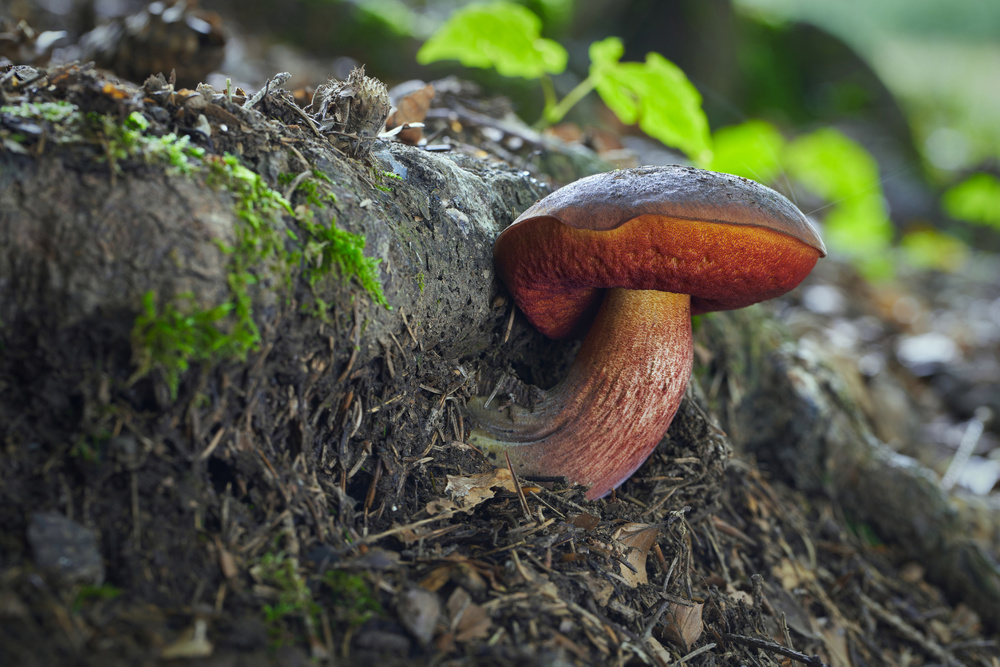
Boletes often look like classic mushrooms from above, but many do not have gills underneath the cap. Instead, they have a spongy surface made of tiny pores.
In Texas, boletes may appear near trees after rain. They can be brown, red, yellow, tan, or other earthy colors. Some stain blue when bruised, which can be a useful clue for identification.
Boletes are a large and varied group. Some are prized by experienced mushroom hunters. Others are bitter, unpleasant, or potentially harmful.
For outdoor observers, the pore surface makes boletes a good group to learn about. Flip the cap gently with a stick or look from the side without picking it, and you may see the sponge-like underside.
Amanitas
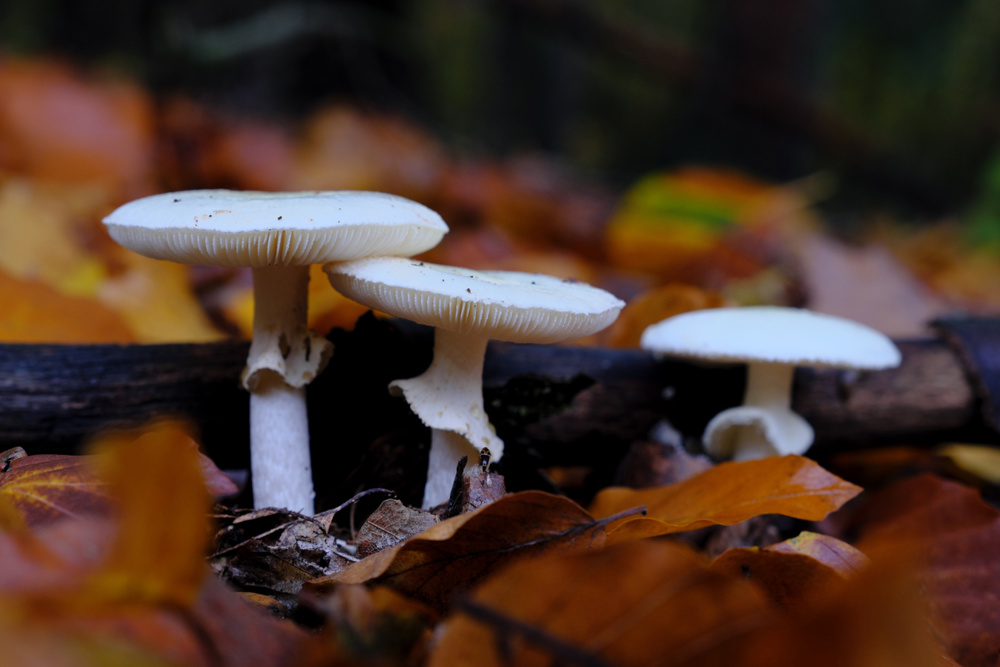
Amanitas are among the most important mushrooms to learn about because the group includes some highly toxic species. Some amanitas are beautiful, with smooth caps, pale gills, rings around the stem, and a cup-like structure at the base.
The problem is that beauty can be misleading. Several dangerous amanitas can look clean, simple, and harmless. Some may appear in yards, parks, or wooded areas near trees.
A key feature in many amanitas is the base of the stem. It may sit in a cup or bulb, sometimes hidden under soil or leaf litter. This is one reason casual identification from a photo can be risky.
If you are learning mushrooms in Texas, amanitas deserve respect. They are worth observing, photographing, and studying, but they should never be handled as food by beginners.
Jack-o’-Lantern Mushrooms
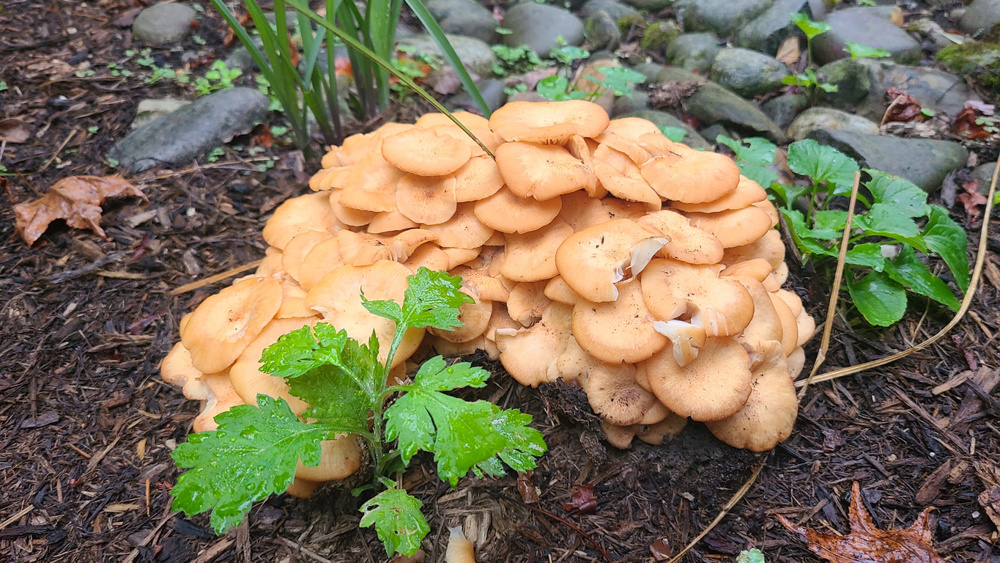
Jack-o’-lantern mushrooms are bright orange mushrooms that often grow in clusters on wood, stumps, or buried roots. They can be found in wooded areas and sometimes near trees in yards.
They are important because beginners may confuse them with chanterelles. Jack-o’-lantern mushrooms have true gills and often grow in tight clusters. Chanterelles usually have blunt ridges instead of thin gills.
Some jack-o’-lantern species are known for a faint glow from their gills in very dark conditions, though this glow is not always easy to see.
These mushrooms are toxic and can cause serious stomach upset. Their bright color makes them attractive to look at, but they should stay in place.
Green-Spored Parasol
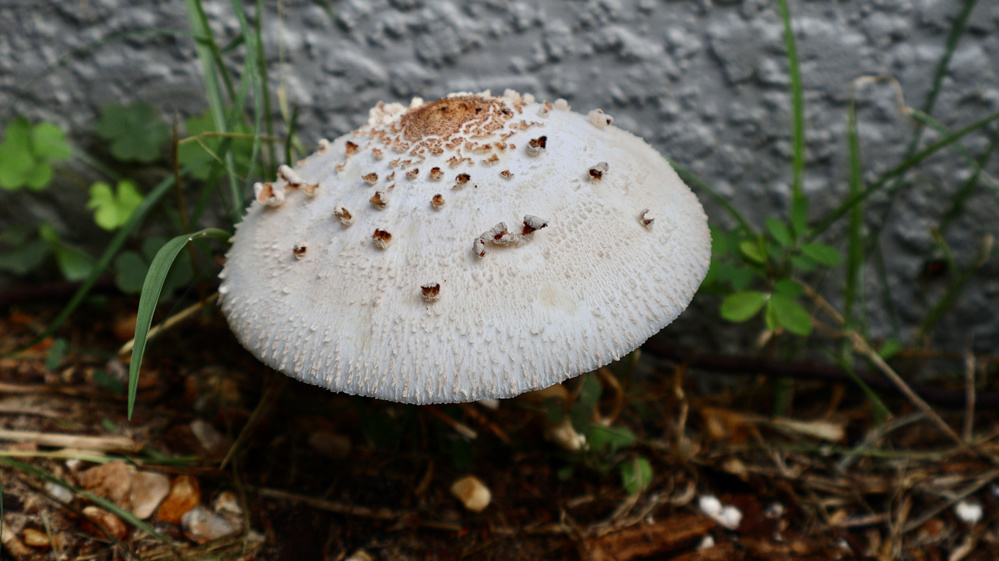
The green-spored parasol is a mushroom that may appear in lawns, parks, pastures, and grassy areas. It often has a large cap with brownish scales and a tall stem.
This species is one of the most common causes of mushroom poisoning in North America. Part of the problem is that it looks like some edible parasol mushrooms.
A mature green-spored parasol gets its name from its greenish spore print. That feature may not be obvious just by looking at it in the grass.
If a large, umbrella-like mushroom appears in a Texas lawn after rain, admire it with caution. It may look like something from a storybook, but it could still make someone very sick.
Where You Might See Mushrooms in Texas
Mushrooms can appear almost anywhere that moisture and organic matter are present. Good places to spot them include:
- Shaded trails after rain
- Fallen logs and old stumps
- Leaf litter under hardwood trees
- Lawns and parks
- Mulched garden beds
- Creek banks and damp wooded areas
Different mushrooms prefer different habitats. Some grow from soil. Some grow only on wood. Others appear to grow from the ground but are actually attached to buried roots.
When Mushrooms Are Most Likely to Appear
In Texas, mushrooms often show up after rain, especially when temperatures are mild. Spring and fall can be productive seasons in many areas, but summer rains can also bring sudden growth.
East Texas, with its higher humidity and forested land, often supports more visible mushroom activity than drier regions. Still, mushrooms can surprise you in many parts of the state when conditions are right.
A dry lawn may seem empty for weeks. Then, after a soaking rain, mushrooms can appear almost overnight.
Safe Mushroom Watching Tips
You do not need to pick mushrooms to enjoy them. In fact, leaving them in place helps them release spores and continue their role in the ecosystem.
For safe mushroom watching:
- Take photos from several angles
- Note the habitat, such as soil, wood, grass, or leaf litter
- Avoid touching your face after handling any wild mushroom
- Keep children and pets from eating unknown mushrooms
- Do not rely on apps, photos, or guesses for edible identification
- Contact Poison Control or a medical professional if someone eats a wild mushroom and feels sick
Mushroom identification can involve cap shape, gills, pores, spore color, bruising, smell, habitat, season, and microscopic traits. A single photo rarely tells the full story.
Why Mushrooms Are Worth Noticing
Mushrooms add mystery and beauty to the Texas outdoors. They also tell a story about what is happening beneath your feet.
A flush of mushrooms may show that soil is moist, wood is decomposing, or tree roots are connected with active fungi. Even a tiny mushroom in a lawn is part of a larger natural system.
Once you start noticing mushrooms, hikes and backyard walks become more interesting. A fallen log becomes a miniature habitat. A damp patch of grass becomes a place to look closer. A rainy week becomes a chance to see what has quietly been waiting underground.
Final Thoughts
Texas mushrooms come in many forms, from golden chanterelles and shelf-like turkey tails to strange stinkhorns and star-shaped earthstars. Some are beautiful. Some are odd. Some are dangerous.
The safest way to enjoy them is through observation, photography, and learning. Wild mushrooms are not something to taste on a guess.
Next time you are outdoors after a rain, slow down and look near the ground. You may find a whole world of fungi hiding in plain sight.