

When most people think of the Civil War, their minds go straight to famous battlefields in places like Virginia, Pennsylvania, or Tennessee. But Texas has its own share of history from that era, and you can still walk the ground where soldiers clashed. From skirmishes along the Gulf Coast to campaigns that stretched across the plains, Texas played a unique role in the conflict.
Today, several of those battlefields are preserved, offering visitors a chance to explore the sites, learn the stories, and get a feel for how the war touched the Lone Star State. Whether you’re a history buff or just curious about Texas’ past, these locations bring the Civil War era to life in a way that books and documentaries can’t.
The Historic Battle of Sabine Pass: A Confederate Victory Against the Odds
One of the most remarkable Civil War stories in Texas happened at Sabine Pass, a narrow channel along the Gulf Coast near the Louisiana border. On September 8, 1863, Union forces launched an ambitious plan to invade Texas by water. Their fleet included four gunboats and nearly two dozen transport ships carrying about 5,000 troops. The goal was to seize control of the Sabine River and open a path into the state.
Defending the area was a much smaller Confederate force — just 47 men of the Davis Guards, an Irish-American unit led by Lieutenant Richard “Dick” Dowling. Stationed at Fort Griffin, they had six cannons, some basic fortifications, and not much else. Outnumbered more than a hundred to one, the Confederates seemed destined to be overwhelmed.
But Dowling’s men had prepared carefully. They practiced their artillery skills daily and knew the local terrain better than anyone. When the Union fleet advanced, the Davis Guards unleashed accurate cannon fire that disabled two gunboats and forced the rest of the invasion force to retreat. The result was stunning: the Confederates captured hundreds of prisoners without losing a single man of their own.
This small but decisive victory was celebrated across the South and gave Texas a sense of security for the remainder of the war. Today, visitors can explore the Sabine Pass Battleground State Historic Site, where a monument honors the Davis Guards and their improbable success. The site combines open green space with historical markers, giving a glimpse into the moment when a handful of men stopped a full-scale invasion.
Palmito Ranch Battlefield: The Final Civil War Clash on Texas Soil

Image: Pi3.124, Battle of Palmito Ranch marker, CC BY-SA 3.0
Even after Robert E. Lee’s surrender at Appomattox, conflict continued. The Civil War’s final battle occurred at Palmito Ranch near Brownsville, on May 12–13, 1865—a full month after official surrender.
Though there’s no full visitor center, interpretive signs at the Palmito Ranch Battlefield Site explain the unusual timing and context of this last clash. The area preserves this overlooked endnote of America’s bloodiest conflict, fought even after hostilities should have ceased.
Though rustic and undeveloped, this open battlefield offers a quiet, contemplative glimpse into this remarkable historical footnote. It’s one of the few battle sites left nearly untouched by modern development.
Galveston’s Naval Confrontations: The First and Second Battles
Galveston was one of the most important ports on the Texas coast during the Civil War, and both the Union and Confederacy knew it. Its strategic position made it a target for control, leading to two major confrontations in 1862 and 1863.
The First Battle of Galveston took place on October 4, 1862, when Union naval forces sailed into the harbor. With little resistance, they quickly seized control of the city and established a blockade. For the Confederacy, losing Galveston was a serious blow, as it cut off a vital supply line and gave the Union a foothold on the Texas coast.
But the Confederates weren’t willing to give up the port so easily. Just three months later, on January 1, 1863, they launched a daring counterattack in what became known as the Second Battle of Galveston. Confederate forces under General John B. Magruder combined land troops with two “cottonclad” steamers — riverboats reinforced with bales of cotton to protect them from Union fire. In a dramatic fight, they drove the Union fleet out of the harbor and reclaimed the city. This Confederate victory restored Galveston to Southern control, and the port remained in their hands until the end of the war.
Today, Galveston embraces its Civil War history with historical markers, museum exhibits, and preserved architecture from the 19th century. Walking along the waterfront or through the Strand Historic District, you can imagine the city as it was during those turbulent years, when ships battled for control of the Gulf and the fate of Texas trade routes hung in the balance.
Today, historic markers scattered across Galveston’s Strand District and harborfront commemorate the engagements. Nearby, the Galveston Seawall, built decades later, offers scenic walking access to this historic coast.
Fort Brown: A Border Stronghold Throughout the Conflict
In Texas’s southernmost corner, Fort Brown in Brownsville played a pivotal role in Civil War logistics and defense. Switching hands between Union and Confederate forces, its location near the Rio Grande made it vital for cross-border trade and military operations.
Explore features such as:
-
Preserved earthworks and historic markers
-
Repurposed university buildings on the UT-Rio Grande Valley campus
-
The former Commissary site, where supplies were stored
-
Paranormal tales shared by some visitors
Though partially developed, the site maintains remnants of its original purpose. It helps illustrate how Texas’s borderlands were far from peaceful during the war.
The Alamo’s Lesser-Known Role in the Civil War
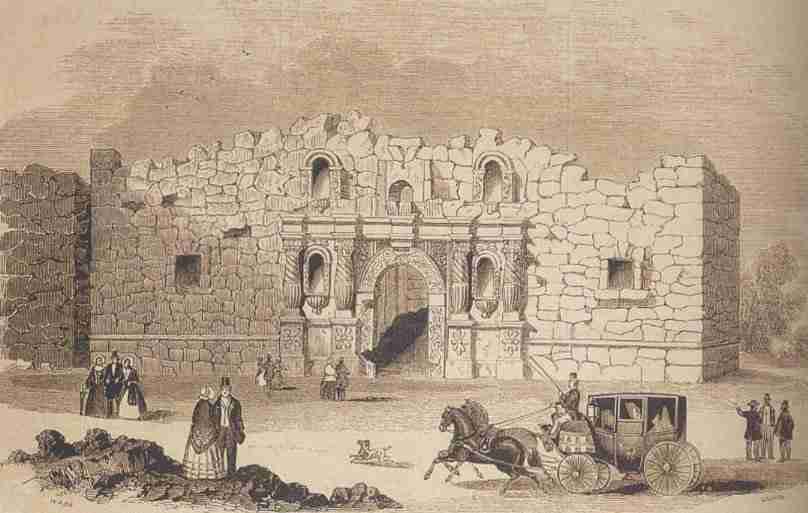
When people hear “The Alamo,” their thoughts immediately go to the famous 1836 battle during the Texas Revolution. But few realize that the old mission also played a part in the Civil War, nearly three decades later.
By the 1860s, the Alamo was no longer just a symbol of Texas independence — it was a functioning military site. During the war, Confederate forces used the historic structure as a supply depot and barracks. Its thick stone walls made it a practical choice for storing ammunition and equipment, and soldiers stationed in San Antonio kept watch over the region from this familiar landmark.
Although no major battles were fought at the Alamo during the Civil War, its use highlights how the site remained an important military hub long after its legendary stand. For Confederates, it wasn’t just a reminder of past sacrifice, but also a working part of their defense network in Texas.
Today, visitors to the Alamo can learn about this lesser-known chapter through exhibits and guided tours that go beyond the Revolution. It’s a reminder that the Civil War touched even the most iconic places in Texas history, weaving new layers into a story many people think they already know. In contrast, the other Spanish missions in San Antonio were designated a UNESCO World Heritage Site in 2015 due to their religious and cultural importance.
Camp Ford: Texas’ Largest Confederate Prisoner-of-War Camp

Located near Tyler, Camp Ford was the largest Confederate POW camp west of the Mississippi, where up to 5,000 Union soldiers were imprisoned during the war.
Today, you can visit the Camp Ford Historic Park, which includes:
- Trails and informational kiosks
- Memorial markers for fallen Union prisoners
- Interpretive displays describing prison life, harsh winters, and shortages
- Maps showing the camp’s original layout
While solemn, the preserved site offers insight into an often overlooked aspect of Civil War history in Texas.
Marshall Arsenal and the Confederate Supply Chain
While most Civil War stories highlight battlefields and generals, the war in Texas also depended on factories, depots, and supply lines that kept armies moving. One of the most important hubs was the Marshall Arsenal, located in Marshall, Texas.
The arsenal was established after the Confederate government realized how isolated Texas was from much of the South. Traditional supply routes through the Mississippi River were cut off once Union forces gained control there, so Texas had to become more self-reliant. Marshall’s location in East Texas, with its access to railroads and relative safety from direct Union attack, made it the perfect place to set up an armory.
At the Marshall Arsenal, workers produced and repaired weapons, ammunition, and military equipment. The site also became a key storage and distribution center, ensuring that Confederate troops across Texas and neighboring states had the supplies they needed. In a war where shortages were constant, facilities like Marshall were vital to keeping the Confederate war effort alive.
Today, Marshall remembers its Civil War role with historical markers and local museum exhibits. While the original arsenal no longer stands, its story sheds light on the behind-the-scenes logistics that shaped the war in Texas. For visitors, it’s a chance to see how industry and supply chains were just as important to the conflict as the battles themselves.
Commemorative Sites and Museums Preserving Texas Civil War History
In addition to battlefields, Texas houses several museums dedicated to preserving Civil War heritage:
- Texas Civil War Museum (Fort Worth): Features over 15,000 artifacts from both Union and Confederate forces
- Harrison County Historical Museum (Marshall): Covers the arsenal and East Texas’s wartime role
- Oakwood Cemetery (Tyler): Final resting place for many Civil War soldiers
- Camp Ford Historic Park: Offers walking paths and displays
- Sabine Pass and Galveston Markers: Commemorate coastal conflicts
These locations round out a comprehensive picture of Texas during the war years.
Planning Your Texas Civil War Battlefield Road Trip
If you’re ready to explore Texas’ Civil War history, a road trip is one of the best ways to experience it. The battlefields and historic sites are spread across the state, and driving lets you see both the history and the diverse Texas landscapes along the way.
Start by picking a route based on your interests. If coastal battles catch your attention, plan stops in Galveston and Sabine Pass, where naval clashes and daring defenses shaped the war along the Gulf. For a mix of symbolic and logistical history, head inland to San Antonio’s Alamo and the Marshall Arsenal site in East Texas. Each stop tells a different side of the story — from front-line fighting to the behind-the-scenes supply efforts that kept armies going.
Be sure to check ahead for visitor hours and amenities. Many sites have museums, guided tours, or interpretive markers that help bring the past to life. Others, like open battleground parks, are best explored at your own pace, with time to read the plaques and walk the grounds.
It’s also worth tying your trip to the local culture. Many of these towns have historic districts, regional food specialties, and other attractions that make the journey as enjoyable as the destinations themselves. Think of it as blending Texas history with a taste of Texas hospitality.
With a little planning, your Civil War road trip can be more than just a drive — it becomes a hands-on history lesson across the Lone Star State.
Hidden Gems: Lesser-Known Civil War Sites Across the Lone Star State
Beyond the well-known battlefields, Texas has many smaller sites that help tell the larger Civil War story:
-
Palmito Ranch – Location of the last land battle of the Civil War, fought in May 1865.
-
Fort Brown – A former military post in Brownsville that highlights border tensions and now sits on the grounds of a modern university campus.
-
Sabine Pass – The scene of one of the most dramatic Confederate victories, where a handful of defenders turned back a massive Union invasion force.
-
The Alamo – Best known for the Texas Revolution, but also used by Confederates as a supply depot and warehouse during the Civil War.
-
San Jacinto Battleground – Primarily remembered for the 1836 battle that secured Texas independence, but the park also includes exhibits that explore Texas’ role in the Civil War.
These stops may not be as famous as Galveston or Marshall, but they add valuable context and variety to any Civil War heritage road trip through Texas.