
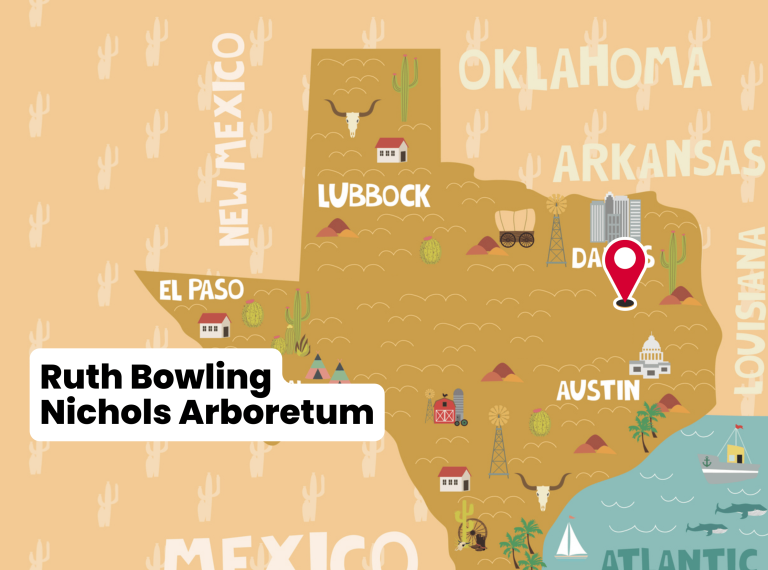
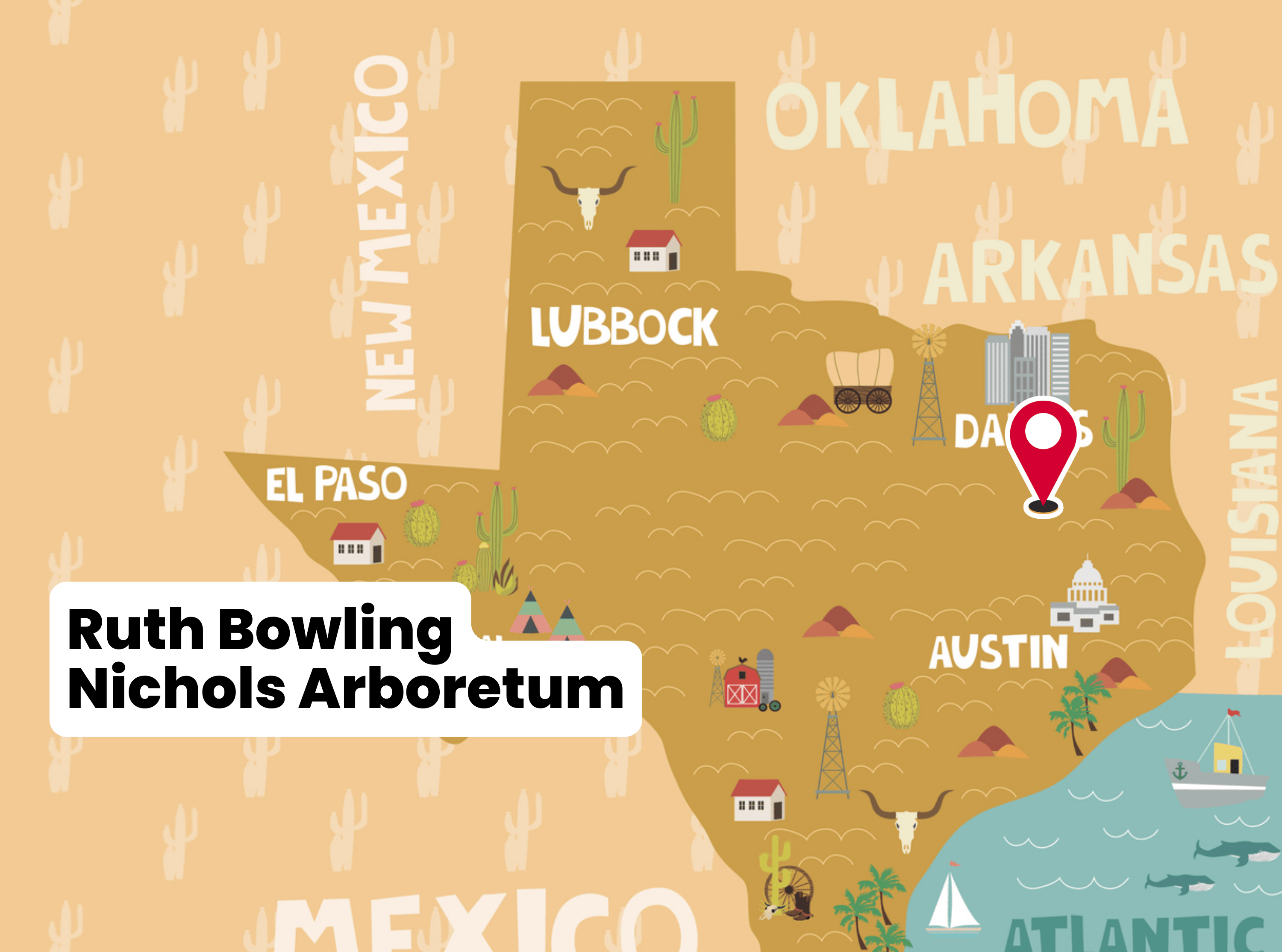
The Ruth Bowling Nichols Arboretum is a seven-acre green space located near Jacksonville in Cherokee County, Texas. Managed by the Texas A&M Forest Service (TFS), it serves as both a natural retreat and an outdoor classroom dedicated to forestry education, conservation, and community engagement. The arboretum is part of the TFS Jacksonville District Office property and reflects the agency’s mission to promote sustainable forestry and environmental awareness throughout East Texas.
History and Dedication
The arboretum’s origins trace back to 1996, when State Senator Robert Nichols donated land to the Texas A&M Forest Service for the construction of a district office. An adjacent parcel was leased to the agency to develop a public green space dedicated to environmental education and tree diversity. The arboretum was named in honor of Ruth Bowling Nichols, Senator Nichols’s mother, who was remembered for her love of nature and commitment to community service. Although the district office opened in 1999, the arboretum’s formal dedication took place in October 2009, marking the completion of a long-term project to establish a space for forestry education and outreach.
Trails and Forest Demonstrations
Visitors to the Ruth Bowling Nichols Arboretum can enjoy a quarter-mile walking trail that showcases the ecological diversity of East Texas forests. The trail is divided into three sections, each representing a distinct forest type: pure pine, mixed hardwood, and a combination of pine and hardwood species. This design allows visitors to observe differences in forest composition, structure, and management. The arboretum features native East Texas trees, including loblolly and shortleaf pine, winged elm, southern red oak, and sweetgum, providing a living illustration of local biodiversity and forest succession.
Historic and Notable Trees
The arboretum is home to several historic and commemorative trees grown from cuttings or seeds of famous specimens. These include trees with ties to American history and literature, such as the Frederick Douglass White Oak, the Sam Houston Kissing Burr Oak, the Stephen F. Austin Live Oak, the Trail of Tears Redbud, and the Walden Woods Red Maple. One of the most distinctive specimens is the Frank Lloyd Wright Ginkgo, propagated from the architect’s own tree. These plantings connect East Texas to broader national narratives of heritage, culture, and conservation.
Educational Features and Community Programs
A central element of the arboretum’s mission is environmental education. The Hazel Tilton Outdoor Classroom, located within the grounds, serves as a hands-on learning space for students, community groups, and gardening enthusiasts. Educational programs often focus on forestry practices, soil conservation, native plant identification, and sustainable landscaping.
The arboretum also hosts demonstration gardens maintained by the Cherokee County Master Gardeners Association. These gardens feature themed plantings that highlight the region’s horticultural diversity, including roses, herbs, cacti, perennials, sub-tropical plants, Texas natives, and a dedicated children’s garden. These spaces not only beautify the arboretum but also provide living examples of plant care and design suited to East Texas conditions.
A Living Legacy
Today, the Ruth Bowling Nichols Arboretum stands as a living tribute to conservation, education, and community partnership. Through its trails, educational programs, and demonstration gardens, it continues to promote awareness of Texas’s natural heritage and inspire future generations to appreciate and care for the environment.
Photos:
Ruth Bowling Nichols Arboretum
Map:
Sorry, no records were found. Please adjust your search criteria and try again.
Sorry, unable to load the Maps API.
Jacksonville
Texas
75766
United States
- Information regarding pet policies is not specified on the official website. Visitors are encouraged to contact the arboretum directly at (903) 586-7545 for details.
-
Walking and hiking on scenic trails
-
Bird and wildlife watching
-
Picnicking
-
Geocaching
-
Educational tours and programs (by appointment)
-
Hazel Tilton Outdoor Classroom
-
Demonstration gardens with themed plantings
-
Informational signage for plant identification
-
Benches and rest areas along trails
-
Please note: No restroom facilities are available on-site.