
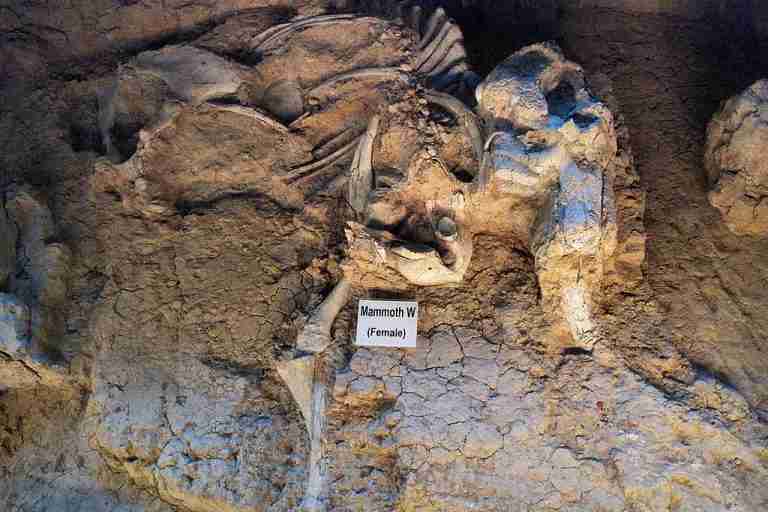
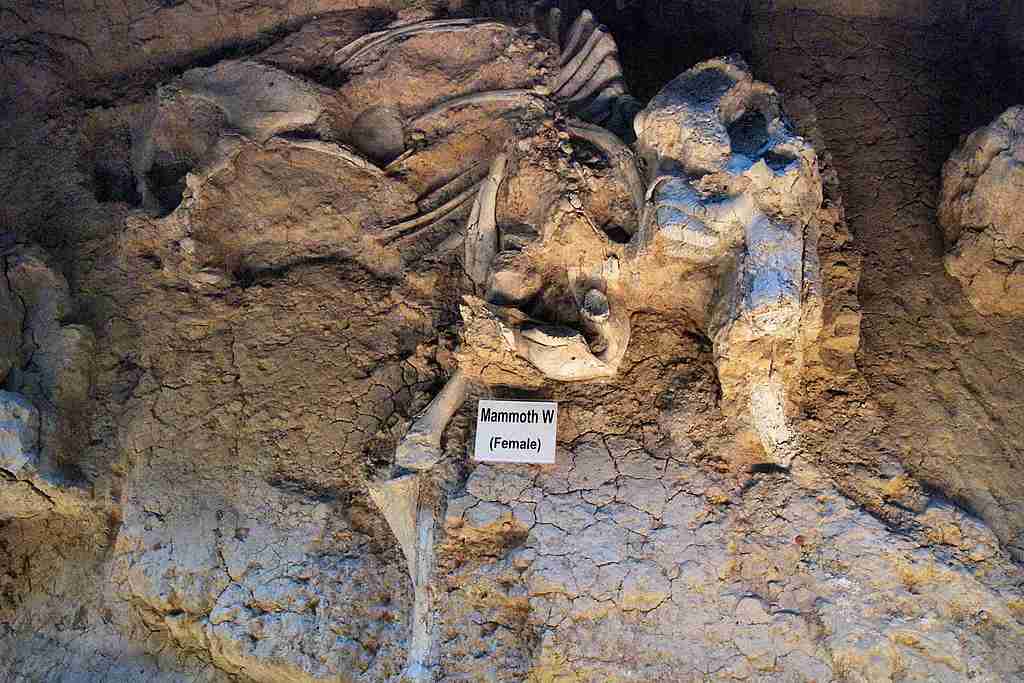
Waco Mammoth National Monument in Waco, Texas is one of the most important Ice Age sites in the United States. The area preserves the fossil remains of Columbian mammoths that lived during the Pleistocene Epoch. Many of these fossils remain in their original resting place inside a climate-controlled dig shelter, giving visitors a clear look at how the animals were found. The site represents a rare snapshot of life thousands of years ago and continues to support ongoing scientific study.
Discovery and Early Excavations
The first bones were uncovered in 1978 when Paul Barron and Eddie Bufkin spotted a large fragment eroding from a ravine near the Bosque River. The find was later identified as part of a Columbian mammoth. Professional excavations began soon afterward, leading to the recovery of additional mammoth remains. Over time, paleontologists uncovered fossils from at least two dozen mammoths along with evidence of other prehistoric animals that once shared the landscape.
A Unique Nursery Herd
One of the most significant scientific findings at the monument is the presence of a nursery herd of Columbian mammoths. The primary fossil bed includes females and juveniles that appear to have died together during a natural event. This assemblage is considered the first known example of a nursery herd of this species in the United States. The discovery has offered rare insight into mammoth social structure and herd behavior during the Ice Age.
Additional Ice Age Animals
Excavations have revealed more than mammoth fossils. The site has produced remains of a prehistoric camel, a juvenile saber-toothed cat tooth, a dwarf antelope, and other Pleistocene animals. These findings help build a broader picture of the environment that existed in Central Texas thousands of years ago. Each fossil adds context to the ecological relationships that shaped the region during the era.
Establishment as a National Monument
In 2015, the site was officially designated as Waco Mammoth National Monument and became part of the National Park Service. Today, management is a cooperative effort involving the National Park Service, the City of Waco, and Baylor University. Tours, educational programs, and interpretive exhibits connect visitors with both the scientific research and the history of the ongoing excavations. The dig shelter remains the centerpiece, allowing the public to view fossils exactly where they were found.
Photos:

Map:
Sorry, no records were found. Please adjust your search criteria and try again.
Sorry, unable to load the Maps API.
Waco
Texas
76708
United States
- General Areas: Pets are welcome in all outdoor areas, including the paved trail, picnic area, and grassy areas near the parking lot.
- Restricted Areas: Pets are not allowed inside the dig shelter or any buildings.
- Guidelines: Pets must be on a leash no longer than six feet and under control at all times. Owners are responsible for cleaning up after their pets.
- Guided Tours: Knowledgeable guides lead visitors through the Dig Shelter, where they can view in-situ fossils and learn about the site's history, the mammoths' lives, and the ongoing research.
- Educational Programs: The monument offers various educational opportunities, including field trips, group tours, and the Junior Ranger program, engaging visitors of all ages in paleontology and natural history.
- Hiking and Picnicking: The surrounding parkland features walking trails and picnic areas, allowing visitors to enjoy the natural beauty of the area.
- Visitor Center: The center includes exhibits, a gift shop, and restrooms, providing a comfortable starting point for visitors.
- Dig Shelter: This climate-controlled facility protects the excavation site and allows for year-round viewing of the fossils.
- Picnic Areas: Designated spots equipped with tables are available for visitors to enjoy meals amidst the scenic parkland.