
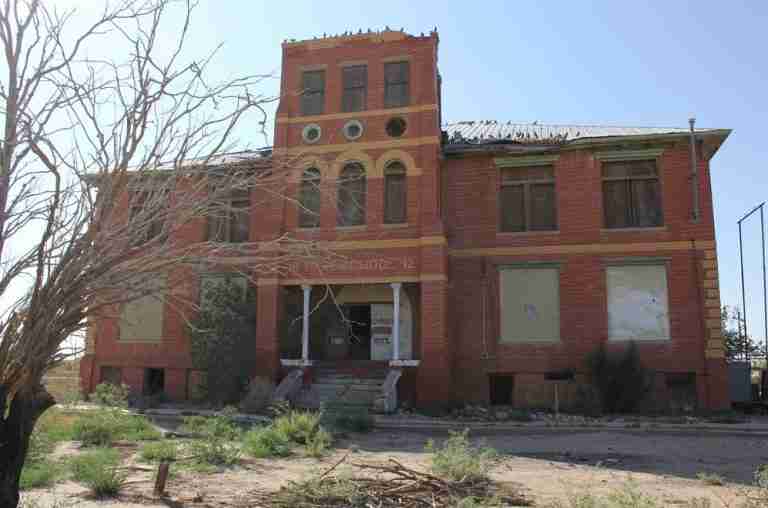
Toyah is the oldest townsite in Reeves County, Texas. Its name comes from a Native American word meaning “flowing water.” The town began as a small trading post serving nearby ranches in the late 19th century.
In the late 1870s, W. T. Youngblood and his family arrived in the area by covered wagon carrying general merchandise. Youngblood first operated a tent store, then built a one-room adobe structure that became a supply stop for ranchers.
A major turning point came in 1881 when the Texas & Pacific Railroad reached Toyah. That same year, a post office was established. The railroad brought workers, supplies, and new businesses, turning Toyah into an important cattle-shipping point for surrounding ranches.
By late 1881, Toyah was described as a tent town with saloons, restaurants, and a stagecoach service connecting it to Fort Stockton and Fort Davis. Within a few years, permanent buildings replaced tents, and Toyah had hotels, general stores, blacksmiths, and other frontier businesses.
A public school opened in 1894 with one teacher and five grades in a single classroom. Enrollment grew quickly, and by 1900 there were 42 students and two teachers, showing the town’s steady development.
Peak and Decline
By 1910, Toyah had a population of about 771. Four years later, the population had surpassed 1,000, and the town remained at that level through the 1920s. During its peak years, Toyah had churches, two banks, hotels, lumberyards, and a range of small businesses that served local ranchers and railroad employees.
The Great Depression brought an economic downturn that Toyah never fully recovered from. As cattle shipping moved to other locations and travel patterns changed, businesses began to close. By 1931, the population had fallen to around 550 with only 17 businesses still open. Toyah formally incorporated in 1933, but the population continued to shrink through the mid-20th century.
The numbers tell the story of the decline: around 460 residents in the 1940s, 400 in the 1950s, and under 200 by the early 1970s. By 1990, only 142 residents remained, and by 2000, the population was down to about 100. In 2010 it stood at 90, and by 2020 it had dropped to just 61.
2004 Disaster: Flooding and Tornado
In April 2004, flash flooding of Salt Draw caused major damage throughout the Toyah area. A protective levee failed, inundating most of the town and destroying homes and infrastructure. The Interstate 20 bridge over Salt Draw was also swept away in the floodwaters.
Just two months later, in June 2004, a tornado struck the community. It tore through the downtown area, heavily damaging the old bank building, which had once served multiple purposes including a post office, telephone exchange, and lodge hall. The storm destroyed or severely weakened several other historic structures. Many of the buildings that survived were already in poor condition, and the combined effects of flood and tornado left much of the town abandoned.
Modern Status and Legacy
Today, Toyah remains an incorporated town in Reeves County with a very small population. Although much of its business district lies in ruins, the site still contains remnants of its earlier prosperity, including the old schoolhouse, deteriorating storefronts, and residential ruins that attract photographers and history enthusiasts.
While the town has no active businesses and limited services, it stands as a reminder of the region’s railroad era and early ranching economy. The population continues to decline, but Toyah retains a small community presence and a sense of historical significance as Reeves County’s first and oldest town.
Photos:
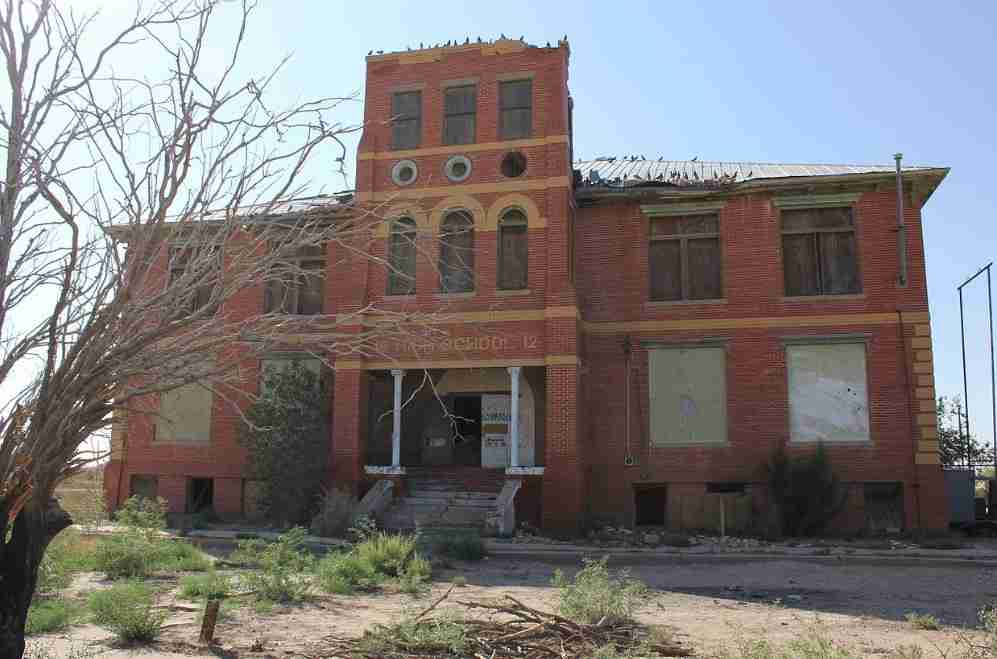
Toyah
Map:
Sorry, no records were found. Please adjust your search criteria and try again.
Sorry, unable to load the Maps API.
Toyah
Texas
79785
United States
Nicolas Henderson from Coppell, Texas, Abandoned school in Toyah, Texas, CC BY 2.0