
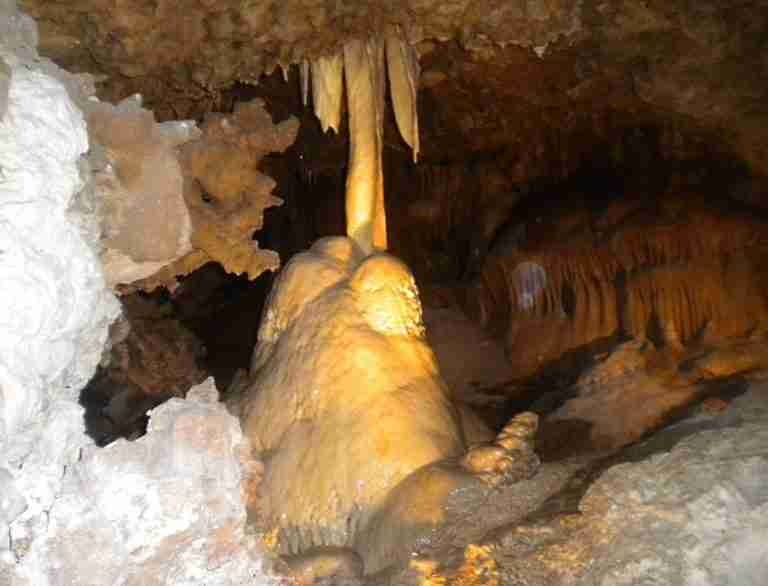
Inner Space Cavern, located in Georgetown, Texas, is one of the best-preserved caves in the state. It formed within the Edwards limestone, a geologic layer that dates back roughly 20 to 25 million years. Over that time, groundwater slowly dissolved the rock, creating a vast network of underground passages and chambers.
The cave remained sealed off from the surface for thousands of years until 1963, when a Texas Highway Department drilling crew uncovered it during construction of Interstate 35. Their equipment unexpectedly broke through about 33 feet of limestone and revealed a large cavity below. Geologists and cavers soon investigated the space, confirming that they had found an extensive karst system that had been naturally sealed for roughly 14,000 years.
Opening to the Public
After three years of study and preparation, Inner Space Cavern opened to the public in 1966. The developed section of the cave features paved pathways and lighting that allow visitors to safely experience its underground environment. Public tours cover about a mile of passages, though the full mapped system extends for several miles beyond the tour route.
Guides point out the cave’s striking formations, including stalactites, stalagmites, columns, and flowstones. Many of these structures continue to grow today as mineral-rich water drips through the limestone ceiling. The cavern’s natural stability and relatively dry conditions have kept these features remarkably well preserved.
Fossil Record and Ice Age History
One of the most fascinating aspects of Inner Space Cavern is its fossil record. Excavations and research have uncovered remains of Pleistocene animals that once roamed central Texas during the last Ice Age. Among the species found are mammoths, giant ground sloths, saber-toothed cats, and other large mammals that became trapped in the cave thousands of years ago when natural openings were still exposed.
These fossils provide valuable insights into the region’s prehistoric environment, helping scientists reconstruct the ancient ecosystems that existed before the end of the Ice Age. The remains are considered among the most significant paleontological finds from any Texas cave.
Unique Cave Life
Beyond its fossils, Inner Space Cavern supports a small but specialized ecosystem adapted to total darkness. One notable resident is the Coffin Cave mold beetle (Batrisodes texanus), an eyeless, cave-dwelling insect found only in caves within Williamson County. Its survival depends on the delicate balance of temperature, humidity, and nutrient sources inside the cave. The beetle’s presence underscores the biological importance of preserving these underground habitats.
Visiting Today
Today, Inner Space Cavern continues to operate as a major tourist attraction and educational site. It offers guided tours suited to different levels of adventure, from easy walks to more challenging “wild cave” experiences for those interested in undeveloped sections. The cavern remains a living laboratory for geologists, biologists, and paleontologists studying Texas’s subterranean and Ice Age history.
Photos:
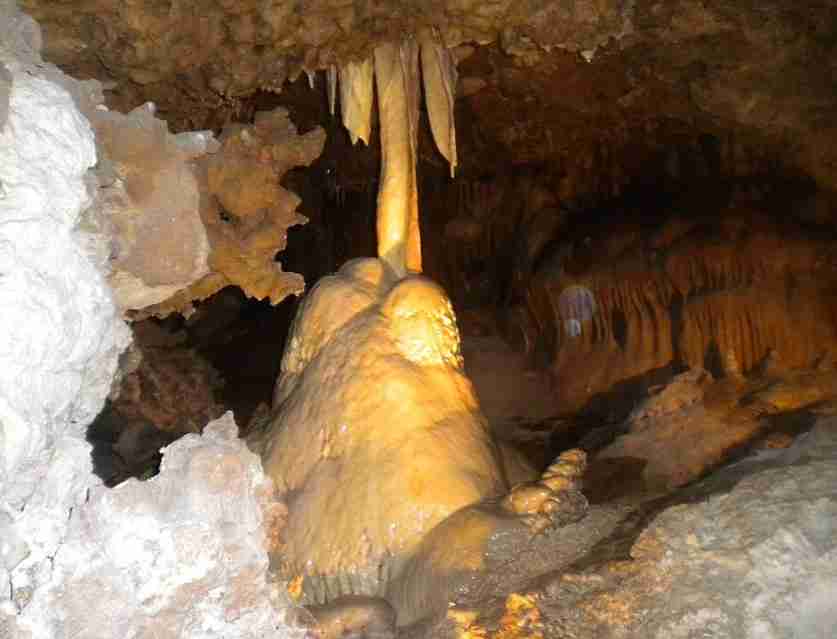
Inner Space Cavern
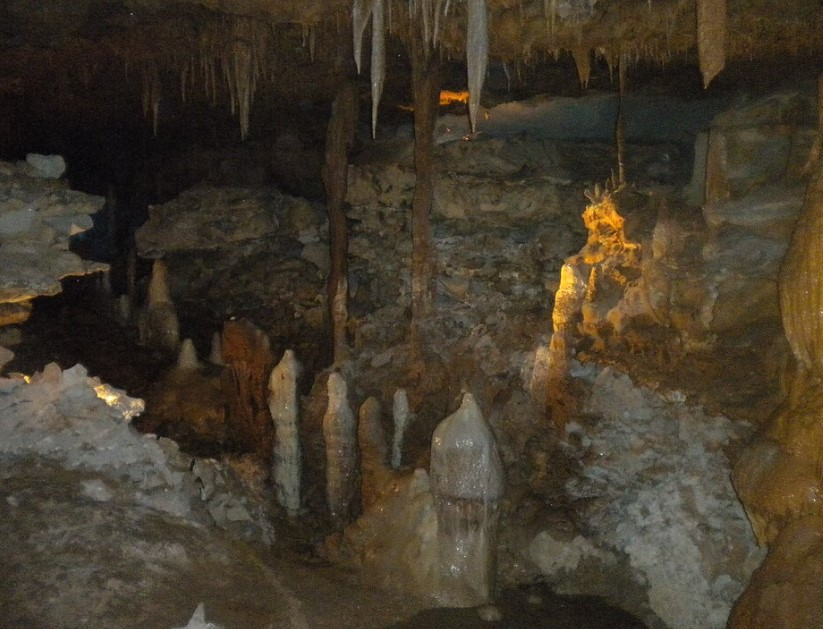
Inner Space Cavern
Map:
Sorry, no records were found. Please adjust your search criteria and try again.
Sorry, unable to load the Maps API.
Georgetown
Texas
78626
United States
Pets are not allowed inside the cavern.
-
Guided Tours: Various tours are available, ranging from standard walking tours to advanced spelunking adventures.
-
Gemstone Panning: An activity where visitors can pan for gemstones, offering a fun and educational experience.
-
Gift Shop: Offers a variety of souvenirs and geological treasures.
-
Picnic Areas: Designated spots are available for visitors to enjoy outdoor meals.