

San Antonio Missions National Historical Park protects four Spanish colonial missions that were established along the San Antonio River in the 1700s. These missions were part of Spain’s broader effort to colonize the northern frontier of New Spain by converting Indigenous communities to Catholicism and creating self-sustaining settlements. The park includes Mission Concepción, Mission San José, Mission San Juan Capistrano, and Mission Espada. Together with the Alamo, these sites were inscribed as a UNESCO World Heritage Site in 2015 for their cultural importance and exceptional preservation.
The Role of the Missions in Early Texas
The missions served as religious, economic, and cultural centers. Indigenous residents received instruction in Catholicism while also learning trades such as farming, weaving, carpentry, and masonry. Each mission operated as a small community complete with living quarters, workshops, churches, and irrigation infrastructure. The blending of Spanish and Indigenous traditions can still be seen in architectural details, agricultural practices, and artwork that remain within the complexes.
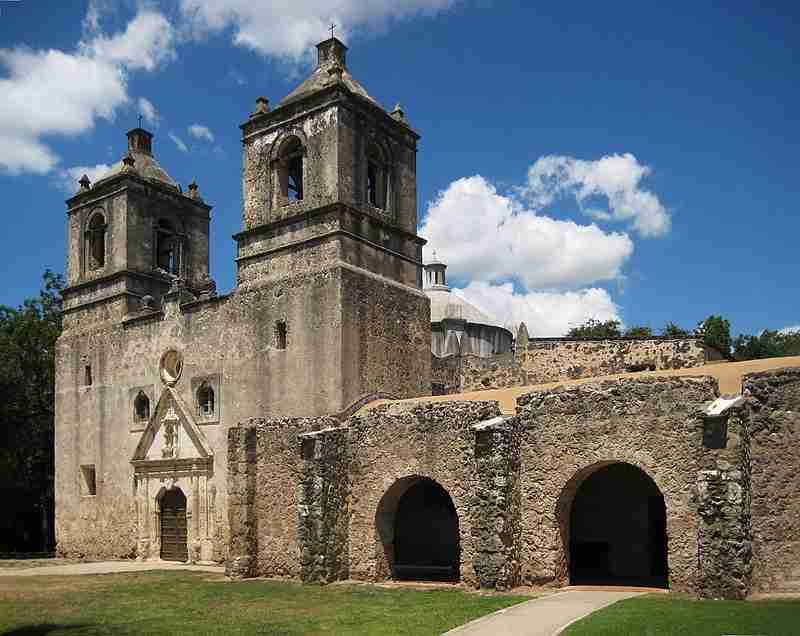
Mission Concepción
Mission Nuestra Señora de la Purísima Concepción de Acuña reached its permanent San Antonio location in 1731, though its original founding took place earlier in East Texas. It is known for having the oldest unrestored stone church in the United States. Portions of its original painted frescoes are still visible inside and on the exterior walls. The building’s structural integrity and stonework make it one of the best preserved examples of Spanish colonial mission architecture.
Mission San José
Mission San José y San Miguel de Aguayo was founded in 1720 and quickly grew into the largest of the Texas missions. Its size, layout, and craftsmanship earned it the nickname “Queen of the Missions.” Within its grounds are a reconstructed church, a historic granary, living quarters along the mission walls, and remnants of workshops. The site functions as the main visitor area for the national historical park, providing orientation and exhibits on mission life.
Mission San Juan Capistrano
Mission San Juan Capistrano was transferred to San Antonio in 1731. It developed extensive farmlands supported by an irrigation system that helped sustain the mission community. Agricultural work was an important part of daily life, including the cultivation of crops and management of orchards and gardens. Buildings at the mission include a small church, convento, and surrounding structures that reflect its agricultural role.
Mission Espada
Mission San Francisco de la Espada also arrived in San Antonio in 1731. It is notable for its irrigation system, which includes acequias and the historic Espada Aqueduct. Constructed in the early eighteenth century, the aqueduct still carries water along its original route, making it one of the oldest functioning irrigation features of its kind in the United States. The mission’s distinctive stone chapel and surrounding structures reflect some of the earliest European architectural influences in the region.
Cultural Legacy of the Missions
The missions shaped the development of San Antonio and left a lasting influence on Texas culture, architecture, and community life. Their structures, agricultural systems, and artwork reveal how Spanish and Indigenous traditions interacted and evolved over time. Today the national historical park provides visitors with a detailed look at these early communities and preserves a significant chapter of Texas history.
Photos:


Map:
Sorry, no records were found. Please adjust your search criteria and try again.
Sorry, unable to load the Maps API.
San Antonio
Texas
78210
United States
- General Areas: Pets are welcome on the park grounds and trails.
- Restricted Areas: Pets are not allowed inside any park buildings or within the historic mission churches.
- Additional Guidelines: Pets must be on a leash no longer than six feet, and owners must clean up after them.
- Guided Tours: Ranger-led programs are offered daily at Mission San José, providing historical insights into the missions' significance and architecture.
- Hiking and Biking: The park features trails connecting the missions, allowing visitors to explore the area on foot or by bicycle. The Mission Reach Ecosystem Restoration and Recreation project added 15 miles of trails, enhancing accessibility between the sites.
- Educational Programs: The park offers various educational materials, lesson plans, and videos for teachers and students interested in learning about the missions' history and cultural impact.
- Photography: Visitors are encouraged to capture the historic and architectural beauty of the missions. Permits are required for portrait photography, commercial photography/filming, and other activities.
- Visitor Center: Located at Mission San José, the visitor center provides exhibits, information, and restrooms to enhance the visitor experience.
- Restrooms: Facilities are available at each mission site for public use.
- Water Stations: Water filling stations are available at all mission sites throughout the park and in the visitor center at Mission San José. Visitors are encouraged to bring reusable water bottles.
- Picnic Areas: Designated picnic spots are available for visitors to relax and enjoy meals amidst the historic surroundings.