
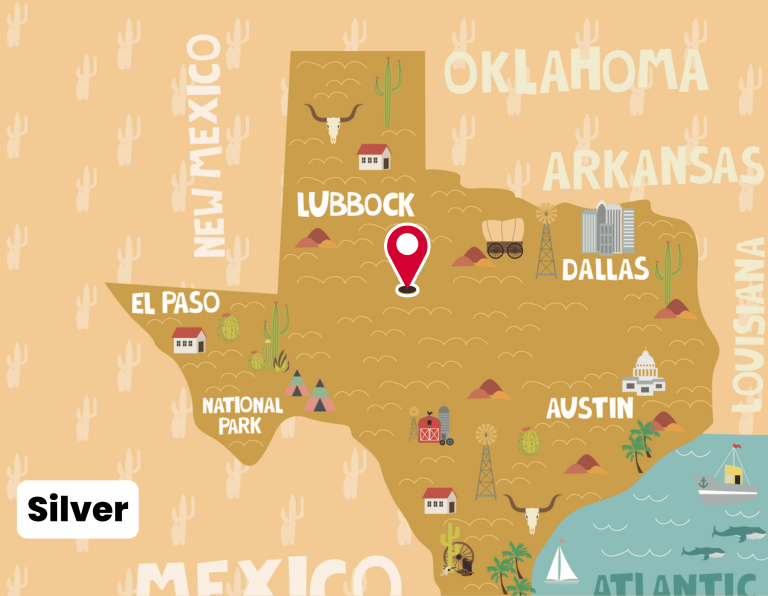
Silver, located in northwestern Coke County, began as a ranching settlement in the 1870s. The area’s open range attracted cattle ranchers who established small herds and homesteads. In 1890, a post office was established with rancher Thomas J. Wiley (sometimes recorded as Wylie) as postmaster. That same year, the community also opened a one-room school.
Drought conditions forced the post office to close in 1907, but it reopened the following year in 1908. From 1910 through the 1940s, Silver’s population stayed very small, averaging only about ten residents. It remained an isolated ranching community for decades, without significant growth or infrastructure.
Oil Discovery and Boom Years
The turning point came in 1946, when the Sun Oil Company discovered oil on land owned by Allen Jameson. The Jameson Oil Field soon became a major producer. By July 1949, there were 59 producing wells, and Silver rapidly transformed from a quiet ranch settlement into an oil boomtown.
Within a few years, the community expanded to an estimated 1,000 residents, mostly oil company employees and their families living in temporary camps. Infrastructure quickly developed to support the population surge:
-
A rail spur from Maryneal was built to connect the town.
-
State Highway 208 was paved from Robert Lee to Silver.
-
A modern, million-dollar school complex replaced the old one-room schoolhouse.
-
The town gained three churches, two cafés, several stores, and a company recreation hall.
For a brief period, Silver looked like a thriving oil community, sustained almost entirely by the Jameson Field.
Decline After the Boom
By the mid-1960s, production in the Jameson Field began to decline, and Sun Oil Company scaled back operations. The town’s population and businesses shrank along with the industry.
By 1980, only about 60 residents remained. Although the post office continued operating, many of the community’s facilities closed or were repurposed. The once expensive school complex was converted into a hog farm. Silver still had a few businesses in 1986, including a trucking firm, a blacksmith and welding shop, and a Sun Oil field office.
Population in Recent Decades
Silver’s decline continued into the twenty-first century:
-
2000: The population held steady at around 60, with six businesses still listed in the community.
-
2010: The number of residents had fallen to about 30.
Today, Silver is considered a near-ghost town, with only scattered families and remnants of its boomtown years.
Interesting Facts About Silver
-
Tiny Origins: For more than three decades, from 1910 to 1940, Silver averaged only about ten residents.
-
Million-Dollar School: During the oil boom, Silver invested in a modern school complex valued at about a million dollars. It was later converted into a hog farm after the population collapsed.
-
Oil Peak: By 1949, just three years after the discovery, there were 59 producing wells in the Jameson Oil Field, fueling the community’s rapid rise.
-
Short-Lived Boom: Unlike some towns that developed a diversified economy, Silver’s survival was tied almost entirely to oil, making its decline steep once production fell.
Photos:
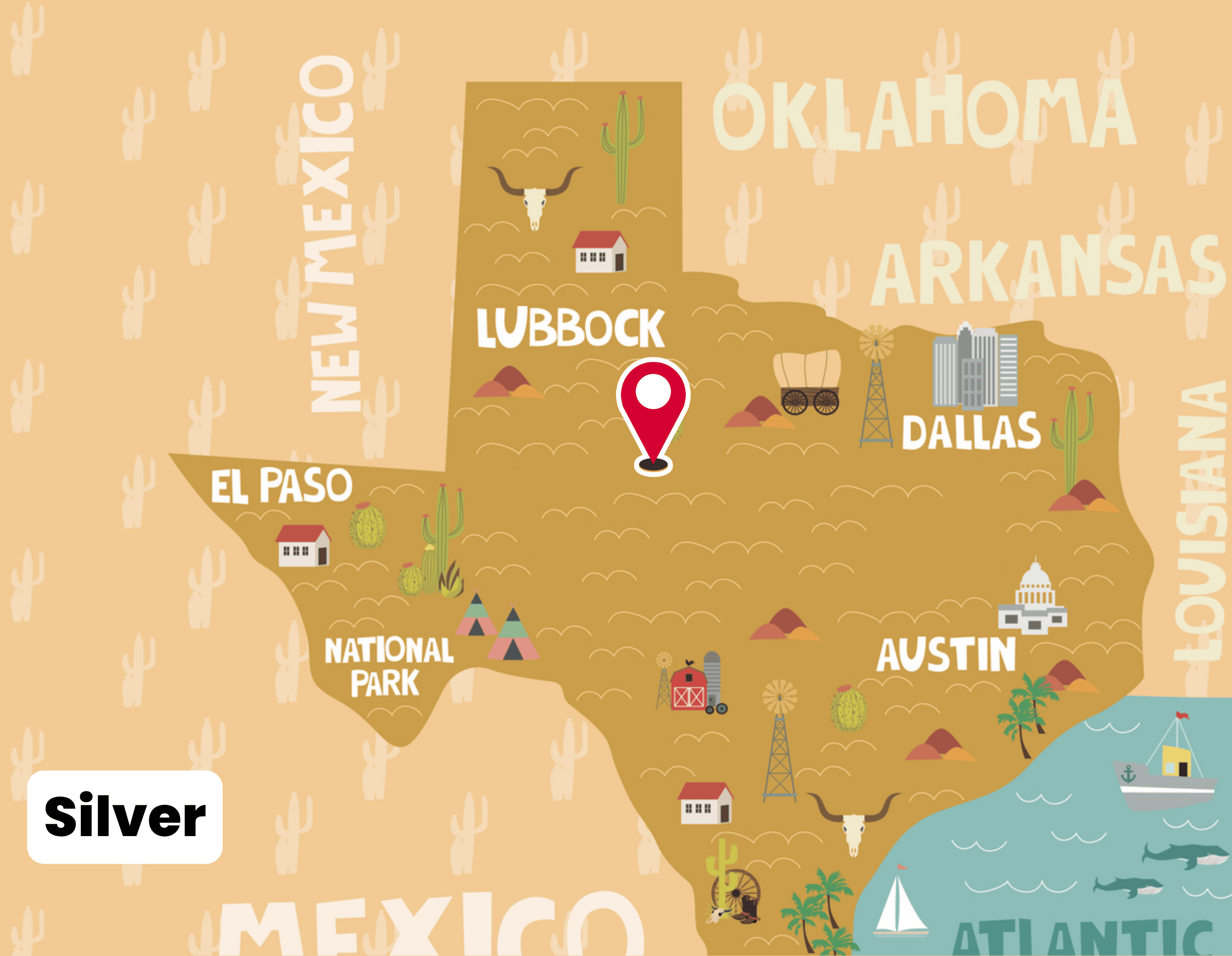
Silver
Map:
Sorry, no records were found. Please adjust your search criteria and try again.
Sorry, unable to load the Maps API.
Coke County
Texas
76949
United States
- Yes—on‑leash in the community; always verify on private property
- Rural driving tours, oilfield history exploration, photography
- Schoolhouse (private), post office (active), ZIP 76949, a small business; no formal visitor facilities