
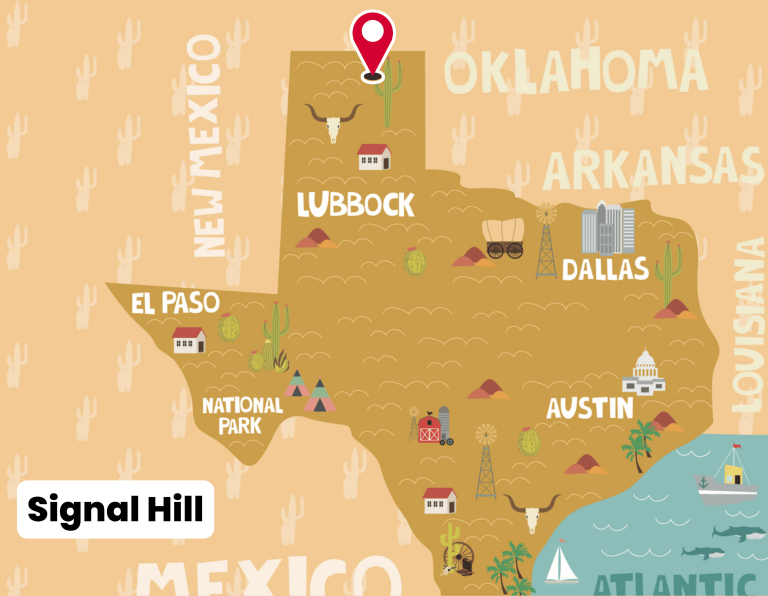
Signal Hill was founded in 1926, about 1.5 to 4 miles east of Stinnett, Texas, in Hutchinson County. The town was developed by Earl Thompson, who promoted the site after conducting a tentative survey for the Panhandle & Santa Fe Railway. Although a spur line was planned, it was never built.
The name “Signal Hill” came from a small rise in the land visible from a distance. The community was created during the early stages of the Panhandle oil boom, and its rapid growth reflected the excitement and speculation that defined many oil towns of the era.
Boom Years
By the end of 1926, Signal Hill had swelled to a population of nearly 10,000 residents. It was one of the largest oil camps in the region at the time.
The settlement was laid out with blocks, streets, and lots, and it quickly developed a range of businesses and facilities, including:
-
Bank building (used mainly as the developer’s office, not a traditional bank)
-
Drugstores and supply houses
-
Bakery and icehouse
-
Gasoline filling stations
-
Hotels and rooming houses
-
Welding and boiler shops
-
Movie theater
-
Restaurants, cafes, and saloons
The town also had a depot site planned to connect with the railway, but the failure of that project contributed to its decline.
Decline and Abandonment
The boom was short-lived. In 1927, the Texas Rangers arrived in Signal Hill to crack down on gambling, liquor, and other vice activities common in oil boom towns. At the same time, the much-anticipated railway spur line never materialized.
These setbacks caused businesses and residents to leave almost as quickly as they had arrived. By 1927–1928, the once-bustling community was largely abandoned.
The bank building, one of the most substantial structures in town, stood for several more years. In 1934, it was dismantled, and its bricks were reused elsewhere. This event marked the final chapter in the town’s physical existence.
Remnants and Memory
Today, little remains of Signal Hill. The only visible trace is the concrete foundation slab of the old bank. The prairie has reclaimed the land where thousands once lived and worked during the oil boom.
Despite its brief life, Signal Hill is remembered in local history. A resident born in 1928 recalled that the town’s perimeter once stretched “to the top of the small hill from which it got its name.”
Key Points
-
Founded: 1926 by Earl Thompson, about 1.5–4 miles east of Stinnett, Texas
-
Peak population: Nearly 10,000 by late 1926
-
Facilities: Bank building (company office), stores, hotels, shops, theater, and oilfield services
-
Decline: Began in 1927 after Texas Rangers’ intervention and failure of the railroad spur
-
Abandonment: By 1927–1928, most residents were gone
-
Aftermath: Bank building dismantled in 1934; only the concrete foundation remains today
Photos:
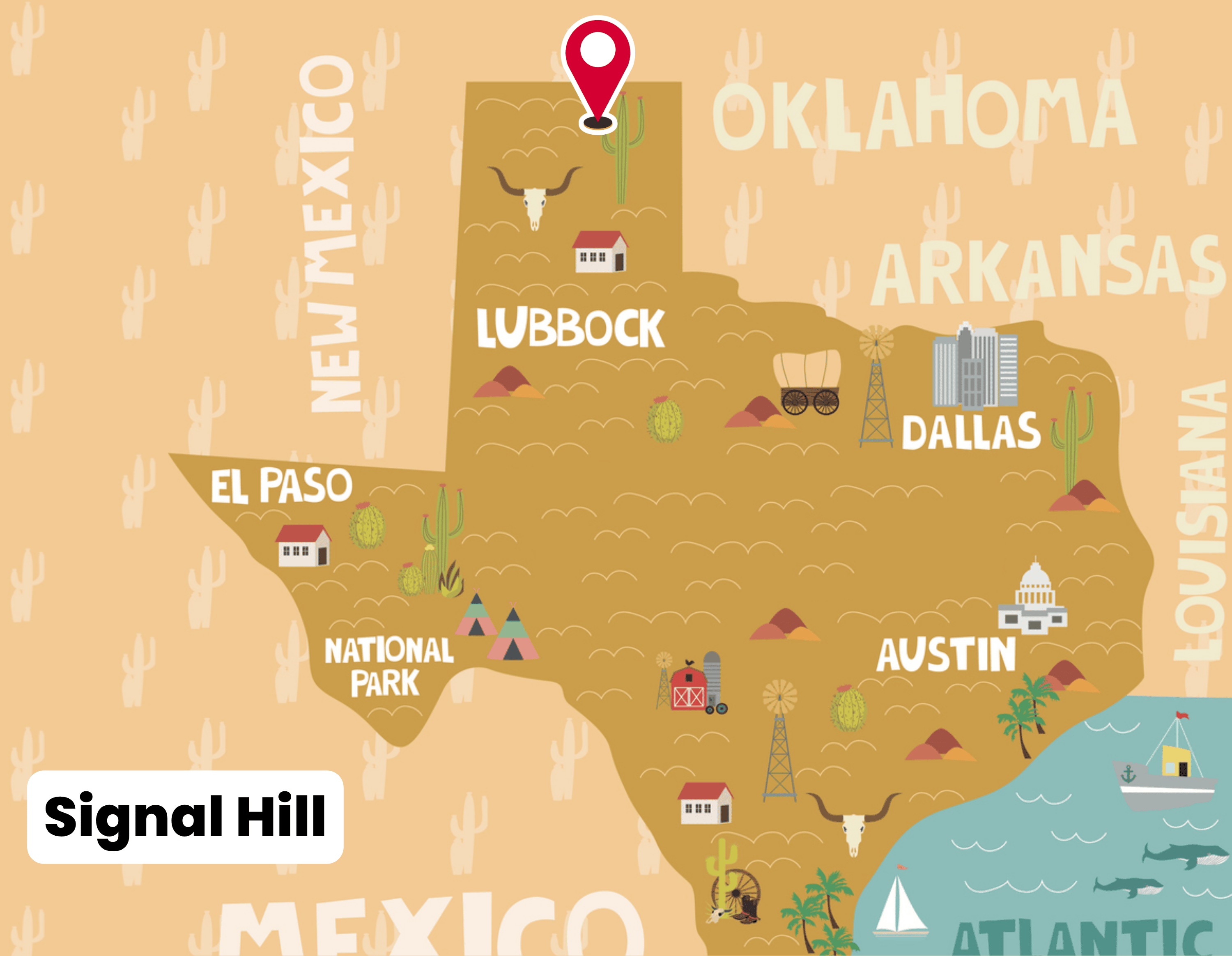
Signal Hill
Map:
Sorry, no records were found. Please adjust your search criteria and try again.
Sorry, unable to load the Maps API.
Hutchinson County
Texas
United States
- Yes, on-leash—access only from road; avoid trespassing
- View foundation slab, photograph the oil‑camp site, take a short historic drive
- None