
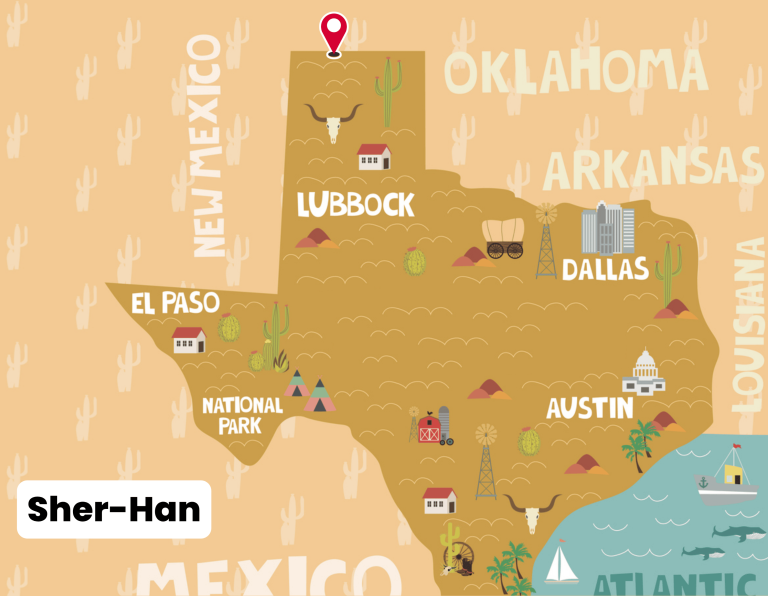
Sher-Han was established around 1944 during World War II as an industrial camp in the northern Texas Panhandle, near the Oklahoma border. The community was built by Phillips Petroleum Company, together with Panhandle Eastern Pipe Line Company and Michigan Wisconsin Pipe Line Company, to support a natural gas liquids extraction plant. Its name is a combination of Sherman County and Hansford County, the two counties where its operations were located.
Community and Layout
Because the camp was in a remote area with few paved roads, the companies provided housing and amenities for employees and their families. At its peak, Sher-Han included:
-
About 105 company-owned homes housing more than 300–400 residents
-
A community center for gatherings and events
-
A Baptist church, later relocated to Guymon, Oklahoma
-
A grocery store and gas station serving residents
-
Recreational amenities, including a ballpark, tennis courts, and a nine-hole golf course with sand greens
The camp functioned as a self-contained community, rare for industrial sites of its era.
Decline and Closure
By the 1960s, Sher-Han’s future was shaped by two key changes: improvements in transportation and increasing corporate concern for safety. With new paved highways connecting the region, employees could now live in nearby towns such as Gruver, Spearman, Sunray, and Borger and commute to work at the gas extraction plants. This development reduced the need for a permanent residential camp at the facility itself.
At the same time, the companies operating in Sher-Han recognized the dangers of keeping families so close to plants that processed large volumes of highly flammable natural gas liquids. Industrial accidents were an ever-present risk, and the idea of a residential community directly adjacent to explosive material became increasingly untenable.
As a result, the decision was made to wind down Sher-Han as a residential settlement. This process unfolded gradually:
-
Relocation of families: Employees were encouraged, and in many cases required, to move their families to surrounding towns. Housing and jobs remained available, but outside of the industrial zone.
-
Physical removal of homes: Many of the 105 houses built by the companies were moved intact to neighboring communities. This practice, while unusual, allowed families to keep their homes rather than abandoning them.
-
Relocation of the church: The Baptist church that had served Sher-Han residents was carefully dismantled and reassembled in Guymon, Oklahoma, ensuring that it continued to serve a congregation.
-
Closure of community facilities: The grocery store, community center, and recreational amenities were shut down as the population dwindled.
By 1969, the process was complete. The last houses were sold and removed, leaving the once-thriving industrial town an empty site. Only sidewalks, foundations, and traces of streets remained, marking where homes and facilities once stood.
Present-Day Status
Sher-Han is now classified as a ghost town. Visitors to the site will find little more than sidewalks, foundations, and scattered remnants such as bunkhouses or barns. The area is generally closed to the public, but its story remains a distinctive example of a Texas community built, sustained, and eventually dismantled by the energy industry.
Interesting Facts
-
Name origin: A portmanteau of Sherman and Hansford, the counties tied to its industrial operations.
-
Industrial camp life: Unlike most rural oil and gas camps, Sher-Han offered families a full range of recreational amenities, including a golf course with sand greens.
-
Relocated community: Sher-Han is unusual among Texas ghost towns because its homes and facilities were not abandoned to decay; they were physically moved to nearby towns when the site was closed.
Photos:
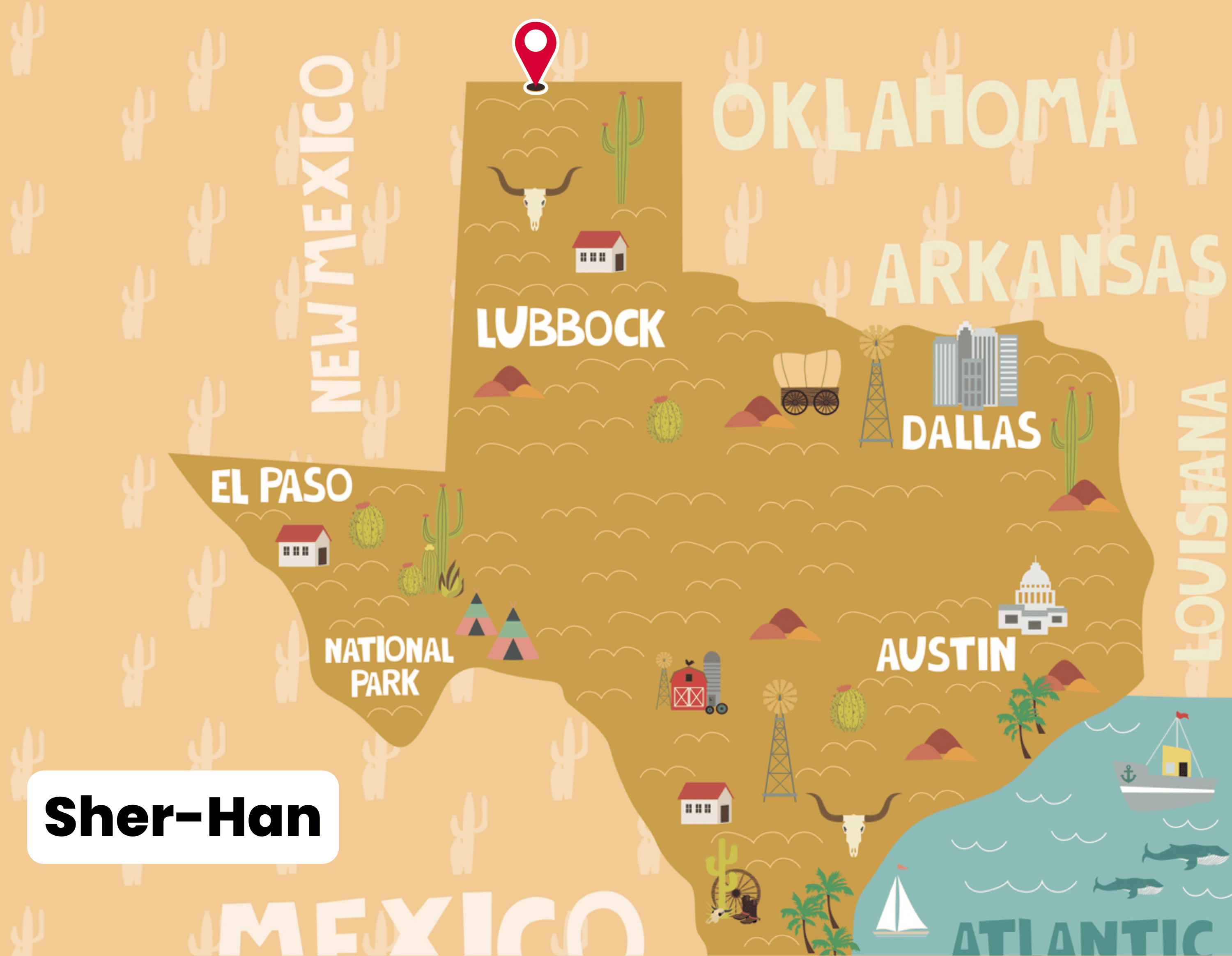
Sher-Han
Map:
Sorry, no records were found. Please adjust your search criteria and try again.
Sorry, unable to load the Maps API.
Hansford County
Texas
United States
- Allowed only in public right-of-way along Hwy 136; property is private and closed to public
- Photography of foundations and sand greens, exploration of industrial relics, nostalgic drive-through
- None