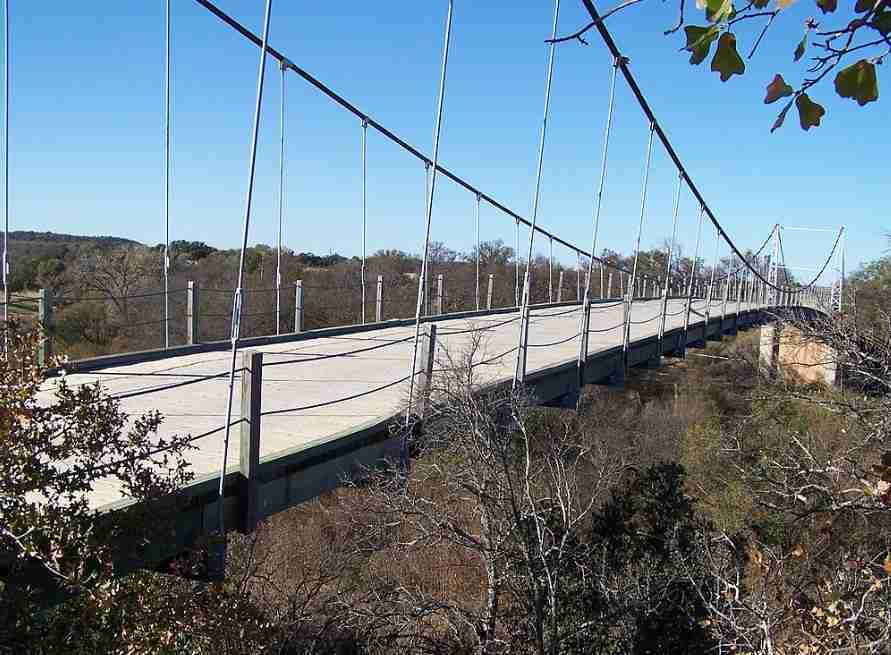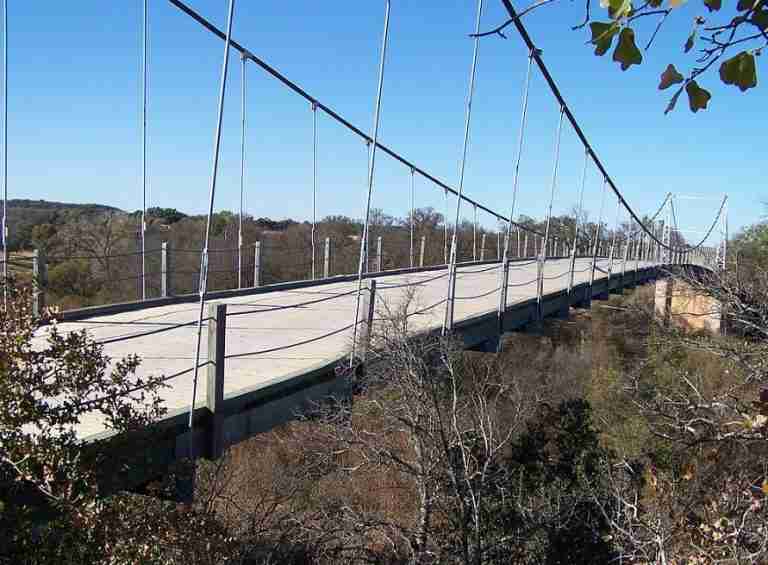
The community of Regency, located along the Colorado River in Mills County, traces its roots back to 1854, when David Hanna settled in the area. Early on, the settlement was known as Hanna Valley (sometimes called Hannaville), reflecting the founder’s name. It developed as a small farming and ranching outpost, typical of rural Texas communities in the mid-19th century.
Post Office and Name Change
A post office was first established in 1876 under the name Hanna Valley but was discontinued in 1882. When residents reapplied for a post office in 1884, the postal service rejected the old name due to duplication with another Texas town. The community adopted the new name Regency, which it has carried since.
Growth and Decline
By about 1895, Regency reached its peak population, estimated at over 200 residents. The town supported churches, schools, and small businesses that served the surrounding ranching families.
The community, however, experienced steady decline in the 20th century. The post office was discontinued in the early 1930s, and the last general store closed in 1971. By the early 21st century, only a small population remained, and Regency was considered a ghost town, though the area is still home to scattered ranches.
The Regency Bridge
Early Crossings
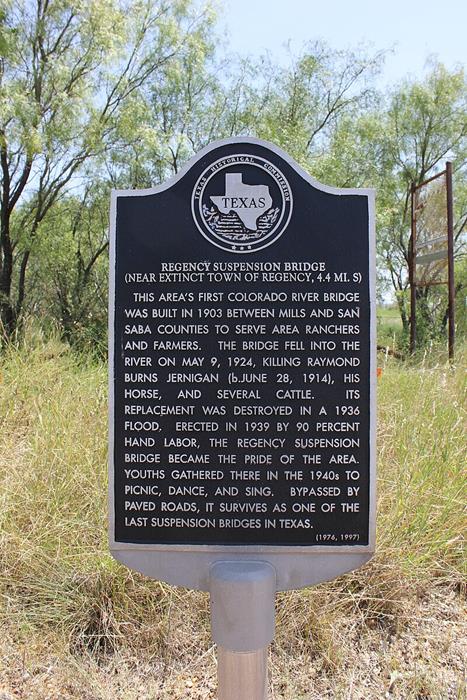
The Colorado River has always been central to the community. Before the bridge, fords and ferries were used to cross the river. In 1903, a truss bridge was constructed at the site. This bridge collapsed in 1924 when a herd of cattle attempted to cross, tragically killing a young boy, a horse, and several cattle.
A replacement bridge was later erected, but it was destroyed by floodwaters in the mid-1930s (sources vary between 1936 and 1938).
The Current Suspension Bridge
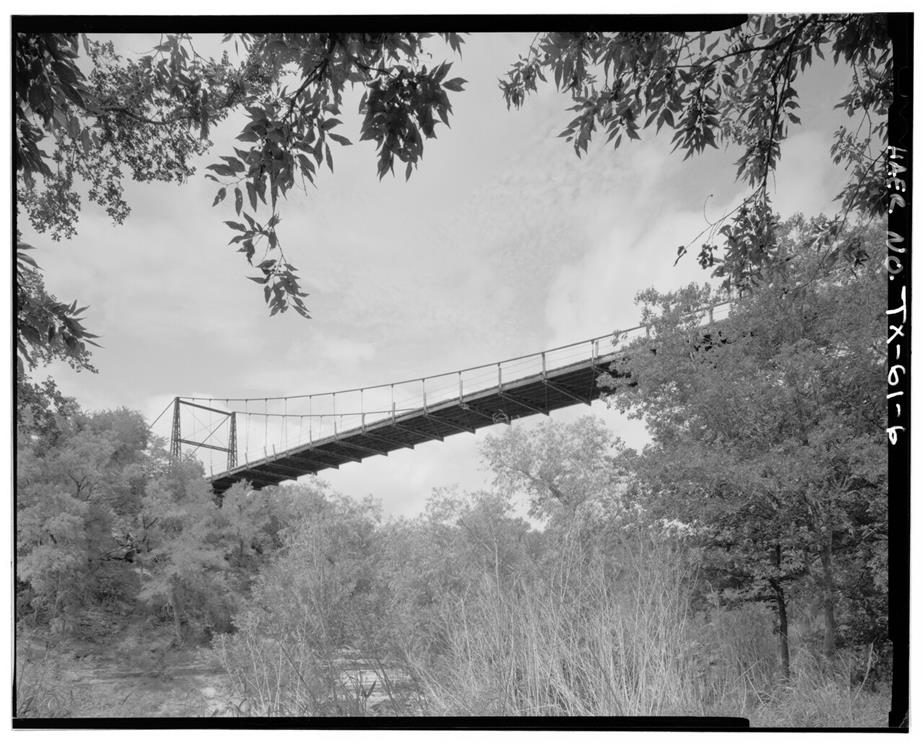
The present Regency Suspension Bridge was built in 1939 by the Austin Bridge Company with significant assistance from local ranchers and workers. Unlike its predecessors, this structure was designed as a suspension bridge, with a main span of about 344 feet and an overall length of about 403 feet. Its deck width is a narrow 14 feet, allowing only one lane of traffic at a time.
The bridge was built largely with hand labor, using timber decking and steel cables, and it quickly became both a practical river crossing and a gathering spot for local youth.
Historic Recognition and Restoration
The Regency Bridge was listed on the National Register of Historic Places on December 12, 1976. It is frequently described as the last suspension bridge in Texas open to automobile traffic.
In the late 1990s, the bridge underwent major restoration. On March 5, 1999, a rededication ceremony was held, attended by then-Governor George W. Bush, who helped highlight the bridge’s cultural and historical importance.
Recent Status
The bridge has required periodic maintenance due to age, fire damage, and traffic wear, but as of the 2020s, it remains open to vehicles, preserving its place as a landmark of rural Texas engineering and heritage.
Key Facts About Regency and Its Bridge
-
Founded: 1854 by David Hanna
-
Original Name: Hanna Valley (also Hannaville)
-
Post Office: Established 1876, renamed Regency in 1884, closed in early 1930s
-
Peak Population: Over 200 by the mid-1890s
-
Last Store Closed: 1971
-
Bridge History:
-
1903 – Truss bridge constructed
-
1924 – Collapsed under herd of cattle
-
1930s – Replacement bridge destroyed by flood
-
1939 – Current suspension bridge completed
-
-
Bridge Specs: 344-ft main span, 403-ft total length, 14-ft deck width
-
Recognition: Listed on the National Register of Historic Places in 1976
-
Restoration: Rededicated in 1999 with Governor George W. Bush attending
-
Current Use: Still open to automobile traffic, often called the last drivable suspension bridge in Texas
Photos: