

Rath City was a brief but notable buffalo hunters’ camp and trading post on the Double Mountain Fork of the Brazos River in present-day Stonewall County, Texas. It flourished only a few years during the peak of the southern plains buffalo hunt before vanishing as quickly as it appeared.
Founding and Purpose
In 1876, Kansas hide trader Charles Rath established a store and hide yard along the Double Mountain Fork. Rath had already made his name in the buffalo trade in Dodge City, Kansas, and saw opportunity further south as the great herds moved into Texas. His enterprise, sometimes called Rath, Lee & Reynolds, became the nucleus of the new settlement.
Known variously as Rath City, Reynolds, Hide Town, Rath, and Rath’s Store, the outpost was designed to serve hunters who were fanning across the plains to harvest hides. It offered supplies, a shipping point, and a social hub for the largely male hunting population.
Life in Rath City
At its height, Rath City featured:
-
Rath’s mercantile store and hide yard
-
A corral for stock
-
Two saloons and a dance hall
-
Dugouts, tents, and a few cabins where hunters and traders lived
The settlement was never large, but it was noisy, rough, and full of activity. Most residents were buffalo hunters and skinners who used Rath City as a base before returning to the plains.
The Buffalo Hunters’ War
In February 1877, hunter Marshall Sewell was killed by a Comanche party near present-day Lubbock. His death alarmed the buffalo hunters, and reports say about 300 men gathered at Rath City.
From this group, 45 hunters formed a posse that pursued the Comanches north. On March 18, 1877, they clashed at Yellow House Canyon, in modern Lubbock County. Though casualties were limited, the confrontation—sometimes called the Buffalo Hunters’ War—is remembered as one of the last armed conflicts between buffalo hunters and Native groups on the southern plains.
Decline and Abandonment
Rath City’s prosperity was tied directly to the buffalo hide trade. By 1879–1880, the southern herds had been almost completely wiped out. Without hides to ship, the hunters moved on, and the settlement rapidly emptied. By 1880, Rath City was effectively a ghost town, remembered only by a few graves and traces of dugouts.
Legacy
The original site of Rath City lies on private land today. In 1979, the Texas Historical Commission erected a marker along U.S. Highway 83, about nine miles south of Aspermont, to commemorate the settlement’s short but intense history. A nearby rest area allows visitors to pause and read about one of the Texas frontier’s most fleeting boomtowns.
Interesting Facts
-
Brief Lifespan: Rath City existed for barely four years, from 1876 to 1880.
-
Trading Hub: Charles Rath had earlier helped establish Dodge City, Kansas, as a hide market before moving south.
-
Frontier Conflict: The Yellow House Canyon fight of 1877 was among the last notable clashes between buffalo hunters and Comanches.
-
Marker Today: The THC marker along U.S. 83 remains the only visible sign of Rath City’s location.
Photos:
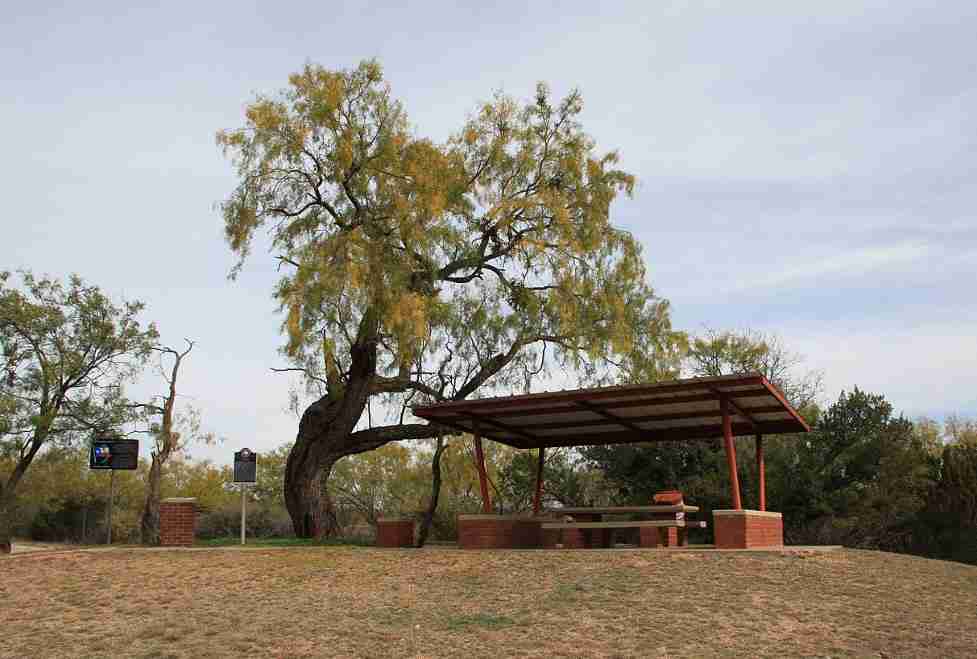
Rath City
Map:
Sorry, no records were found. Please adjust your search criteria and try again.
Sorry, unable to load the Maps API.
Houston
Texas
United States
- Yes—leashed pets allowed at roadside picnic/marker site
- Viewing historical marker, roadside picnic, frontier photography
- Picnic table, shade, interpretive plaque at rest area; no restrooms or services