
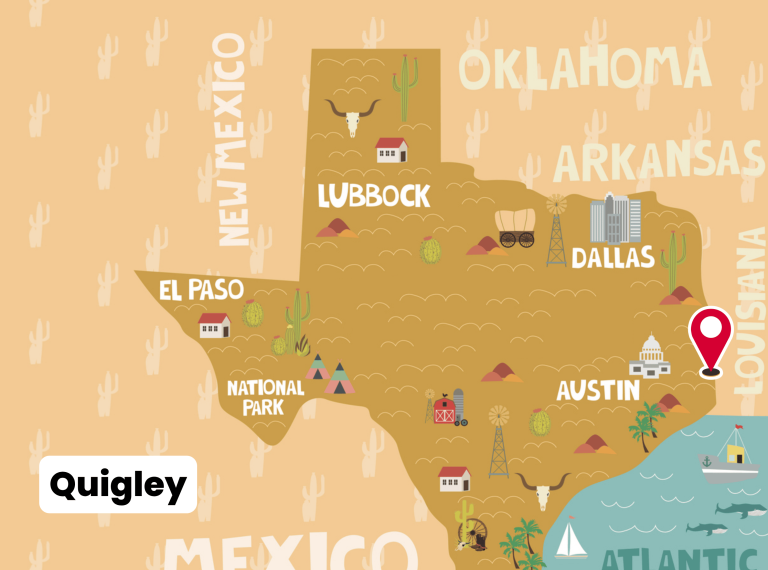
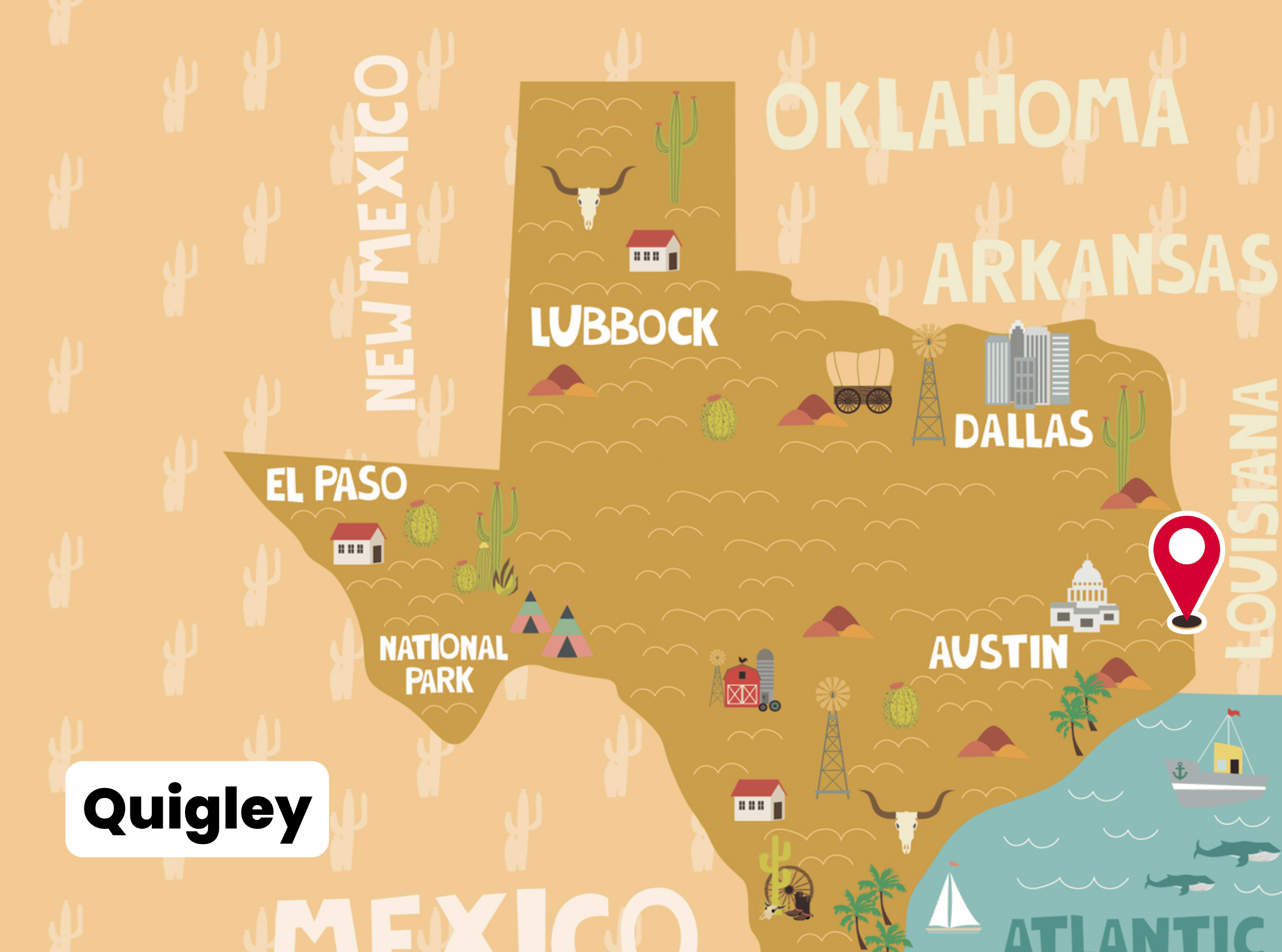
Quigley was a small logging camp in Jasper County, Texas, established in 1905. It was founded by C. E. Slade, who operated under contract with the Miller-Link Lumber Company, a significant player in East Texas’s early 20th-century timber industry. The camp existed during a period when the dense pine forests of the Piney Woods were being heavily harvested to supply lumber for Texas’s growing cities and railroads.
The Timber Industry in Jasper County
At the turn of the 20th century, Jasper County was one of several East Texas counties transformed by the lumber boom. Lumber companies purchased vast tracts of longleaf and shortleaf pine, then built sawmills, tram lines, and temporary settlements to extract the timber. These camps often grew rapidly, serving as both industrial sites and small communities for workers and their families.
Miller-Link Lumber Company, the firm associated with Quigley, was headquartered in Houston and operated large sawmills in the region. Contract loggers like C. E. Slade played a key role, moving into heavily forested areas and building infrastructure to harvest and deliver logs to the company’s mills.
Operations at Quigley
Quigley’s location was chosen for its proximity to timber and to the Orange & Northwestern Railway, which connected Jasper County to Orange, Texas, and beyond. To move logs from the forest to the rail line, Slade constructed a logging tram railroad. This tram system, typical of logging camps of the time, used small locomotives to haul timber from the woods to the main line.
Production at Quigley was substantial. Records indicate that the camp shipped up to 24 carloads of logs per day into the Miller-Link mill, a remarkable output for a rural logging settlement. This high volume reflected both the abundance of available timber and the efficiency of the tram and railway connection.
Community and Workforce
Though its purpose was industrial, Quigley supported a modest community. Population figures place it at about 150 people during its active years. While detailed descriptions of the camp’s layout are scarce, logging camps of the period typically included basic housing for workers, small supply stores, and sometimes rudimentary schools or churches if families were present. The central focus, however, was always the mill and the rail facilities that powered the camp’s economy.
Life in such camps was demanding and tied closely to the fortunes of the lumber industry. Workers often labored long hours in harsh conditions, with little permanence to the community. Camps like Quigley were known for their transient nature: once the nearby timber was cut, residents usually moved on to the next site of opportunity.
Decline and Legacy
Precise information about Quigley’s decline is limited. Sources do not confirm when operations ended or how long the camp remained active. Like many early 1900s logging camps, it likely dwindled when local timber resources were exhausted or when economic conditions shifted. Without a broader economic base beyond logging, such communities often disappeared quickly.
Today, Quigley is considered a ghost town. It is remembered primarily through references in railway and lumber industry records rather than through physical remnants. Its story reflects the broader boom-and-bust cycle of East Texas logging: rapid development, intense extraction, and eventual abandonment.
Historical Significance
Quigley is an example of the temporary extraction settlements that shaped East Texas during the lumber boom. The camp highlights several important themes:
-
The role of railroads in opening up forested areas for large-scale logging.
-
The influence of contract loggers like C. E. Slade, who expanded operations for larger lumber firms.
-
The short life spans of such camps, which often vanished once the resource was depleted.
While little specific detail about Quigley has survived, its existence offers insight into the industrial and social history of the Piney Woods region and the people who lived and worked there.
Photos:
Quigley
Map:
Sorry, no records were found. Please adjust your search criteria and try again.
Sorry, unable to load the Maps API.
Jasper County
Texas
United States
- Likely allowed with landowner permission; otherwise leash and permission required
- Forest walks, logging history exploration, photography, wildlife spotting
- None—no structures, trails, signs, or facilities