
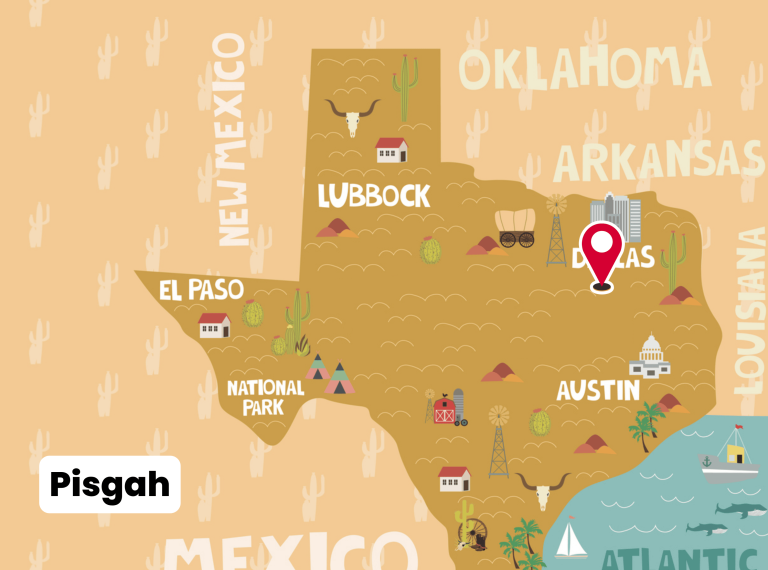
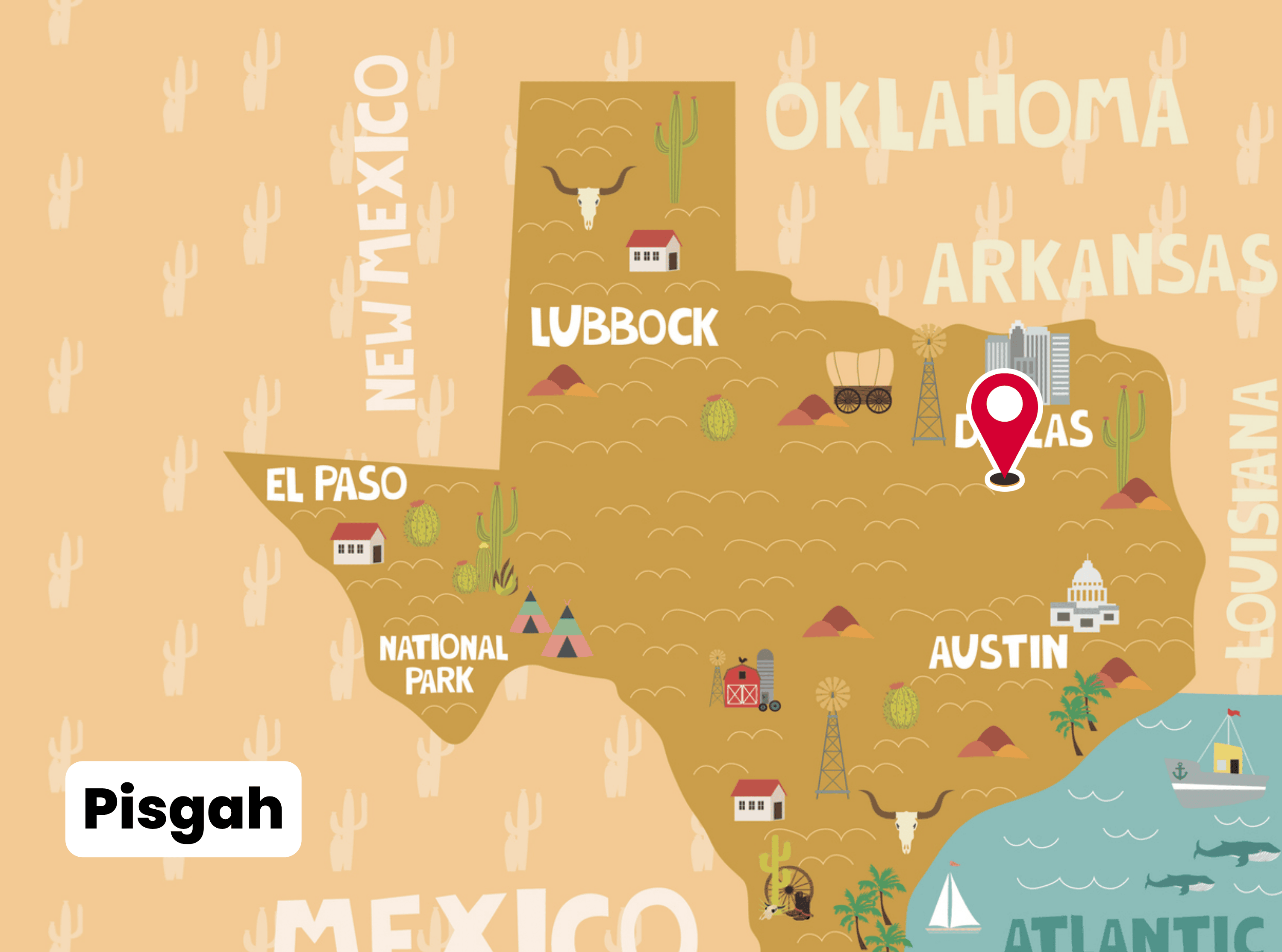
Pisgah is a historic rural community located on Pisgah Ridge, about seven miles south of Corsicana in south-central Navarro County. The settlement traces its origins to the late 1840s, when farming families established homesteads in the area. Over time, it developed into a small but important local center for surrounding agricultural operations.
Growth and Community Institutions
By the late 19th century, Pisgah had established the key institutions that marked it as a functioning rural community. A post office operated briefly from 1891 to 1892, providing limited mail service before closing. Around 1900, Pisgah supported a school, a church, several general stores, and a cotton gin and gristmill. These facilities made the settlement a convenient hub for nearby farm families who relied on it for both education and essential services.
Decline and Consolidation
After World War II, rural depopulation and school district reorganization reshaped many small Texas communities, and Pisgah was no exception. The local Pisgah school was consolidated with the Richland school system, effectively ending the community’s role as an educational center. As families moved toward larger towns or consolidated farming operations, local businesses closed, and the community’s population steadily declined.
By the mid-1960s, reports noted that only a cemetery and a few scattered homes remained. Pisgah, once a modest but vibrant settlement, had become a near-abandoned rural site.
Present Status
Today, Pisgah is considered a ghost town. While it no longer functions as an organized settlement, it remains identifiable through its cemetery and a few rural residences in the surrounding countryside. It is remembered as one of many small Navarro County communities that flourished briefly before fading due to larger economic and social changes in rural Texas.
Photos:
Pisgah
Map:
Sorry, no records were found. Please adjust your search criteria and try again.
Sorry, unable to load the Maps API.
Navarro County
Texas
United States
- On private land—permission required; leash etiquette advised
- Cemetery visitation, historical photography, rural walking tours
- None—bring water and supplies