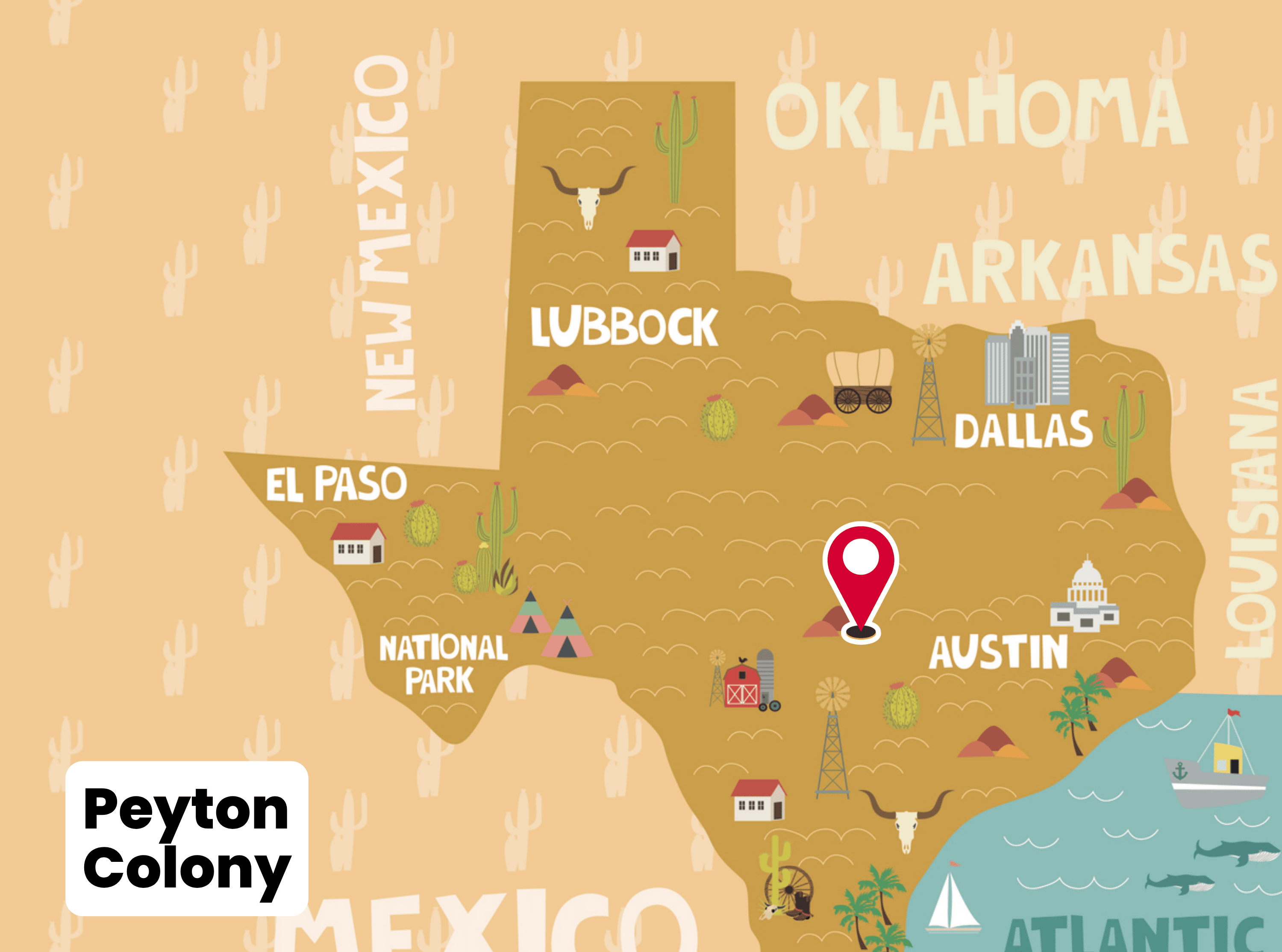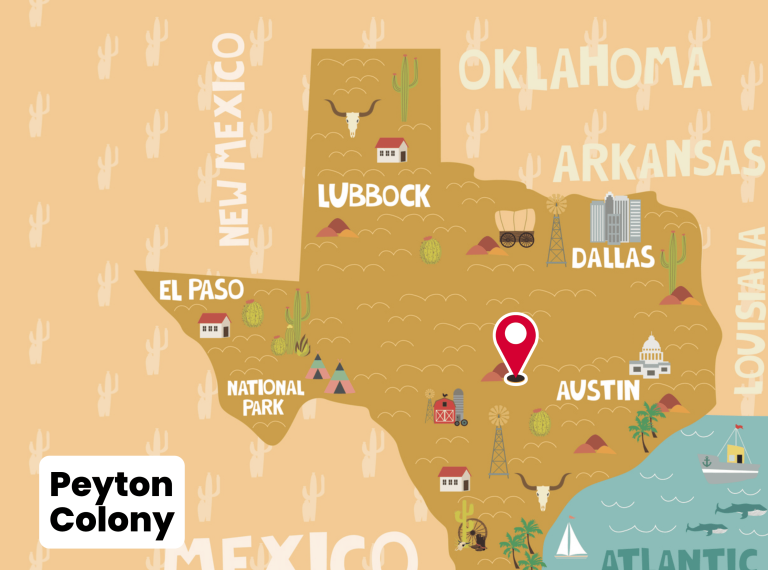
Peyton Colony—also known historically as Payton, Board House, or Boardhouse—is a freedmen’s settlement in southeastern Blanco County, Texas. It was founded shortly after the Civil War by Peyton Roberts, a formerly enslaved man, and a group of freed families who sought to establish a self-sufficient community in the Texas Hill Country.
Founding and Early Settlement
The community traces its beginnings to 1865, when Roberts, recently emancipated, organized a migration of freed people to Blanco County. He and others secured homestead land along Boardhouse Creek, seven miles east of Blanco, under the federal preemption law, which allowed settlers to claim and purchase public land. Although preemption formally ended in 1876, land patents for Peyton Colony were issued as late as 1880.
The settlement became known locally as the Freedmen’s Colony. Its families were largely independent, building homes, raising crops, and creating institutions that supported community life.
Community Institutions

Mt. Horeb Baptist Church
In 1874, Rev. Jack Burch, with land donated by community member Jim Upshear, organized Mt. Horeb Baptist Church. The church became the colony’s central gathering place, serving both spiritual and social functions. The building still stands today and continues to be a key historical marker of the settlement.
School

A log structure was first used for worship and schooling, and by 1877, a formal schoolhouse had been built. The school served African American children in grades 1 through 8 and remained in operation until 1963, nearly 90 years of continuous service. Education was a central focus for the colony’s residents, representing both opportunity and resilience during an era when Black schooling was scarce in rural Texas.
Lime Kiln
Peyton Roberts and neighbors also constructed a lime kiln, which supplied mortar for early homes and community buildings. The kiln was restored in the 1960s and today is preserved as part of a roadside park on Farm-to-Market Road 165. It is recognized as a significant historic site and is one of the most tangible remnants of the colony’s industry.
Later Development and Decline

Peyton Colony had a post office under the name Payton from 1898 to 1909, and again from 1918 to 1930 under the name Board House. The office operated from A. V. Walker’s lumber home.
As the 20th century progressed, younger generations of residents began to leave the area for opportunities elsewhere, leading to a gradual decline in population. By the mid-1900s, fewer families remained in the immediate settlement, though community institutions like the church and school persisted.
By 2000, the recorded population of Peyton Colony was about 30 residents, but its historic identity endured.
Heritage and Legacy
Today, Peyton Colony is remembered as one of the rare freedmen’s settlements in the Texas Hill Country. Many descendants of the original settlers still live in the area or maintain ties to the land.
Key physical sites—the Mt. Horeb Baptist Church, the schoolhouse, the restored lime kiln, and the community cemetery—remain as reminders of the determination of freed families to establish a lasting community after emancipation. The cemetery, with more than 170 graves, includes the resting place of founder Peyton Roberts and other early leaders.
The colony is recognized in local and state history as a significant example of African American resilience and self-reliance during Reconstruction and beyond.
Photos: