

The Pecos River is a vital waterway in the American Southwest and a major tributary of the Rio Grande. It begins high in the Sangre de Cristo Mountains of northern New Mexico, where snowmelt and mountain springs feed its headwaters. From there, the river winds southward for roughly 926 miles, carving its path through eastern New Mexico and western Texas before merging with the Rio Grande near Del Rio. Its course takes it through rugged canyons, desert plains, and scenic valleys, making it one of the most geographically diverse rivers in the region.
Geography and Natural Features
The Pecos River cuts through a dramatic landscape of cliffs and mesas, particularly as it flows through the Trans-Pecos region of Texas. The area surrounding the river is part of the Chihuahuan Desert, one of the largest desert ecosystems in North America. Despite the arid climate, the river supports a variety of plant and animal life. Cottonwoods, mesquite, and desert willows line its banks, providing shelter for wildlife such as deer, coyotes, and numerous bird species.
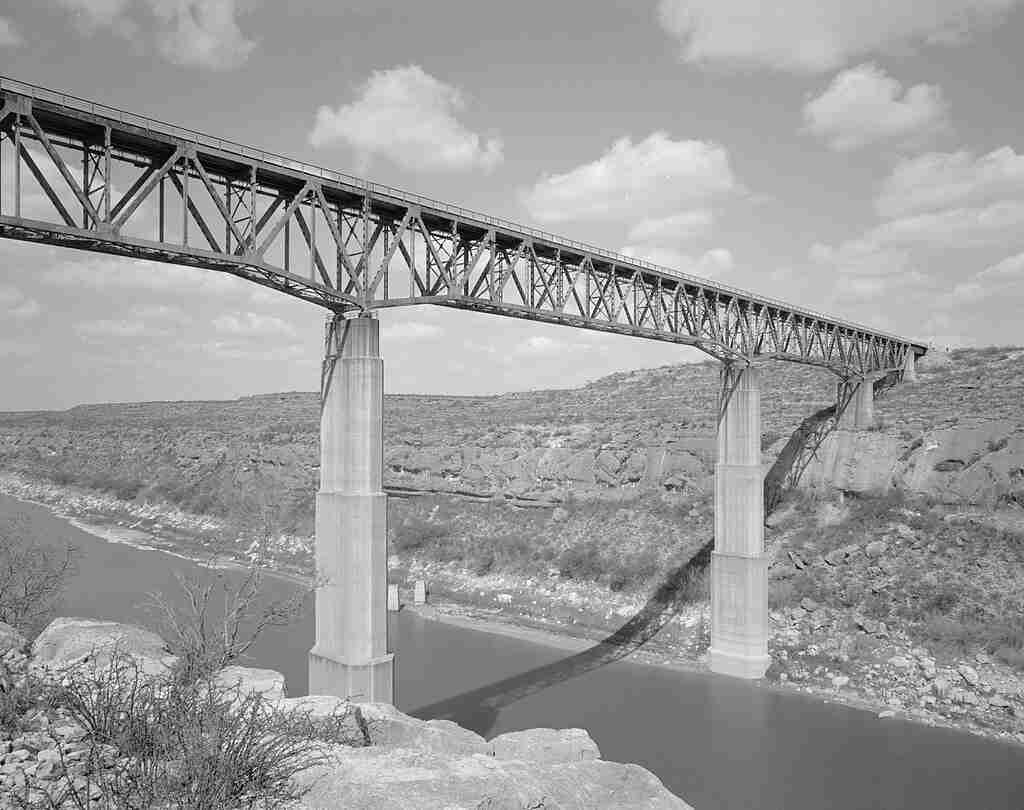
The river is also known for its striking canyon scenery, especially near the Pecos River High Bridge along U.S. Highway 90. This modern engineering landmark offers panoramic views of the steep canyon walls that frame the river below, highlighting the Pecos as both a natural and cultural landmark of West Texas.
Historical Importance
Long before modern settlement, the Pecos River served as an essential resource for Native American tribes living in the region. Archaeological findings indicate that Indigenous peoples relied on the river’s waters for hunting, fishing, and agriculture. In the 16th century, Spanish explorers followed the Pecos as part of their routes across the Southwest, and later, during the 19th century, the river became a landmark for settlers and cattle ranchers heading west.
The river gave its name to the town of Pecos, Texas, which became famous as one of the first rodeo towns in America. Phrases like “West of the Pecos” came to symbolize the frontier spirit and rugged independence of life in that part of the state. The Pecos River thus holds a special place in Texas folklore and history.
Ecology and Conservation
The Pecos River supports several rare and endangered species within its basin. One of the most notable is the Pecos Gambusia (Gambusia nobilis), a small fish native to the river’s spring systems in southeastern New Mexico and western Texas. The species is federally listed as endangered and has become a focus of conservation efforts by wildlife agencies in both states.
Although much of the river’s water is used for irrigation and agriculture, conservation programs aim to balance these needs with the preservation of native habitats. The river’s health is vital to sustaining the unique desert ecosystem that depends on it.
Modern Recreation and Significance
Today, the Pecos River offers opportunities for outdoor recreation, including fishing, kayaking, and scenic driving. Its canyons, wildlife, and remote beauty attract travelers seeking an authentic Texas landscape. The river’s striking contrast between rugged terrain and quiet waters continues to inspire artists, photographers, and nature enthusiasts.
While it no longer serves as a major transportation route, the Pecos River remains a symbol of resilience and natural wonder. It represents both the challenges and the beauty of life in the arid lands of West Texas and New Mexico.
Photos:
Map:
Sorry, no records were found. Please adjust your search criteria and try again.
Sorry, unable to load the Maps API.
Granbury
Texas
76048
United States
Yes
- Fishing
- Kayaking
- Hiking
- Picnic Areas
- Restrooms
- Walking Trails