
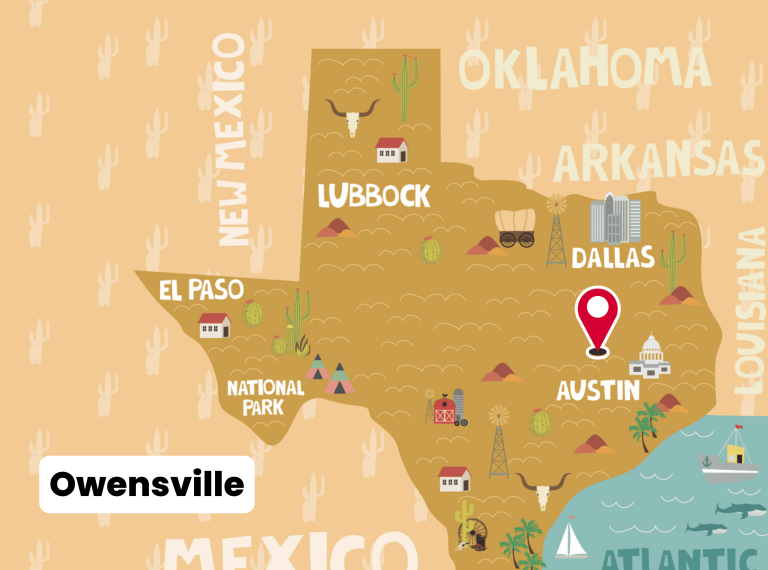
Owensville was founded in 1855 when it was designated as the new county seat of Robertson County, Texas. The land for the town was donated by David Love, and the settlement was named in honor of Harrison Owen, who served as the county’s first clerk from 1837 to 1846.
The courthouse contract was awarded in 1855, and by 1856 the courthouse was completed. That same year, the post office opened, and county records were transferred from Wheelock to Owensville. These developments firmly established the town as the legal and administrative center of Robertson County.
Growth as County Seat
Throughout the 1850s and into the Civil War years, Owensville grew as businesses and homes clustered around the courthouse square. The town became the focal point of county governance and commerce, with lawyers, merchants, and county officials operating in and around the square. Its status as county seat ensured a steady flow of people for court sessions and administrative business, giving the town a sense of importance in the region.
Decline after the Railroad
Owensville’s prosperity began to fade in the late 1860s. The arrival of the Houston and Texas Central Railway transformed the region, but the line bypassed Owensville in favor of the nearby community of Calvert. As Calvert grew rapidly into a major commercial center, Owensville’s strategic importance dwindled.
In 1868, during Reconstruction, County Judge I. B. Ellison oversaw the transfer of county records to Calvert. This move marked the beginning of Owensville’s decline. On July 13, 1870, the Texas Legislature formally declared Calvert the county seat, ending Owensville’s fifteen-year role as the county’s administrative center.
Post Office and Final Decline
The Owensville post office, established in 1856, continued to operate for a short time after the county seat was moved. It was closed permanently in 1872, though it briefly reopened from 1895 to 1897. Without the county government or the railroad to support it, Owensville never recovered.
The courthouse was removed following the relocation of the county seat, and many residents and businesses relocated to Calvert or other growing towns in the area. By the close of the 19th century, Owensville had become little more than a memory.
Present-Day Remnants
By the 20th century, Owensville had disappeared from the map as an active community. Today, the site is remembered primarily as a ghost town. Only a cemetery and a Texas Historical Marker remain to indicate its past significance.
Key Facts about Owensville
-
Founded in 1855, named after county clerk Harrison Owen.
-
Served as Robertson County seat from 1855 until 1870.
-
Courthouse completed in 1856; county records transferred from Wheelock the same year.
-
Post office operated from 1856–1872, briefly reopened 1895–1897.
-
Declined rapidly when bypassed by the Houston and Texas Central Railway.
-
Today, only a cemetery and historical marker remain.
Photos:
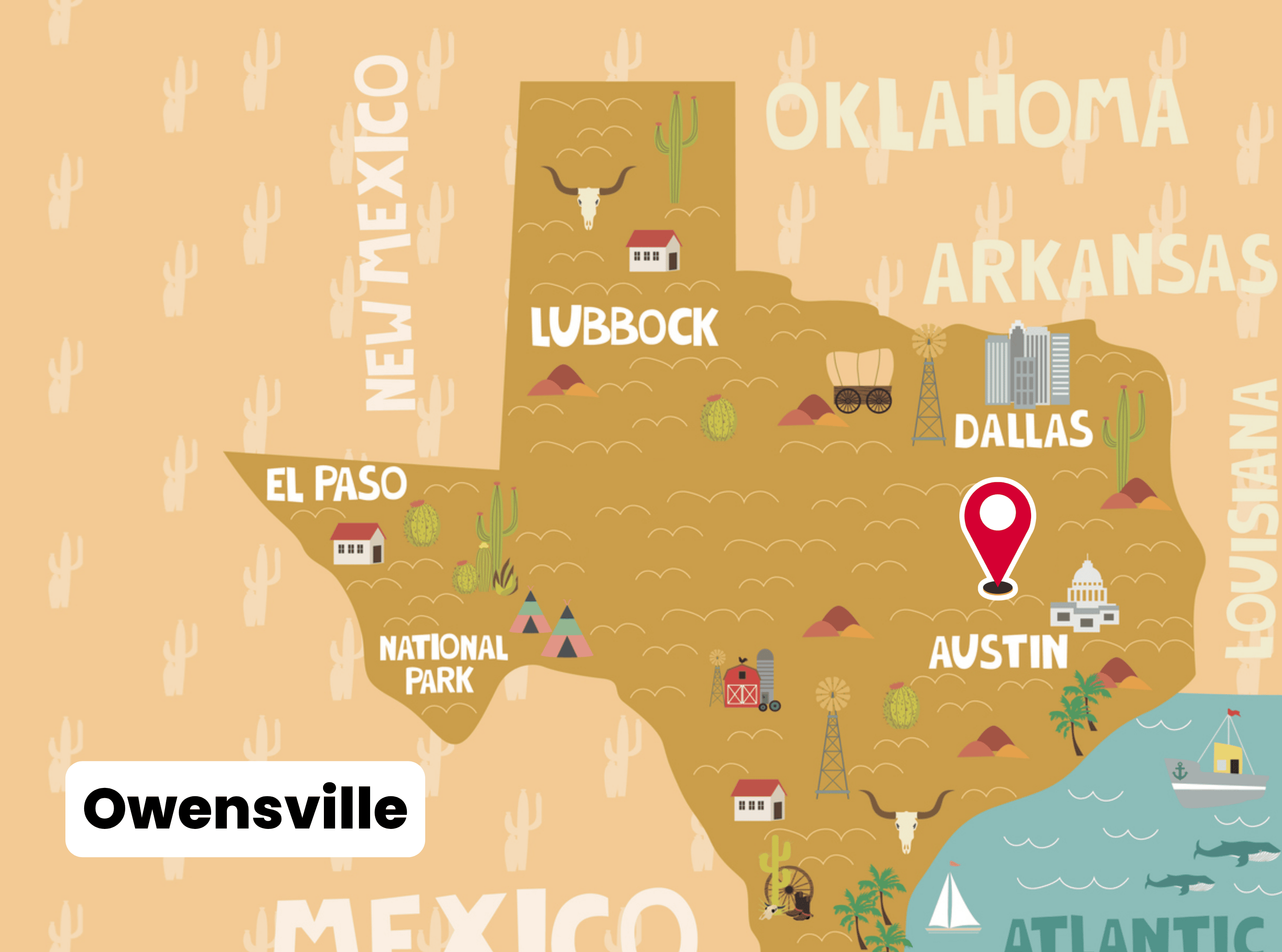
Owensville
Map:
Sorry, no records were found. Please adjust your search criteria and try again.
Sorry, unable to load the Maps API.
Robertson County
Texas
77856
United States
-
Leashed pets are permitted, particularly in areas around the cemetery and along public roads.
-
Visitors should not stray onto private property without landowner permission.
-
Historical exploration: locate the cemetery, inspect remaining gravestones, and visit the historical marker.
-
Photography: capture rustic cemetery scenes, marker plaques, and rural environments.
-
Ghost‑town research: delve into Robertson County archives, explore the brief post‑county‑seat era, and study land deeds.
-
Scenic drives: enjoy drives along FM 46, with pastoral views and nearby small-town landscapes.
-
None on-site: no restrooms, visitor centers, or signage beyond the historical marker.
-
Nearby Franklin (~5 mi SE): offers fuel, convenience stores, dining options, and lodging.