
Nottawa was established in the late 1880s in eastern Wharton County, midway between East Bernard and Lissie at the junction of U.S. Highway 90A and Farm Road 1164. The settlement attracted Czech immigrants, who made up the majority of early residents, along with a small number of English and Welsh families. These settlers came in search of farmland, and the community’s first structure was a small general store that served as its hub.
Agriculture and Rice Production
The early years were difficult, as much of the land was initially unsuitable for cotton and other common crops. Around 1898, settlers discovered that the soil and climate were ideal for rice farming. This discovery changed the trajectory of the area, revitalizing Nottawa and helping to establish Wharton County as a leading rice-producing and exporting region. Rice cultivation became the dominant agricultural activity and remained central to the local economy for decades.
Community Growth
A post office was opened in 1904, with Frank C. Boyden serving as the first postmaster. By 1914, the settlement supported a blacksmith and the Darby & Reed general store, which provided goods and services to farmers in the region. In 1917, the Nottawa Common School District No. 37 was established, offering grades one through six. The school represented a significant step in community development, as it provided local education for farm families’ children.
Decline of Services
Over time, improvements in roads and transportation reduced Nottawa’s role as a community center. In 1924, the local school was consolidated with the East Bernard district, though the Nottawa school building continued to serve some students until the mid-1940s. The post office closed in April 1930, and by the late 1940s the Darby & Reed store had also closed. These losses marked the beginning of the community’s decline.
Industrial Activity
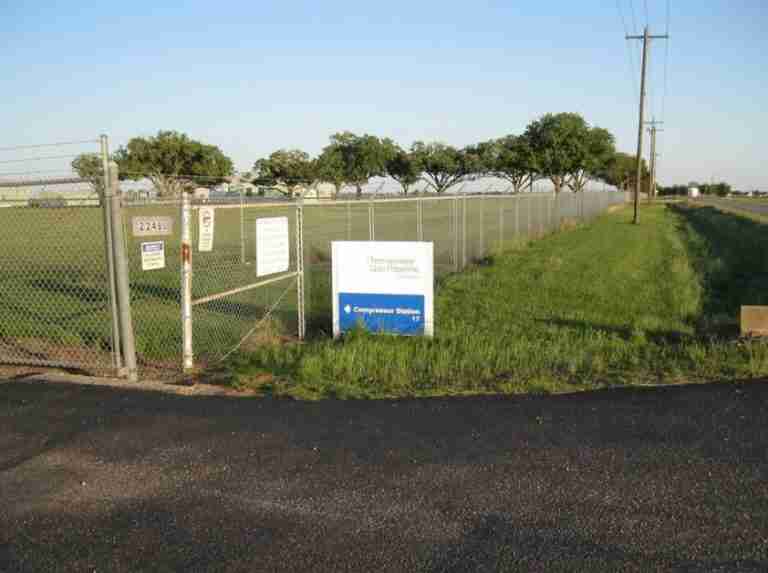
Although the commercial and social institutions faded, Nottawa experienced brief revivals through industrial projects. In 1944, the Tennessee Gas Transmission Company constructed a booster plant nearby, providing limited employment. In the 1970s, Occidental Petroleum established an agricultural research farm in the area, which operated for about two decades. Both facilities brought short-term activity but did not restore Nottawa as a residential or commercial community. The research farm closed in 1991.
Status by the 1990s

By the early 1990s, Nottawa no longer functioned as an organized community. The booster station and research farm were gone, and no businesses or institutions remained. Despite this, the name “Nottawa” continues to be used locally to refer to the area at the highway crossroads.
Key Facts About Nottawa
-
Founded: Late 1880s by Czech, English, and Welsh settlers
-
Location: Eastern Wharton County, at U.S. 90A and FM 1164
-
Economy: Transitioned from marginal farming to rice production after 1898
-
Institutions: Post office (1904–1930), general store, blacksmith, and school (1917–1924 consolidation with East Bernard)
-
Industrial landmarks: Tennessee Gas booster plant (1944) and Occidental Petroleum research farm (1970s–1991)
-
Status: Community ceased to exist by the early 1990s, though the place name remains in local use
Photos:
