
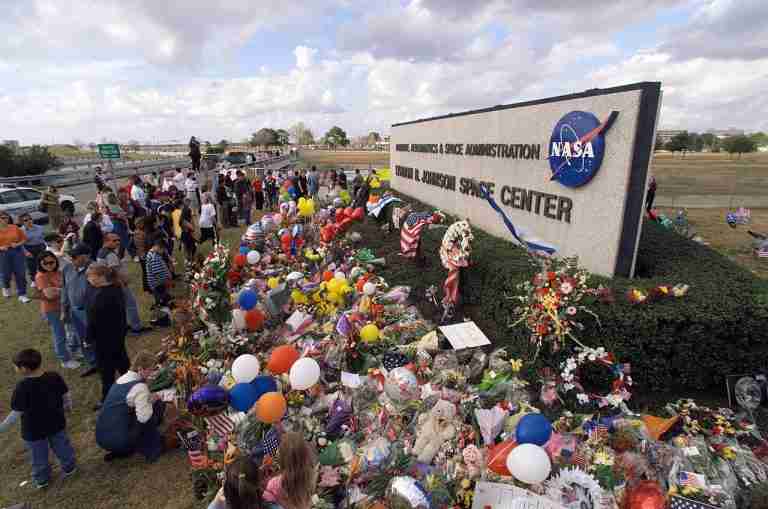
The Lyndon B. Johnson Space Center (JSC) is one of NASA’s most significant facilities, located in Houston, Texas. Established in 1961 as the Manned Spacecraft Center, it became the hub for human spaceflight operations, astronaut training, and mission control. The center was renamed in 1973 to honor President Lyndon B. Johnson, who played a major role in advancing America’s space ambitions. Since its founding, JSC has served as the heart of NASA’s efforts to send humans beyond Earth, from the Moon landings of the Apollo era to current work on the International Space Station (ISS) and preparations for future deep-space missions.
Mission and Operations
JSC oversees NASA’s human spaceflight activities, including astronaut selection, training, and mission management. It is home to the Christopher C. Kraft Jr. Mission Control Center, which has directed every U.S. crewed spaceflight since Gemini IV in 1965. The facility also houses simulators and laboratories that support astronaut readiness and spacecraft design. Its Neutral Buoyancy Laboratory, one of the world’s largest indoor pools, allows astronauts to rehearse spacewalks under conditions that simulate microgravity. The center continues to play a central role in supporting ISS operations and in research aimed at enabling human travel to Mars and beyond.
Research and Training
Training astronauts is one of JSC’s defining missions. The center’s programs combine physical conditioning, emergency procedure training, and technical education in spacecraft systems. Astronauts train in mockups of spacecraft modules, simulators, and underwater environments to prepare for zero-gravity challenges. JSC’s research divisions also develop technologies for life support, robotics, and human adaptation to long-duration spaceflight. The Astromaterials Curation Facility manages samples returned from space, including lunar rocks and other extraterrestrial materials, making it one of the most scientifically valuable collections in the world.
Facilities and Architecture
The Johnson Space Center spans more than 1,600 acres and includes dozens of specialized buildings. The architectural style of the original campus reflects mid-century modern design principles typical of early 1960s institutional architecture. The campus layout emphasizes open space and accessibility, supporting both research and public education. The center’s altitude averages around 50 feet (15 meters) above sea level, consistent with the low-lying Gulf Coast landscape of Houston.
Public Engagement
While the operational areas of JSC are not open to the public, the adjacent Space Center Houston serves as its official visitor center. This museum features interactive exhibits, spacecraft, and guided tram tours that provide a glimpse into NASA’s working facilities. Visitors can view Mission Control, astronaut training areas, and spacecraft such as the Saturn V rocket. Although JSC itself does not host public telescopes, its exhibits offer extensive insights into astronomy and human spaceflight history.
Legacy and Ongoing Role
The Johnson Space Center remains vital to NASA’s future. It coordinates astronaut activities for international partnerships aboard the ISS and leads research supporting upcoming Artemis missions to the Moon. The center’s engineers and scientists are also developing systems for future human exploration of Mars. Decades after the first lunar landing, JSC continues to embody the spirit of innovation that defines human space exploration.
Photos:
Map:
Sorry, no records were found. Please adjust your search criteria and try again.
Sorry, unable to load the Maps API.
Houston
Texas
77058
United States