
Longhorn Cavern State Park, located in Burnet County, Texas, features one of the most remarkable geological formations in the state. Unlike many caves shaped by acidic water dissolving limestone, Longhorn Cavern was primarily carved by the flowing action of an ancient underground river thousands of years ago. The result is a series of smooth, sculpted passages that stand out among Texas caverns for their unique shapes and natural beauty.
Centuries of Human History
The cavern’s story extends far beyond its geology. Archaeological evidence shows that prehistoric peoples used the large entrance chamber for shelter. Later, local Native American tribes are believed to have used the site for refuge and ceremony. During the Civil War, Confederate soldiers mined bat guano from within the cave to produce saltpeter, a key ingredient in gunpowder. Though not a military outpost, the cavern was a resource that aided the Confederate war effort.
From Community Gathering Place to Underground Nightclub
By the early 20th century, Longhorn Cavern had become a place of local curiosity and entertainment. In the late 1920s and early 1930s, it served as a distinctive underground venue where dances and musical performances were held. Local accounts describe it as a lively social spot, complete with music that was even broadcast by radio to nearby towns. This brief era added a colorful chapter to the cavern’s long history, marking it as one of the most unusual gathering places in Texas.
The Civilian Conservation Corps Transformation
In the 1930s, the Civilian Conservation Corps (CCC) transformed the cavern and surrounding land into a formal state park. Company 854 of the CCC spent several years clearing debris, installing walkways, and improving the cavern for safe public access. The Corps also constructed surface facilities, including the park’s administration building, stone stairways, and an observation tower, all designed in the rustic architectural style common to CCC projects. Their work was part of a larger effort to provide employment during the Great Depression while preserving America’s natural landmarks.
Recognition and Preservation
The land that would become Longhorn Cavern State Park was acquired between 1932 and 1937, and the park officially opened to the public in 1938. Decades later, in 1971, Longhorn Cavern was designated a National Natural Landmark, acknowledging both its geological significance and the cultural history embedded within its walls. Today, visitors can take guided tours through the cavern’s winding passages, admire the CCC craftsmanship, and experience a piece of Texas history shaped by both nature and human hands.
Photos:
Longhorn Cavern
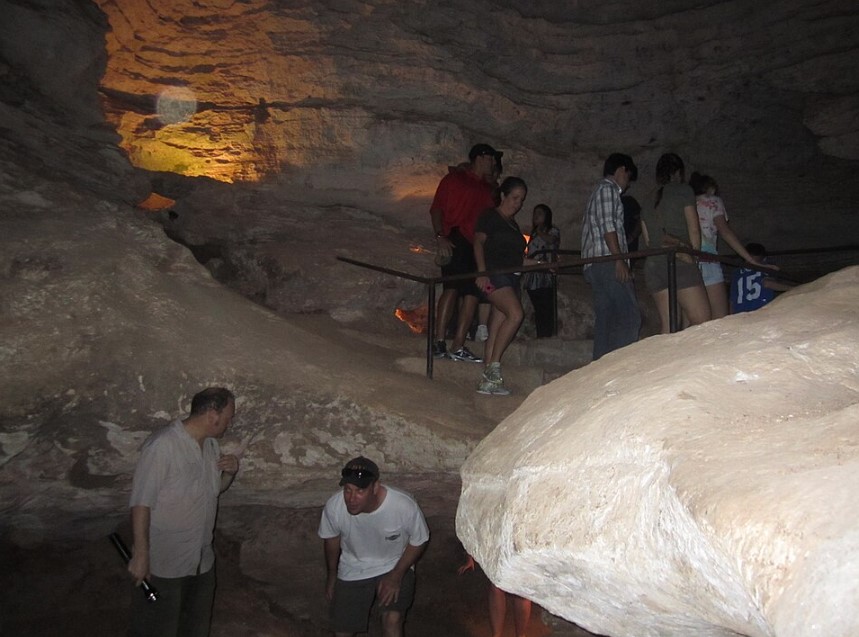
Longhorn Cavern
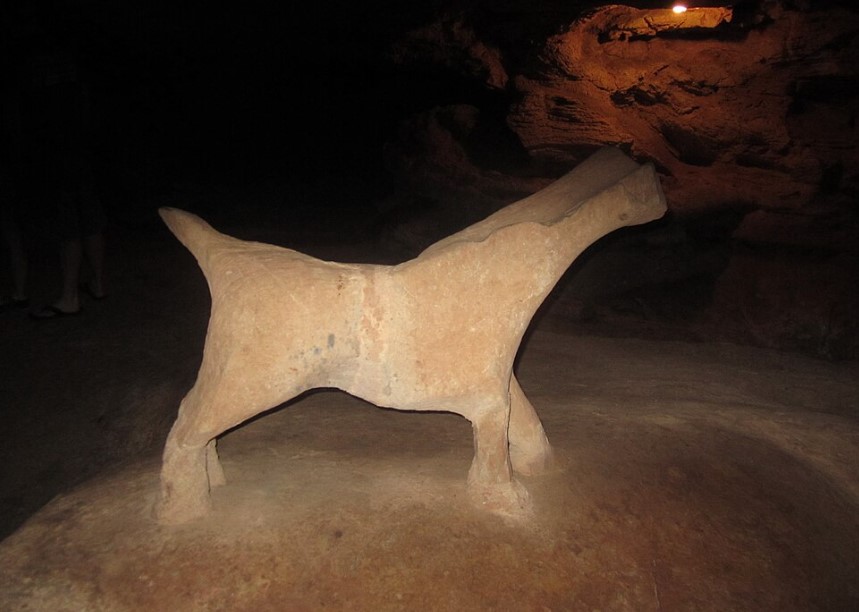
Queen's Watchdog
Map:
Sorry, no records were found. Please adjust your search criteria and try again.
Sorry, unable to load the Maps API.
Burnet
Texas
78611
United States
Pets are allowed in the park's above-ground areas but are not permitted inside the cavern.
-
Guided Cavern Tours: Explore the cavern's unique geological formations and learn about its rich history through guided tours.
-
Hiking: The park offers over a mile of nature trails, providing opportunities to observe local flora and fauna.
-
Picnic Areas: Designated spots equipped with tables for visitors to enjoy outdoor meals.
-
Visitor Center: Offers educational exhibits and information about the park's history and geology.