
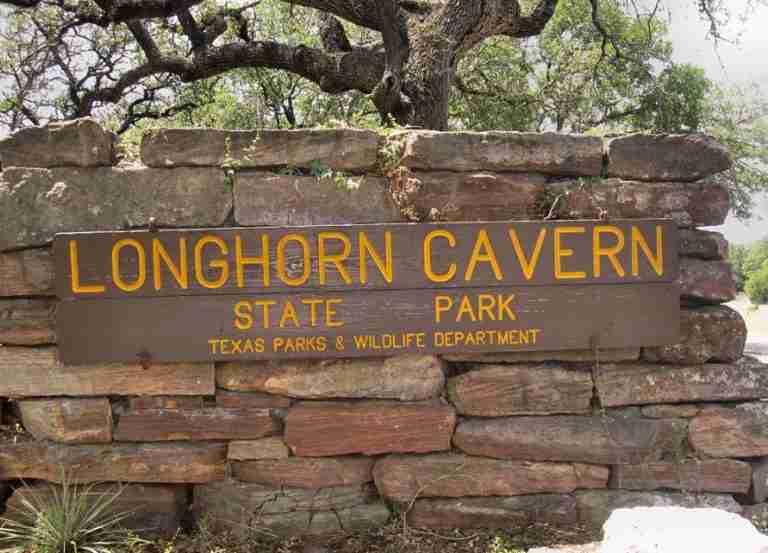
Longhorn Cavern State Park sits in the Texas Hill Country on rock that formed hundreds of millions of years ago. The area was once covered by a shallow sea where layers of sediment built up and eventually hardened into limestone. Later geological uplift created fractures in that limestone. Groundwater moved through those cracks, dissolving and cutting its way through the rock to create the smooth passageways the cavern is known for today. Unlike many caves shaped mainly by dripping water, Longhorn Cavern was carved by flowing water, which produced wide rooms and polished walls with few stalactites or stalagmites.
Human History and Uses
People have used Longhorn Cavern for thousands of years. Evidence shows that prehistoric peoples found shelter inside its large chambers. During the Civil War era, the cavern was a source of bat guano, which was processed for nitrate used in gunpowder production. In the 1920s the cavern gained a reputation as a unique social venue, hosting dances and music events inside its large underground hall.
In the early 1930s the State of Texas acquired the land around the cavern. Civilian Conservation Corps Company 854 began major improvements in 1934. Their work included clearing debris from the cavern floor, building trails and roads, and constructing the stone structures still visible in the park today. These efforts made the cavern safe and accessible for guided tours, which began in 1938 under state park management.
Park Features and Visitor Experience
Longhorn Cavern State Park offers guided tours that take visitors deep into its developed passageways. The tour route passes through large rooms and narrow corridors, providing an up-close look at the geological forces that shaped the cavern. Inside, temperatures stay around the high sixties year-round, providing a cool environment even during hot Texas summers.
Above ground, visitors can enjoy picnic areas and walking trails that highlight the surrounding Hill Country landscape. The combination of natural scenery and underground features makes the park a popular day-use destination for families, travelers, geology enthusiasts, and history fans.
Historical Recognition and Significance
Longhorn Cavern is notable because only a small percentage of caves form through the action of flowing water. Its smooth, river-carved passages set it apart from most cavern systems. In 1971 it was designated a National Natural Landmark in recognition of its geological importance. Many structures in the park, including the entrance building and stone walkways, remain as lasting examples of Civilian Conservation Corps craftsmanship and contribute to the site’s historic character.
Practical Visitor Notes
Longhorn Cavern State Park is a day-use park. Guided tours require a fee, and hours and availability can vary by season. Above-ground areas such as trails and picnic spaces complement the cavern experience. Overnight camping is not offered within the park, so visitors typically plan their trip as a day visit or stay in nearby lodging.
Photos:

Longhorn Cavern State Park

Longhorn Cavern State Park

Longhorn Cavern State Park
Map:
Sorry, no records were found. Please adjust your search criteria and try again.
Sorry, unable to load the Maps API.
Burnet
Texas
78611
United States
- General Areas: Pets are welcome on above-ground hiking trails and in shaded picnic areas.
- Restricted Areas: Pets are not permitted inside the cavern or any park buildings.
- Guidelines: Pets must be leashed and supervised at all times; they cannot be left unattended in vehicles.
- Guided cavern tours
- Hiking
- Picnicking
- Wildlife observation
- Photography
- Gemstone mining
- Geode cracking
- Visitor center with gift shop
- Snack bar
- Picnic areas
- Hiking trails
- Historic CCC-built structures
Billy Hathorn, Tourists at Longhorn Cavern IMG 2026, CC BY 3.0