
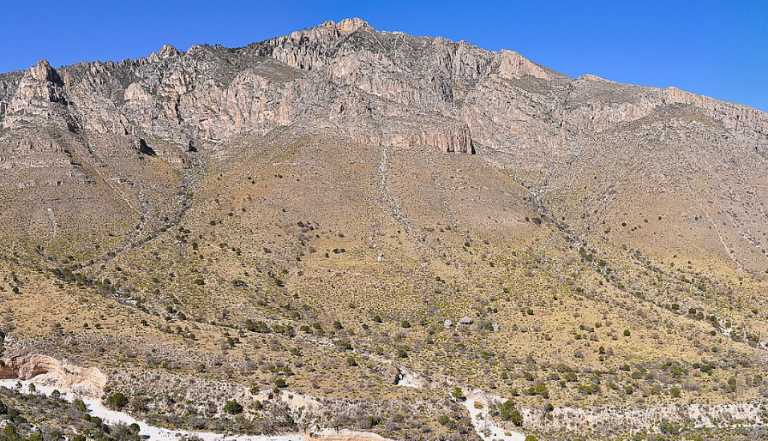
Hunter Peak stands tall in Guadalupe Mountains National Park in far western Texas, within Culberson County. Rising to an elevation of 8,368 feet (2,550 meters), it is recognized as one of the highest peaks in Texas, often listed as the sixth-highest in the state and the fifth-highest within the park. The mountain’s impressive height and scenic surroundings make it a favorite destination for experienced hikers and outdoor enthusiasts seeking panoramic views of the Chihuahuan Desert and surrounding mountains.
Location and Landscape
Hunter Peak sits northwest of the Pine Springs Visitor Center, the main access point to the park. The mountain is part of the Guadalupe Mountains, which form the highest portion of Texas and are known for their dramatic cliffs, canyons, and fossil-rich limestone formations. The north slope of Hunter Peak is gently graded and supports a forested ecosystem dominated by pinyon pine, ponderosa pine, and Douglas fir, offering shade and a cooler microclimate. In contrast, the south slope is steeper and more rugged, transitioning into the arid desert landscape typical of the lower elevations. This contrast provides hikers with an exceptional cross-section of the region’s diverse habitats within a relatively short distance.
Hiking and Topographic Relief
Hiking to the summit of Hunter Peak is a challenging yet rewarding experience. The most popular route begins from the Pine Springs Trailhead, climbing steeply through Pine Spring Canyon before looping along the Tejas and Bowl Trails. The mountain demonstrates striking topographic relief, rising approximately 2,500 feet above Pine Spring Canyon in just one mile. From the summit, hikers are rewarded with expansive views of Guadalupe Peak, El Capitan, and the vast desert floor stretching toward New Mexico. On clear days, the sightlines extend for dozens of miles, highlighting the remote beauty of this corner of Texas.
Historical Background and Naming
Hunter Peak is named after Jesse Coleman “J.C.” Hunter, a rancher and conservation-minded landowner who played a significant role in the early history of the Guadalupe Mountains. Hunter’s efforts in preserving the land helped lay the groundwork for what would eventually become Guadalupe Mountains National Park, established in 1972. His legacy endures through the mountain that bears his name, symbolizing both the rugged independence of early West Texas settlers and their appreciation for the natural landscape.
Ecology and Climate
The varying elevation and slope exposure of Hunter Peak create distinct ecological zones. The higher elevations host coniferous forests that support mule deer, elk, and a variety of bird species, including the Steller’s jay and mountain chickadee. The lower southern slopes transition into scrub desert filled with agave, sotol, and yucca. Seasonal temperature changes can be extreme, with summer temperatures in the canyons climbing into the 90s Fahrenheit, while winter conditions often bring snow and ice to the summit.
A Landmark of the Guadalupe Mountains
Hunter Peak represents a meeting point of geological history, natural diversity, and human legacy. Its position within Guadalupe Mountains National Park provides visitors a chance to experience both alpine and desert environments in a single hike. The peak’s elevation, unique landscape contrasts, and connection to J.C. Hunter’s conservation efforts make it a defining feature of one of Texas’s most striking mountain regions.
Photos:
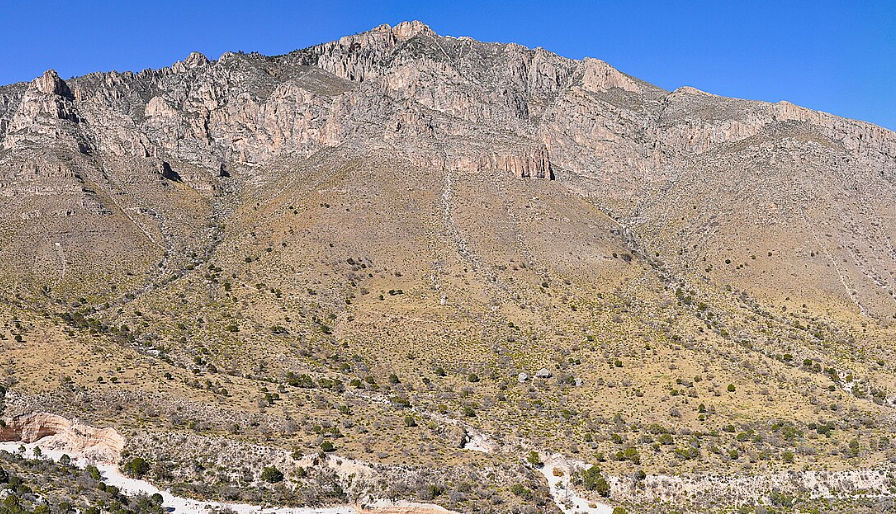
Hunter Peak
Map:
Sorry, no records were found. Please adjust your search criteria and try again.
Sorry, unable to load the Maps API.
Salt Flat
Texas
79847
United States
Pets are permitted in campgrounds, picnic areas, and along roads, but they are not allowed on trails, in the backcountry, or in park buildings.
-
Hiking: The park offers various trails, including the loop to Hunter Peak via the Bear Canyon and Tejas Trails, providing solitude and stunning views.
-
Wildlife Observation: The diverse ecosystems support a variety of wildlife, making it ideal for birdwatching and photography.
-
Camping: Designated campgrounds are available for tents and RVs, offering a rustic experience under the stars.
-
Visitor Center: Provides information, exhibits, and restrooms to enhance your visit.
-
Picnic Areas: Equipped with tables and grills, perfect for family outings.
-
Campgrounds: Pine Springs Campground offers sites with picnic tables and grills; RV sites are available with limited hookups.