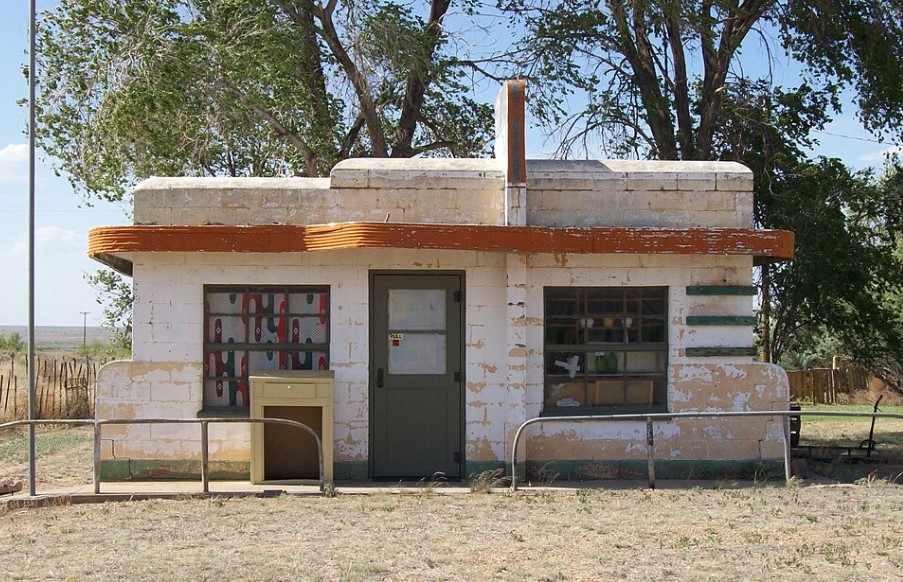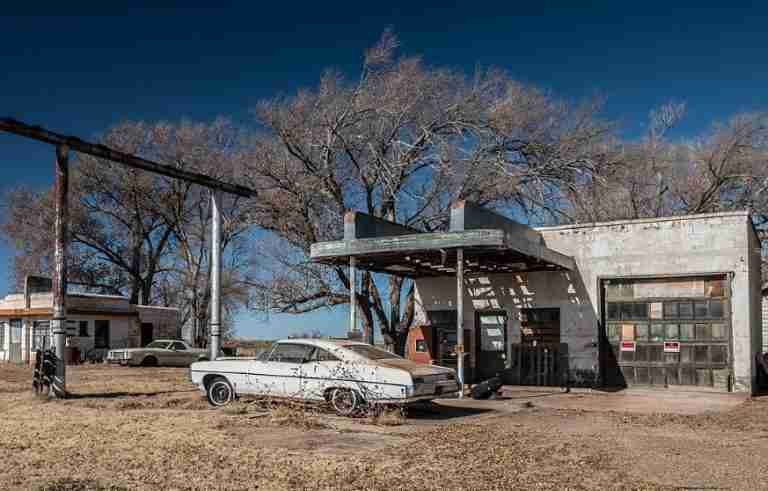
Glenrio is a ghost town that sits on the border between Texas and New Mexico, directly along the historic U.S. Route 66. The town spans Deaf Smith County, Texas, and Quay County, New Mexico. Today it is recognized as part of the Glenrio Historic District, a preserved site listed on the National Register of Historic Places in 2007.
Early History
Glenrio began in the early 1900s as a railroad siding and shipping point for the Chicago, Rock Island, and Pacific Railroad. Most sources place its founding around 1903, when the Rock Island line expanded through the Texas Panhandle. The town originally served nearby ranchers and farmers, providing a place for shipping cattle and agricultural products.
By the 1910s and 1920s, Glenrio added a post office, stores, and a few homes. Its position directly on the state border gave it a distinctive identity from the very beginning.
Route 66 Era
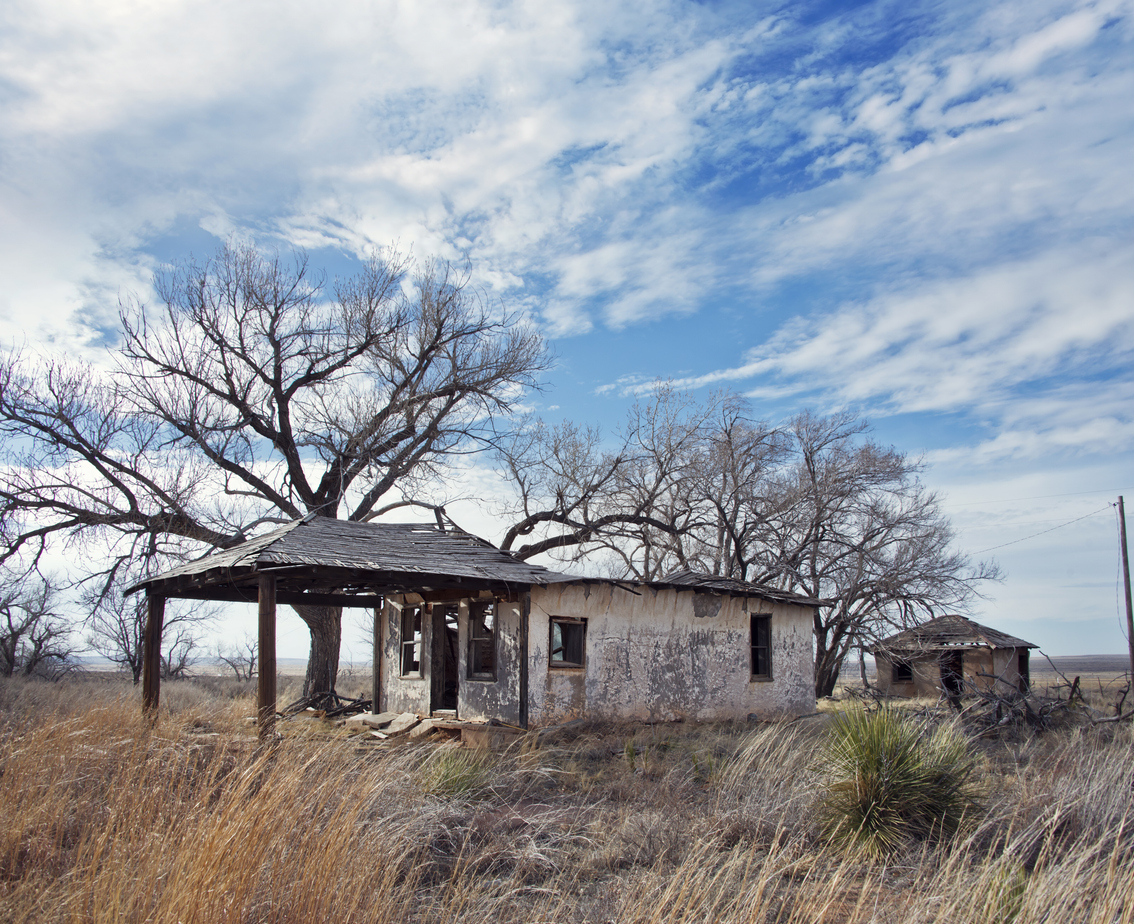
When U.S. Route 66 was created in 1926, Glenrio’s fortunes grew. The highway passed right through town, and Glenrio quickly developed into a service stop for travelers.
A curious feature of the town’s geography shaped its businesses. Deaf Smith County, Texas, was a dry county, meaning alcohol sales were prohibited. As a result, bars and liquor stores were located on the New Mexico side. Conversely, New Mexico had higher gasoline taxes than Texas, so gas stations were primarily built on the Texas side of the border. This arrangement made Glenrio unusual among Route 66 communities, with businesses strategically placed depending on which state law benefited them most.
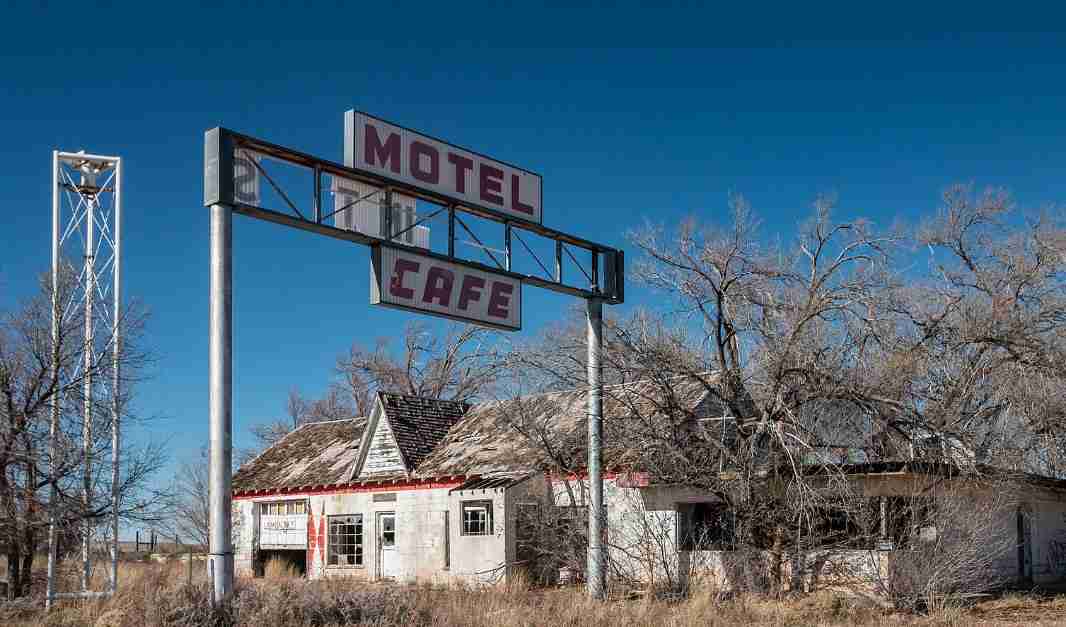
Over the following decades, Glenrio supported motels, diners, service stations, and small shops. Among the most notable establishments were the State Line Motel and the Little Juarez Café, both of which catered to cross-country travelers. At its peak, Glenrio had about 30 to 40 residents, and its economy revolved almost entirely around the steady stream of motorists using Route 66.
Decline
The decline of Glenrio began in the late 1960s. Freight rail service ended in 1955, leaving the community dependent solely on highway travelers. The final blow came in the early 1970s when Interstate 40 (I-40) was completed just north of Glenrio. The bypass, finished around 1973, diverted all cross-country traffic away from the town.
With no reason for motorists to stop, businesses quickly closed. By the late 1970s, Glenrio was largely abandoned. Today, only a handful of residents live nearby, and most of the town’s once-busy businesses remain empty.
Glenrio Historic District
In 2007, the Glenrio Historic District was added to the National Register of Historic Places. The district covers about 17 abandoned buildings, as well as portions of the original Route 66 roadbed. Structures include motels, diners, gas stations, and private homes dating from the 1910s through the mid-20th century.
Architecturally, several buildings show influences of Streamline Moderne / Art Moderne design, reflecting the style popular along Route 66 in the 1940s and 1950s. The State Line Motel sign and the remains of the Little Juarez Café are among the most photographed features of Glenrio today.
In Popular Culture
Glenrio holds a place in American cultural history. Scenes from the 1940 film adaptation of John Steinbeck’s The Grapes of Wrath were filmed in the town, highlighting its significance during the Dust Bowl and Great Depression era.
Because of its preserved ruins and authentic Route 66 character, Glenrio is a frequent stop for photographers, history enthusiasts, and Route 66 travelers seeking a glimpse of mid-20th-century roadside life.
Name Origin
The name “Glenrio” is a combination of “glen” (a Scottish term for valley) and “rio” (Spanish for river). Ironically, the town is neither in a valley nor near a river. The origin reflects the mixture of cultural influences in the American Southwest more than the actual geography of the site.
Today
Although nearly abandoned, Glenrio is preserved as a poignant symbol of America’s road travel era. Visitors today can explore the ruins of service stations, motels, and diners that once served travelers along Route 66. The contrast between empty buildings and the still-visible highway roadbed serves as a reminder of how shifts in infrastructure—like the creation of I-40—reshaped small communities across the United States.
For Route 66 enthusiasts, Glenrio remains a must-see stop, offering an authentic and atmospheric window into the rise and fall of roadside America.
Photos:
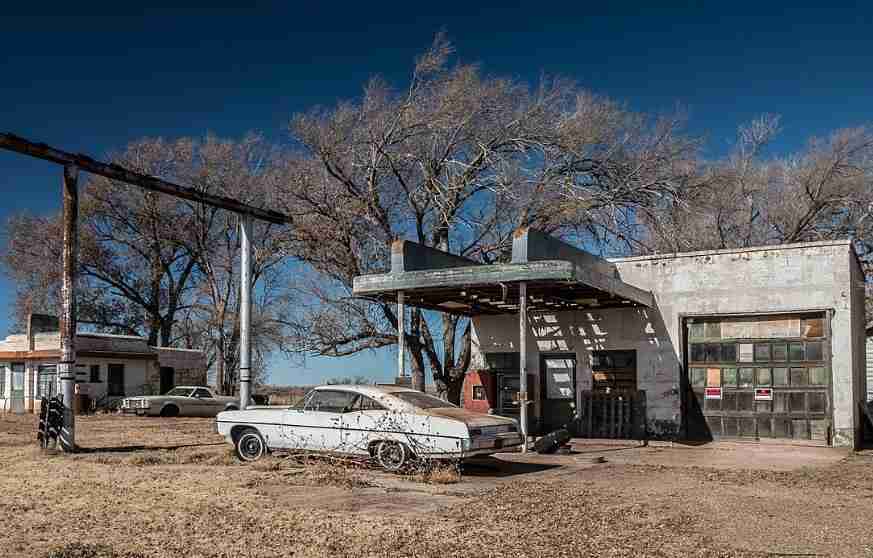
Glenrio
Glenrio