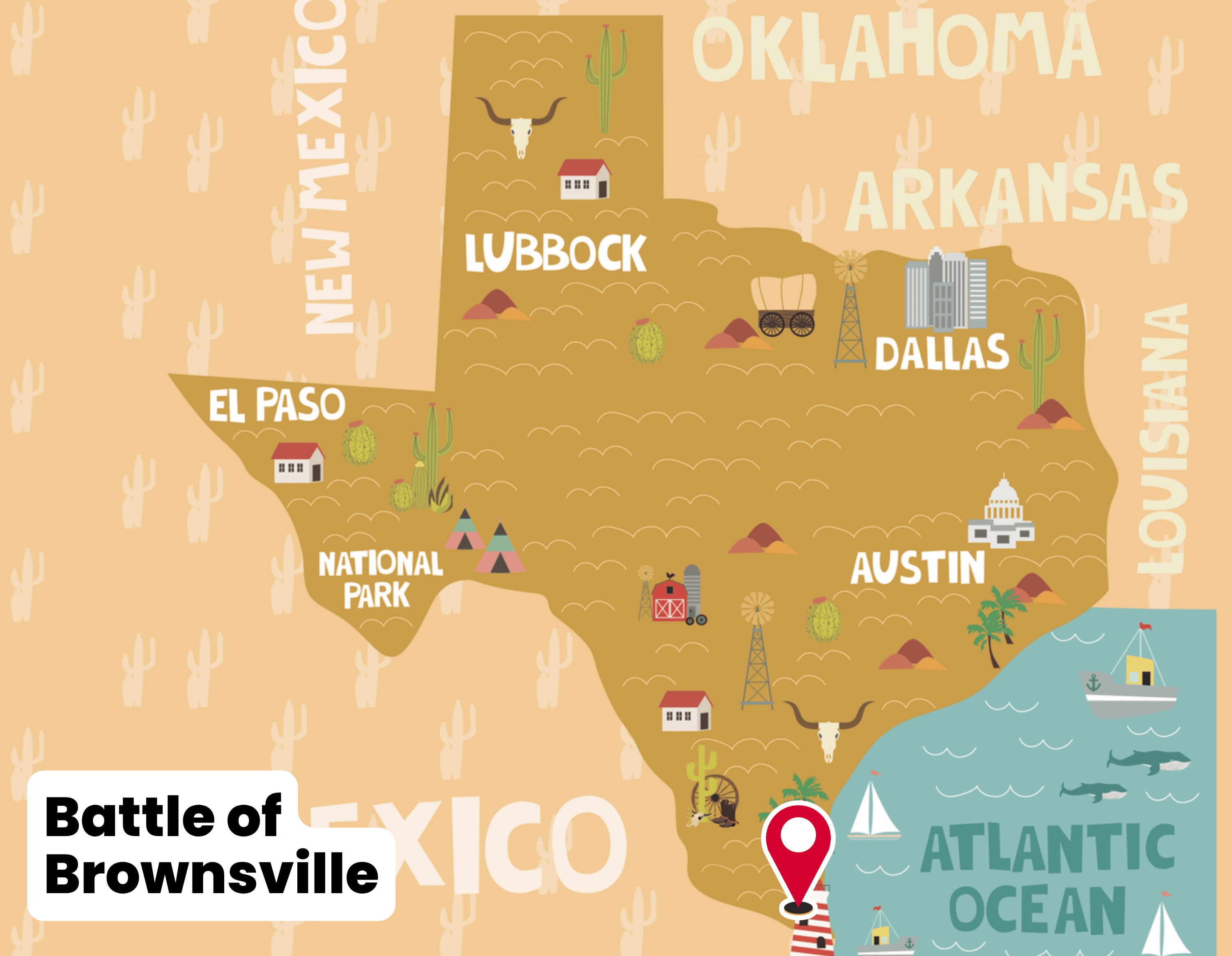
Brownsville, located at the southern tip of Texas along the Rio Grande, played an important role in several military conflicts. Although the town was not founded until 1848, the region around it witnessed key battles during the U.S.–Mexican War and the American Civil War. Today, its history is remembered through sites such as Fort Brown and nearby battlefields.
U.S.–Mexican War (1846–1848)

Brownsville’s military story begins before the town existed. In 1846, U.S. forces built Fort Texas, later renamed Fort Brown in honor of Major Jacob Brown, who was killed defending it. The fort was attacked by Mexican troops in May 1846, marking the start of the war.
Nearby, two important U.S. victories occurred:
-
Battle of Palo Alto (May 8, 1846)
-
Battle of Resaca de la Palma (May 9, 1846)
These early battles set the tone for the U.S.–Mexican War and helped secure American control of the Rio Grande border.
American Civil War (1861–1865)
During the Civil War, Brownsville’s location on the border made it a lifeline for the Confederacy. Cotton was smuggled across the Rio Grande into Mexico and traded for weapons and supplies, bypassing the Union blockade.
First Battle of Brownsville (November 2–6, 1863)
Union General Nathaniel P. Banks led forces that captured Brownsville, aiming to disrupt Confederate trade. Confederate troops retreated, destroying supplies before withdrawing into Mexico.
Second Battle of Brownsville (July 1864)
Confederate forces briefly retook the city after Union troops pulled back, reopening the trade routes across the border.
Battle of Palmito Ranch (May 12–13, 1865)
Often called the last land battle of the Civil War, this engagement occurred just east of Brownsville. Confederate Colonel John “Rip” Ford defeated Union forces under Colonel Theodore Barrett. Ironically, it was a Confederate victory fought weeks after General Robert E. Lee had already surrendered in Virginia.
Visiting Today
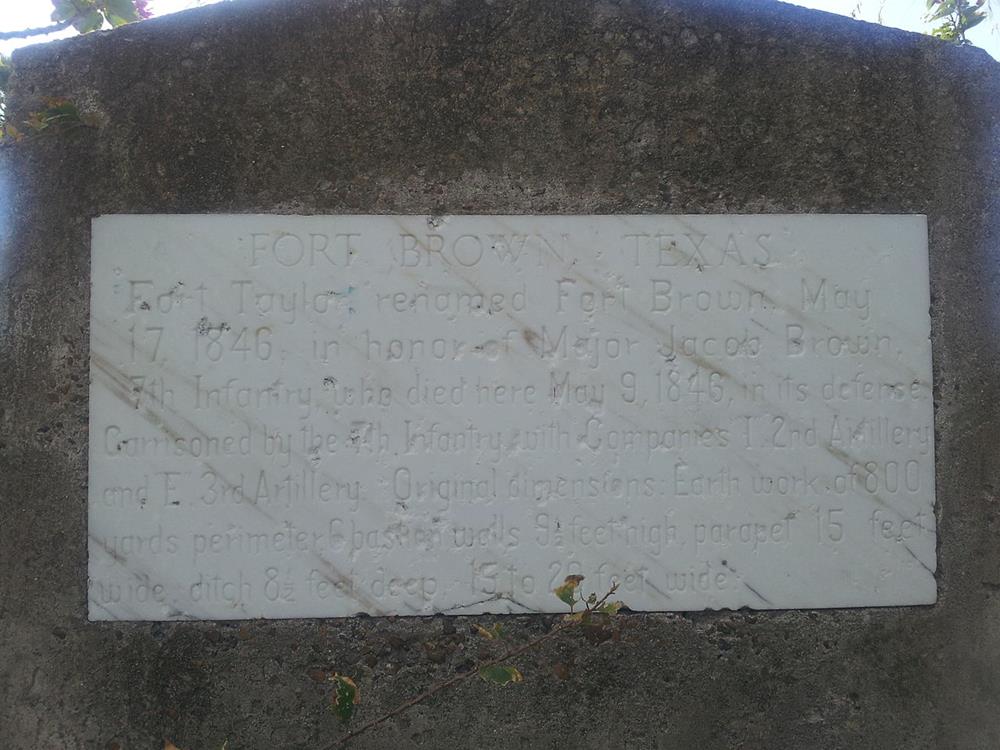
Modern visitors to Brownsville can explore historic Fort Brown, as well as nearby sites tied to the U.S.–Mexican War and Civil War. These landmarks offer a window into how this border city shaped both Texas and U.S. history.
Did You Know?
-
The Battle of Palmito Ranch, fought near Brownsville on May 12–13, 1865, is considered the last land battle of the American Civil War.
-
It ended in a Confederate victory, even though General Robert E. Lee had already surrendered weeks earlier in Virginia.
-
Brownsville’s Fort Brown was named after Major Jacob Brown, who died defending it in 1846 during the U.S.–Mexican War.
Photos: