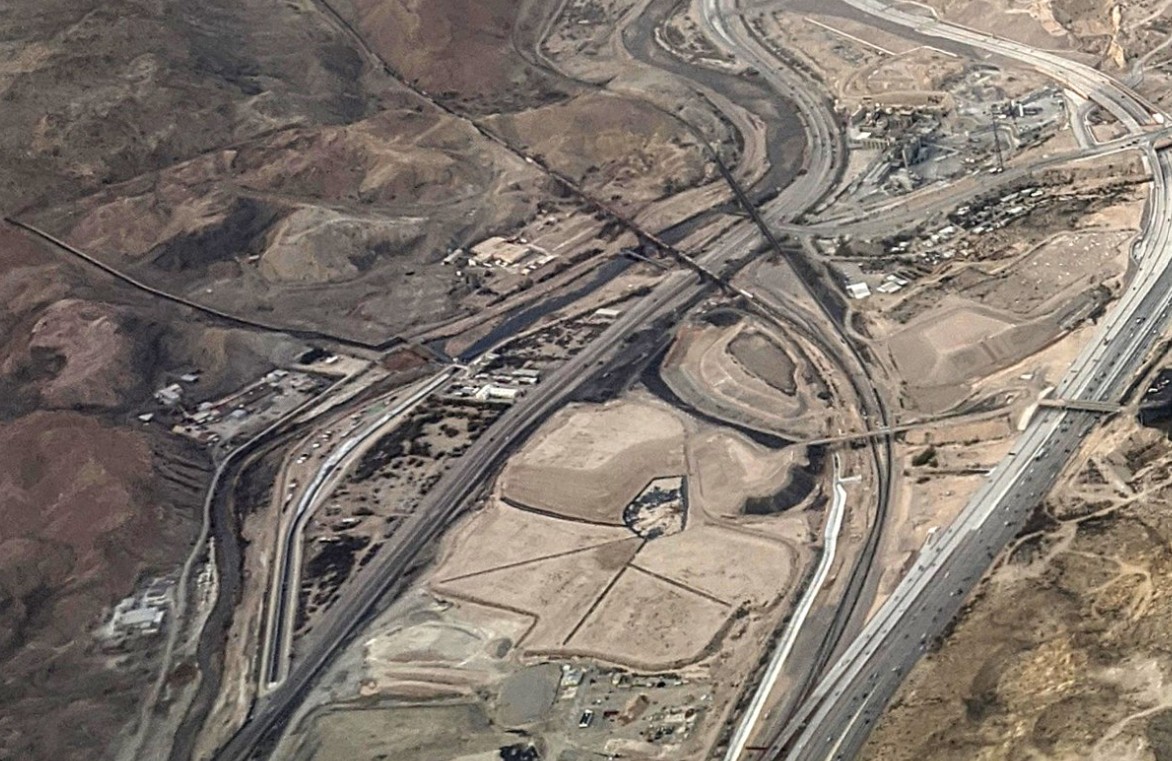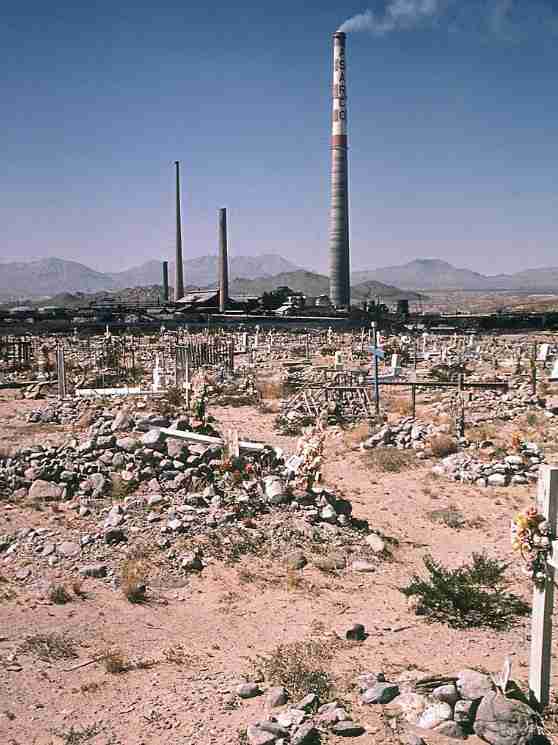
Smeltertown was established in the late 1880s along the Rio Grande, just outside of El Paso, to house employees of the Kansas City Consolidated Smelting and Refining Company. The company, later absorbed into the American Smelting and Refining Company (ASARCO) in 1899, built its large copper and lead smelting plant in 1887. The settlement quickly grew into a distinct community as Mexican immigrant families and Mexican Americans found steady employment at the smelter.
Residents created a close-knit town that included homes, small shops, and essential institutions. The Catholic church, originally named San José and later dedicated to Santa Rosalía, served as a spiritual and cultural center. Education was provided by the Jones School, while locally owned stores supplied daily necessities. Smeltertown, known in Spanish as La Esmelda, became more than just a place of work; it developed its own identity as a working-class neighborhood shaped by the rhythms of heavy industry.
Community and Daily Life
By the early 20th century, Smeltertown housed several thousand people, most tied directly or indirectly to the smelter. Daily life reflected the hardships and solidarity common in industrial towns. Housing conditions were modest, and families often relied on each other for survival and cultural continuity. Despite limited resources, community pride was strong, centered around family ties, church activities, and shared labor struggles.
Labor Struggles
The most significant labor conflict in Smeltertown’s history occurred in 1913. Nearly 1,000 smelter workers—primarily Mexican and Mexican-American men—staged a strike demanding higher wages, shorter hours, and better conditions. The strike soon escalated. ASARCO brought in strikebreakers, and the Texas Rangers intervened on behalf of the company. Violence and intimidation followed, and many striking families were evicted from their homes. The strike was crushed, but it became a defining moment in the region’s labor history, highlighting the vulnerability of immigrant workers and the state’s tendency to side with industrial interests.
Environmental and Health Crisis
For decades, the smelter dominated both the economy and the physical environment of El Paso. By the 1960s and 1970s, however, growing awareness of industrial pollution changed how Smeltertown was viewed. Medical studies revealed alarmingly high levels of lead exposure among residents, particularly children.
A landmark 1972 survey conducted by Dr. Philip J. Landrigan of the CDC found that roughly one in four children in Smeltertown had dangerous blood lead levels. Elevated exposure was linked to neurological and developmental harm. The findings brought national attention to the health risks posed by ASARCO’s emissions. In response, authorities began relocating families, and by 1973, Smeltertown had been almost entirely cleared of residents. The smelter itself continued operating into the late 20th century, before permanently shutting down in 1999, with demolition of its iconic smokestacks completed in 2013.
Legacy and Remnants
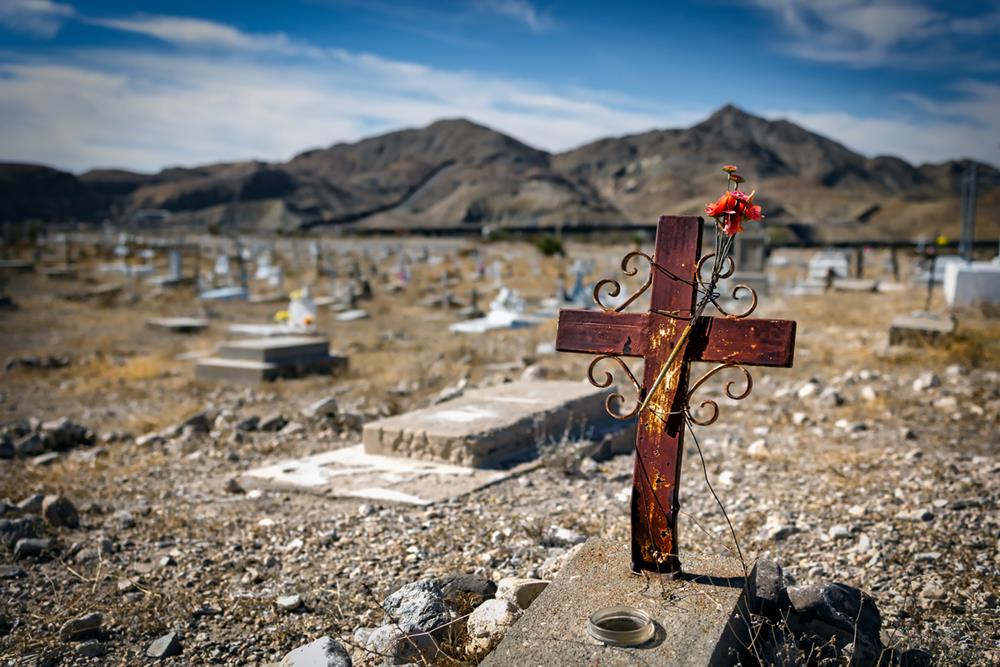
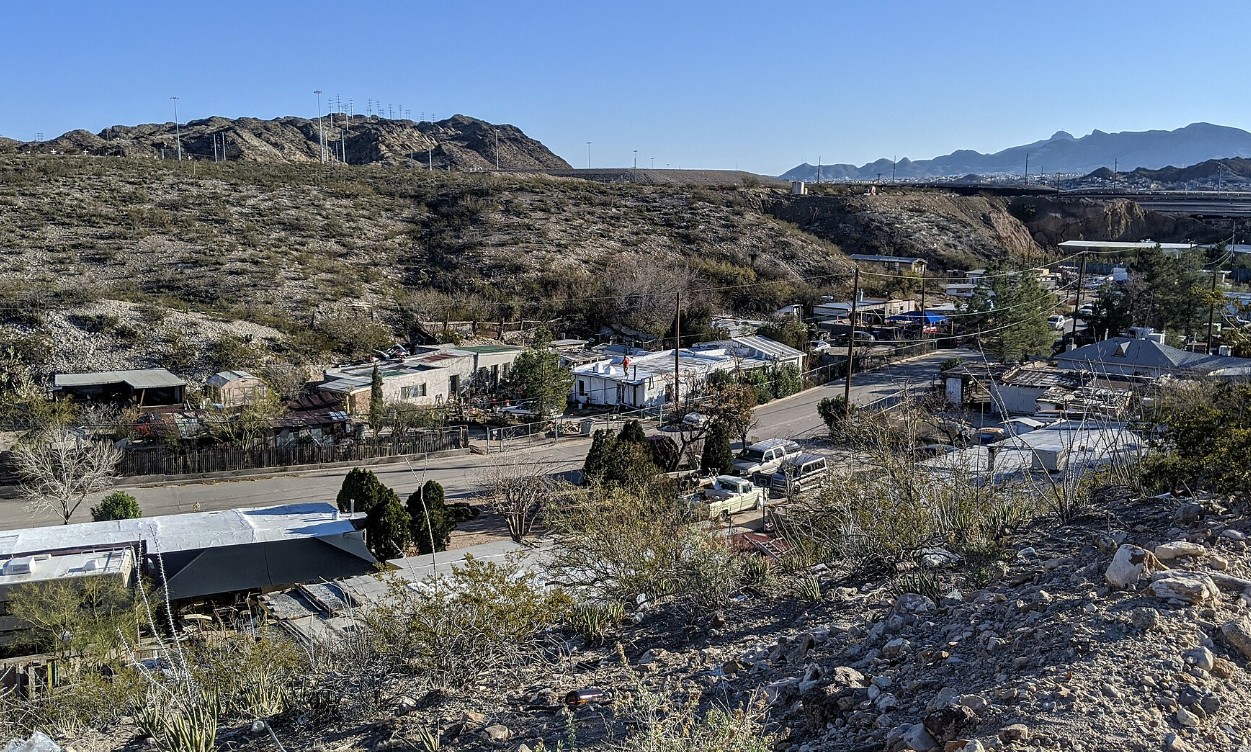
Today, Smeltertown is remembered as both a vibrant community and a site of industrial tragedy. Few physical traces remain. The Smeltertown Cemetery, also known as La Esmelda, still exists, with graves overlooked by the now-silent grounds of the former smelter. Tombstones bearing Spanish surnames reflect the town’s predominantly Mexican heritage. The cemetery, along with scattered building foundations and the nearby La Calavera neighborhood, stand as reminders of the community that once thrived in the shadow of the smelter stacks.
Interesting Facts
-
Labor history: The 1913 strike remains one of El Paso’s most important labor uprisings, underscoring both the organizing efforts of Mexican-American workers and the severe response by industry and state authorities.
-
Health impact: The Smeltertown lead study became a landmark in U.S. environmental health, influencing future regulations on industrial emissions and workplace safety.
-
Industrial relic: The cemetery’s setting—marked by graves framed against the backdrop of smelter ruins—has become a powerful symbol of how labor, industry, and environment shaped the borderlands.
Photos:
Smeltertown
Smeltertown