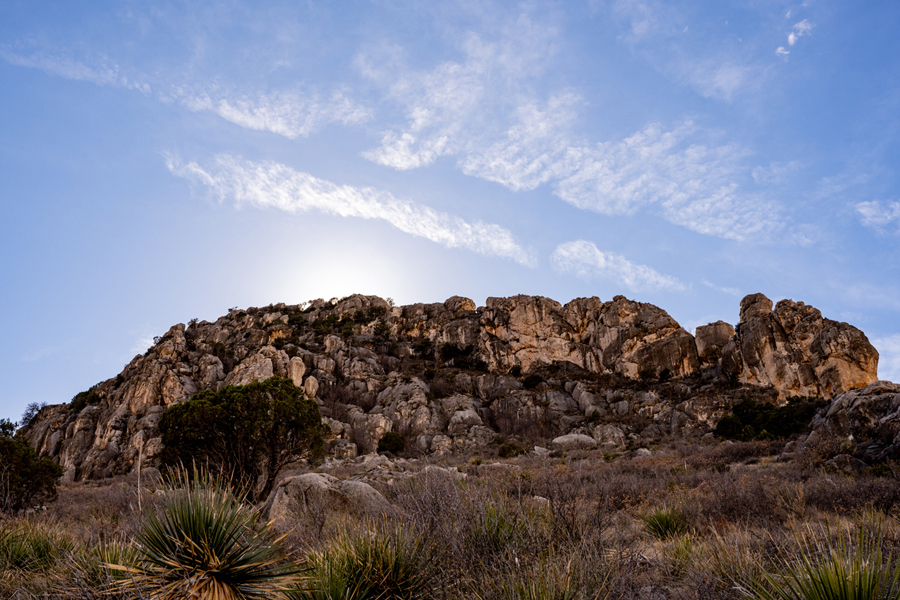
Devil’s Hall Trail is one of the most scenic and distinctive hikes in Guadalupe Mountains National Park, located in far West Texas near the New Mexico border. The trail stretches approximately 4.2 miles round trip and takes hikers through desert foothills, dry washes, and towering limestone canyons. Its defining feature is the narrow corridor known as Devil’s Hall, a natural rock hallway framed by steep canyon walls. This formation highlights the park’s rugged geological history, shaped over millions of years from the remains of an ancient reef.
Trail Description
The hike begins at the Pine Springs Trailhead, gradually ascending through desert terrain filled with agave, sotol, and prickly pear cactus. The first mile follows a maintained path before transitioning into a rocky wash where navigation becomes more challenging. Hikers must climb over boulders and navigate uneven terrain as they make their way toward the canyon. The trail’s moderate-to-strenuous rating reflects this rugged section, which requires balance and careful footing rather than technical climbing skills.
At the end of the wash, the canyon narrows dramatically into the “hall,” where vertical limestone walls rise close together, creating the impression of a natural hallway. This section, known as Hiker’s Staircase, features layered rock steps formed by erosion. The area provides a cool, shaded spot that contrasts with the arid desert outside.
Natural Features and Wildlife
The Guadalupe Mountains are part of an ancient fossil reef system that dates back about 260 million years. The unique geology of the region creates a range of habitats, from desert lowlands to forested mountain slopes. Along the Devil’s Hall Trail, hikers may spot desert cottontails, mule deer, and lizards, as well as bird species such as canyon wrens and black-chinned hummingbirds. The vegetation reflects the blend of desert and mountain ecosystems, with yucca, juniper, and Texas madrone trees thriving in the rocky environment.
While the park is home to a wide variety of plant and animal life, the claim that it harbors numerous species found “nowhere else in the U.S.” is overstated. Instead, the park represents a diverse intersection of desert and mountain ecosystems, supporting species typical of both the Chihuahuan Desert and the higher elevations of the Guadalupe Mountains.
Hiking Conditions and Recommendations
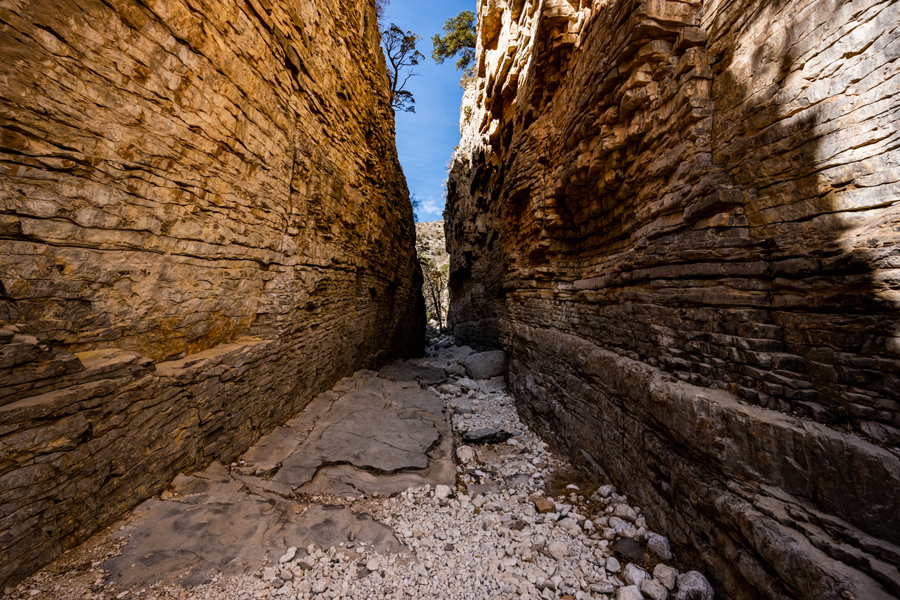
Because of its rough terrain, the Devil’s Hall Trail is best suited for hikers prepared for rock scrambling and dry wash navigation. Conditions can vary depending on recent weather, and flash floods are a potential hazard during storms. Hikers should carry sufficient water, wear sturdy footwear, and plan for limited shade along much of the route. Cooler months and early mornings are ideal for avoiding the harsh West Texas sun.
Park Context
Guadalupe Mountains National Park is known for its striking desert landscapes and significant geological formations. It also contains Guadalupe Peak, the highest point in Texas at 8,751 feet. The park preserves a section of the Capitan Reef, one of the best-preserved fossil reefs in the world. Trails like Devil’s Hall allow visitors to see these ancient formations up close while experiencing the solitude and stark beauty that define the region.
Photos: