
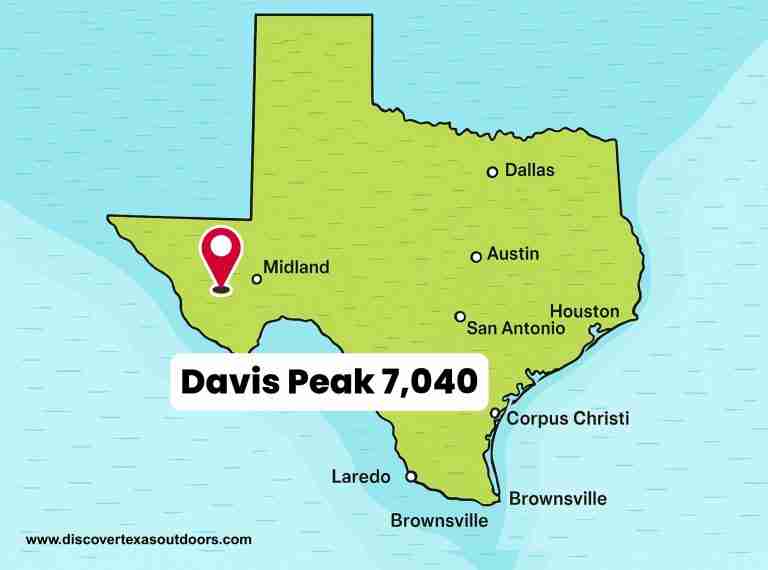
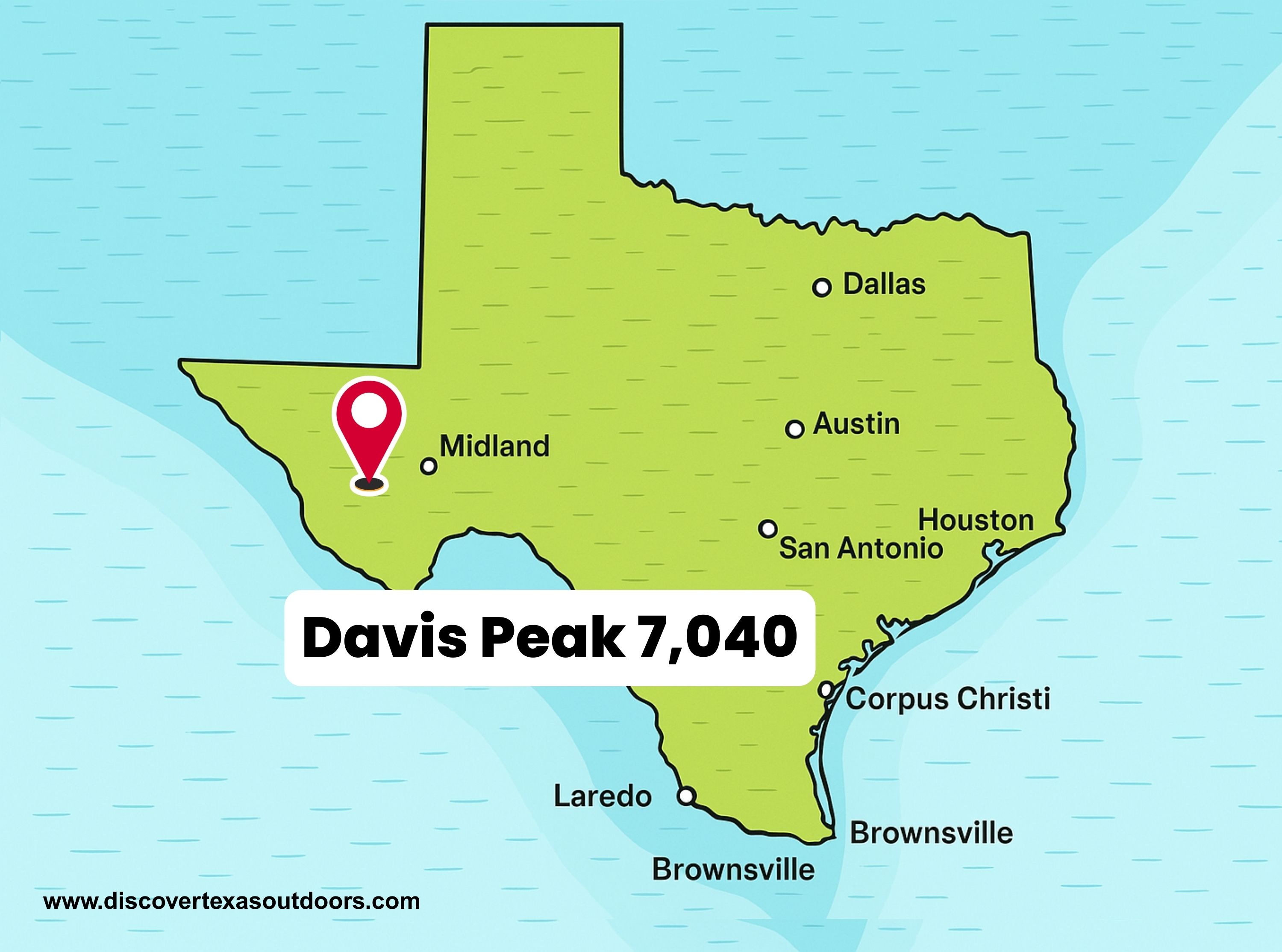
Davis Peak is a summit located within the Davis Mountains of Jeff Davis County in West Texas. Although not as high as the range’s tallest peak, Mount Livermore, Davis Peak stands as one of the notable elevations in this rugged region. The Davis Mountains are among the most prominent volcanic mountain ranges in Texas, recognized for their striking scenery, ecological diversity, and geological history.
Elevation and Location
Davis Peak rises to an elevation of approximately 7,040 feet (2,146 meters), according to regional topographic references. It lies within the Davis Mountains range, which spans parts of the Trans-Pecos region. This area is characterized by steep canyons, rolling highlands, and isolated summits surrounded by the desert plains of the Chihuahuan Desert. The nearby town of Fort Davis serves as the primary gateway to the range and provides access to state and federal parklands that protect much of this distinctive landscape.
Geological History
The Davis Mountains were formed roughly 36 to 35 million years ago during a period of intense volcanic activity. This volcanism produced thick layers of rhyolite and other volcanic rock that define the range’s structure today. Over millions of years, erosion sculpted the peaks, ridges, and valleys that now shape the region’s dramatic topography. The area remains a valuable site for studying volcanic processes and the long-term effects of weathering in arid mountain environments.
Ecology and Climate
The Davis Mountains are often described as a “sky island” because they rise above the surrounding desert, creating cooler and wetter conditions that support plant and animal life not found in the lower elevations. Forested slopes of pinyon pine, juniper, and oak provide habitat for mule deer, black bears, and many bird species. The mix of desert and mountain ecosystems makes the area one of Texas’s most biologically diverse regions.
Recreation and Conservation
Much of the Davis Mountains region is managed for conservation and recreation through state and private efforts. Davis Mountains State Park and the nearby Nature Conservancy preserve provide hiking, wildlife viewing, and camping opportunities while protecting fragile habitats. The combination of high elevation, dark skies, and natural beauty also makes this area a notable destination for stargazing and outdoor study.
Photos:
Map:
Sorry, no records were found. Please adjust your search criteria and try again.
Sorry, unable to load the Maps API.
McDonald Observatory
Texas
79734
United States
Pets are allowed in Davis Mountains State Park but must be kept on a leash no longer than six feet.
- Hiking and backpacking
- Bird watching and wildlife viewing
- Stargazing
- Camping
- Scenic driving tours
- Campsites with water and electricity
- Restrooms with showers
- Picnic areas
- Interpretive center
- Hiking trails