
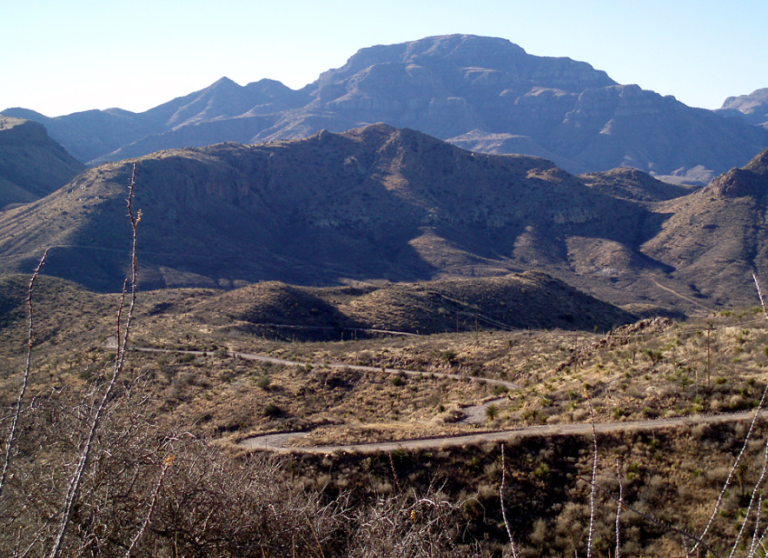
The Chinati Mountains rise from the high desert of far West Texas, near the city of Presidio and close to the U.S.–Mexico border. This isolated range lies within the Trans-Pecos region and is part of the Basin and Range Province, an area known for its rugged terrain and striking geological formations. The range extends roughly northwest to southeast and features elevations between about 4,500 and 7,728 feet above sea level, with Chinati Peak standing as the highest point. The landscape is characterized by steep ridges, canyons, and volcanic cliffs that give the area a dramatic desert profile.
Geology and Formation
The Chinati Mountains are remnants of ancient volcanic activity that shaped much of West Texas during the Oligocene epoch. Geological studies indicate that the Chinati Mountain Caldera Complex formed approximately 32 to 33 million years ago during a massive volcanic event. The caldera system produced extensive lava flows, ash deposits, and tuffs that now define the structure of the range. Over millions of years, erosion and weathering sculpted the landscape into its present form, leaving behind visible evidence of explosive volcanic origins. The complex geology of the area has made it an important site for researchers studying volcanic processes in the Trans-Pecos region.
Chinati Peak and the Surrounding Desert
Chinati Peak, at 7,728 feet, dominates the skyline and offers wide views across the Chihuahuan Desert. The peak and surrounding terrain are covered in sparse desert vegetation such as yucca, sotol, and creosote bush, with scattered junipers at higher elevations. Wildlife includes mule deer, javelinas, and a variety of birds adapted to arid conditions. The mountains also form a natural transition zone between desert lowlands and the slightly cooler highlands, creating pockets of ecological diversity.
Cultural and Linguistic Origins
The name “Chinati” is believed to come from the Apache word ch’íná’itíh, which translates to “gate” or “mountain pass.” This reflects the range’s historical role as a landmark and natural corridor through the rugged desert. The area was used by Indigenous peoples long before European settlement, serving as both a travel route and a refuge. Later, the mountains appeared on early maps of the region and lent their name to the nearby town of Marfa’s Chinati Foundation, a contemporary art center that honors the surrounding landscape.
Modern Significance
Today, the Chinati Mountains remain one of Texas’s lesser-known yet most geologically significant natural features. The range sits near the Chinati Mountains State Natural Area, managed by the Texas Parks and Wildlife Department. Though public access is currently limited, the state’s long-term plans include opening the area for controlled recreation, scientific research, and conservation. The mountains’ mix of desert solitude, volcanic history, and cultural heritage continues to draw interest from geologists, historians, and outdoor enthusiasts who value the untamed beauty of West Texas.
Photos:
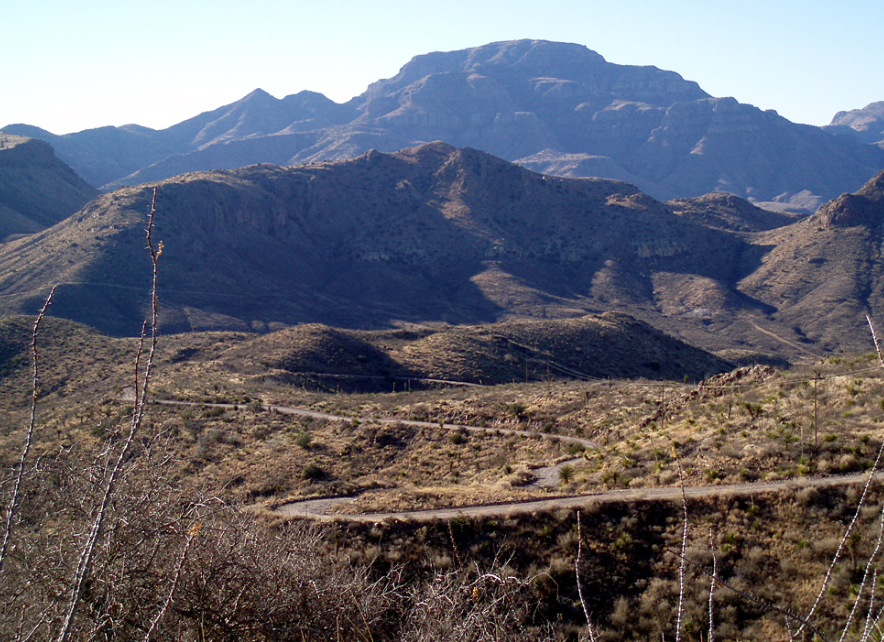
Chinati Mountains
Map:
Sorry, no records were found. Please adjust your search criteria and try again.
Sorry, unable to load the Maps API.
Presidio County
Texas
79845
United States
As a state natural area, pets are generally not permitted to protect the native wildlife and habitats. Visitors should confirm current pet policies before planning a visit.
-
Hiking: The area offers rugged terrain suitable for experienced hikers seeking solitude and natural beauty.
-
Wildlife Observation: The Chinati Mountains host diverse wildlife, including mule deer, mountain lions, and various bird species.
-
Photography: The dramatic landscapes and unique geological features provide excellent opportunities for photography.
-
Visitor Facilities: Development of visitor facilities is underway, with plans for access roads and interpretive signage to enhance the visitor experience.
-
Camping: Primitive camping options are available for those seeking an immersive outdoor experience.
-
Educational Programs: Future plans include educational programs highlighting the area's natural and cultural significance.