
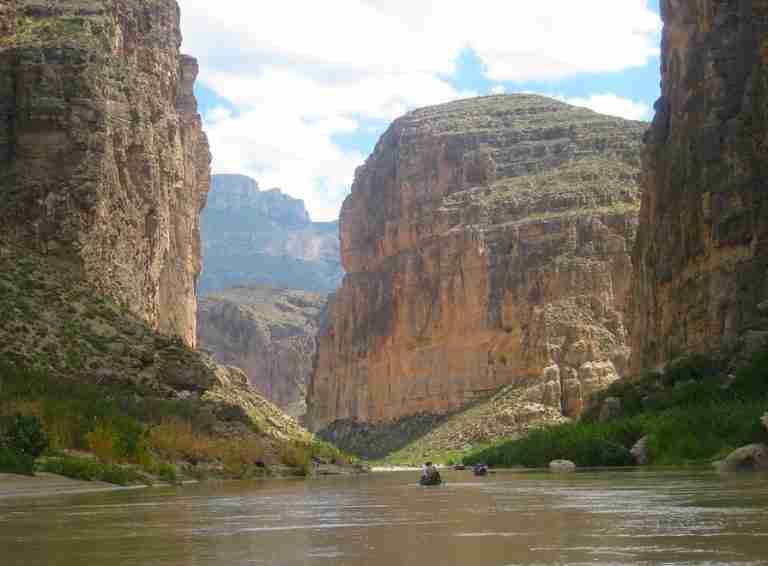
Boquillas Canyon is located at the eastern edge of Big Bend National Park in Texas, where the Rio Grande winds its way between towering limestone cliffs. The canyon marks the border between the United States and Mexico and showcases the dramatic landscape that defines this region of the Chihuahuan Desert. The Rio Grande carved the gorge through the Sierra del Carmen escarpment over millions of years, revealing layers of limestone that record the area’s geologic past.
Geography and Natural Features
The canyon walls rise approximately 1,300 to 1,500 feet above the river, forming one of the park’s most striking natural landmarks. The gorge extends for roughly 20 miles, though its length varies depending on where it is measured. At its entrance, the canyon narrows dramatically, which is likely the origin of its name. “Boquillas” means “little mouths” in Spanish, a fitting description for the small opening that leads into the expansive interior.
The Rio Grande runs through the canyon’s floor, providing life to the surrounding desert environment. Vegetation is sparse but resilient, including ocotillo, mesquite, and desert grasses that thrive along the riverbanks. The area is also home to wildlife such as roadrunners, javelinas, and various species of bats and reptiles.
Human History and Cultural Traces
Archaeological evidence shows that humans have lived in the Boquillas Canyon region for thousands of years. Along the Boquillas Canyon Trail, visitors can still see ancient grinding holes, or morteros, used by Indigenous peoples to process seeds and grains. These traces offer a glimpse into the daily life of the area’s earliest inhabitants and their relationship with the land and river.
In the late 19th and early 20th centuries, Mexican and American settlers established small communities along the river near the canyon. The nearby village of Boquillas del Carmen, across the border in Mexico, remains an important cultural neighbor to the park and is accessible by a small hand-pulled ferry and a short walk or burro ride.
Hiking and River Adventures
The Boquillas Canyon Trail provides a short but scenic route to the canyon entrance. The 1.4-mile round-trip hike begins near Rio Grande Village and ascends a small bluff before descending to the riverbank. The trail offers sweeping views of the canyon walls, the Rio Grande, and the distant Sierra del Carmen Mountains. It is considered an easy to moderate hike, suitable for most visitors.
For a deeper look into the canyon, river trips along the Rio Grande allow travelers to paddle through its winding passages. The section from Rio Grande Village to Heath Canyon is approximately 33 miles long, and while the rapids are generally mild, conditions vary with water levels and weather. These multi-day trips provide a peaceful experience surrounded by towering cliffs, echoing bird calls, and the quiet flow of the river.
Geological Significance
The limestone formations that shape Boquillas Canyon date back to the Cretaceous Period, around 100 million years ago, when the area was covered by a shallow sea. As tectonic forces uplifted the region, the Rio Grande began cutting through these ancient deposits, carving the canyon seen today. Fossils found in the area, including shells and marine remains, reflect this prehistoric marine environment. The visible layers of rock reveal a detailed record of geological change, making Boquillas Canyon an important site for studying the history of the Big Bend landscape.
A Place of Quiet Grandeur
Boquillas Canyon combines geological beauty, cultural heritage, and quiet wilderness in one of Big Bend’s most memorable locations. Whether viewed from the short hiking trail or experienced on a river trip, the canyon’s steep walls and winding river create a sense of timelessness that captures the essence of the Rio Grande’s journey through Texas.
Photos:
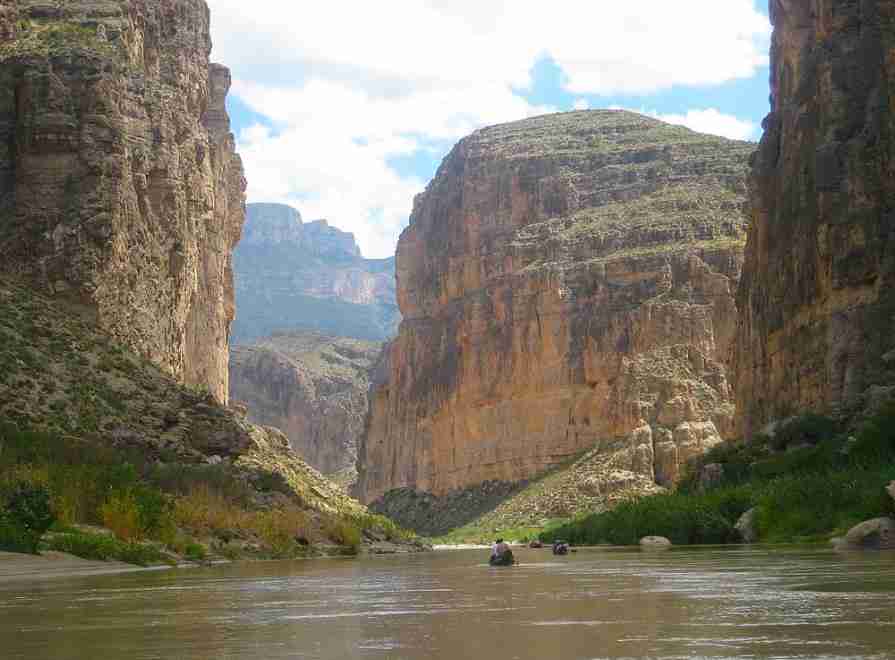
Boquillas Canyon
Map:
Sorry, no records were found. Please adjust your search criteria and try again.
Sorry, unable to load the Maps API.
Texas
Texas
79830
United States
Pets are not permitted on trails, off roads, or on the river within Big Bend National Park. They are allowed in developed areas, such as campgrounds and along roads, but must be leashed at all times.
-
Hiking: Explore the Boquillas Canyon Trail for scenic views of the Rio Grande and the canyon's towering walls.
-
River Trips: Embark on a 2-4 day river journey through Boquillas Canyon, enjoying gentle Class II rapids and camping along the riverbanks .
-
Wildlife Viewing: Observe diverse flora and fauna, including the endangered peregrine falcon soaring above the canyon.
-
Photography: Capture the stunning landscapes, geological formations, and river vistas.
-
Trailhead Facilities: The Boquillas Canyon Trailhead offers parking and informational signage.
-
Nearby Campgrounds: Rio Grande Village Campground provides camping facilities with restrooms and potable water.
-
Visitor Centers: The Panther Junction Visitor Center offers maps, exhibits, and park information.