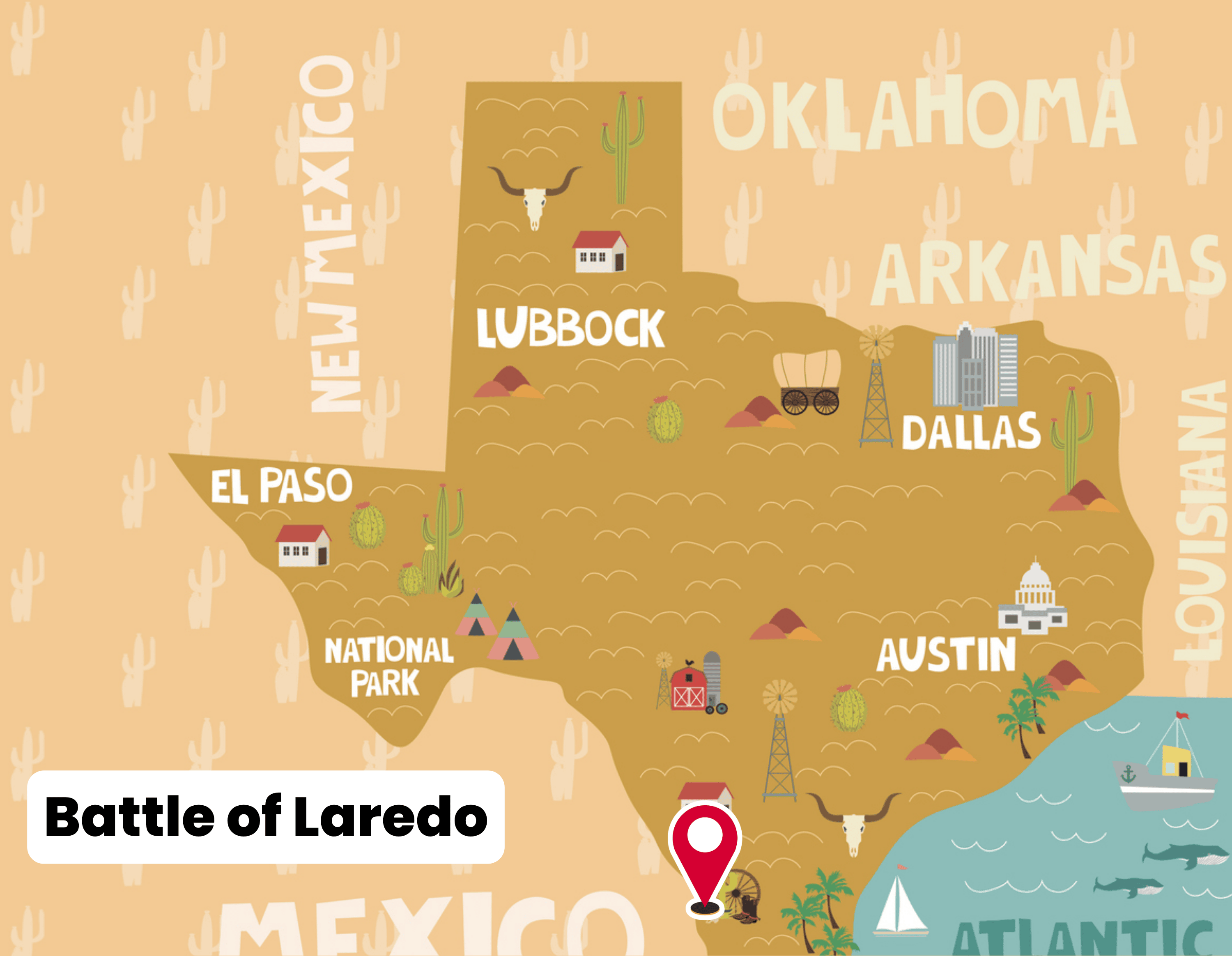
The Battle of Laredo took place on March 18, 1864, during the American Civil War in the border town of Laredo, Texas. Although a relatively small engagement, it highlighted the strategic importance of the U.S.–Mexico border and the role of South Texas in sustaining the Confederate war effort.
Background
During the Civil War, the Union established a naval blockade along the Gulf Coast to prevent the Confederacy from trading cotton for arms and supplies. South Texas, however, offered a loophole. Cotton could be transported overland to towns such as Laredo, then moved across the Rio Grande into Nuevo Laredo, Mexico, where it was shipped overseas through Mexican ports like Matamoros.
By 1864, thousands of cotton bales were stockpiled in Laredo, making the town a tempting target for Union raids. Destroying these supplies would not only weaken the Confederate economy but also cut off a vital trade route.
The Battle
-
Union Forces: Around 200 men from the 1st Texas Cavalry (U.S.), mostly composed of Unionist Texans who opposed secession.
-
Confederate Forces: Only 42 men, commanded by Colonel Santos Benavides, a native of Laredo and the highest-ranking Tejano (Mexican Texan) in the Confederate Army.
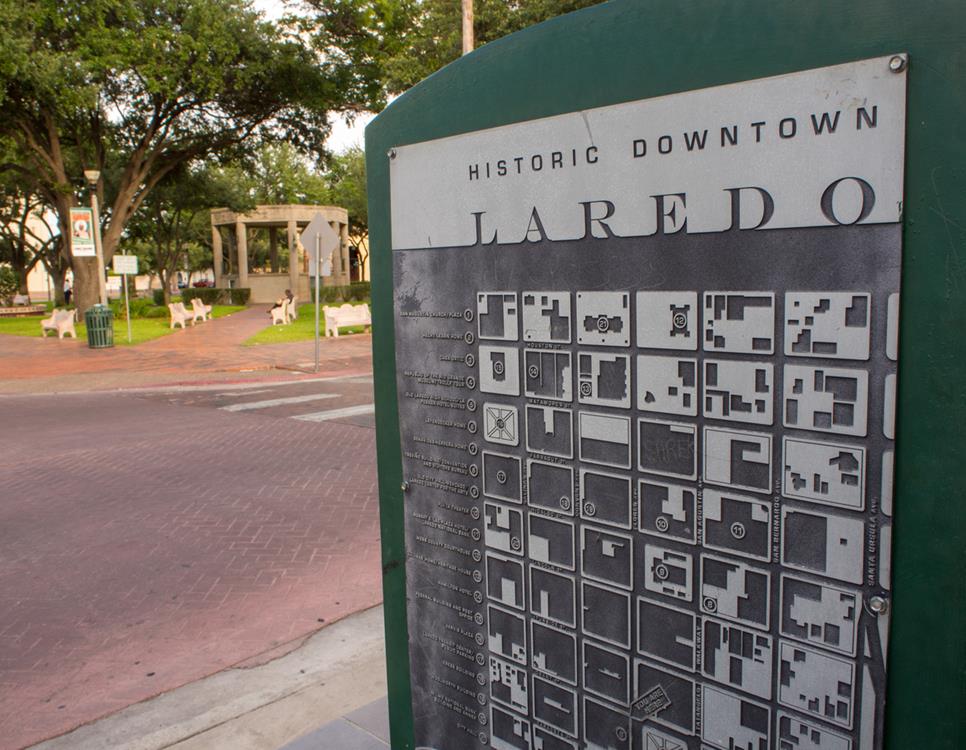
On March 18, 1864, Union forces advanced on Laredo with the objective of destroying 5,000 bales of cotton stored at San Agustín Plaza in the center of town. Despite being vastly outnumbered, Benavides and his men took defensive positions and successfully repelled three separate Union assaults.
After failing to break through, the Union troops retreated, leaving the cotton intact and Confederate control of Laredo secure.
Outcome
-
Result: Confederate victory
-
Casualties: Light on both sides, though exact numbers were not recorded.
-
Immediate Impact: The Confederacy retained access to its crucial cotton trade with Mexico, preserving one of its last economic lifelines in the face of the Union blockade.
Significance
The Battle of Laredo illustrates several key aspects of the Civil War in Texas and along the border:
-
Strategic Role of the Border: With Gulf ports blockaded, overland trade through Mexico became a lifeline for the Confederacy. Laredo’s position on the Rio Grande made it a vital hub.
-
Local Leadership: Colonel Santos Benavides, though commanding only a small force, became a symbol of effective local resistance. His leadership ensured Confederate control of the town at a critical moment.
-
Union Strategy in South Texas: The Union sought to disrupt Confederate trade routes by targeting cotton depots, but its inability to secure South Texas towns like Laredo limited the effectiveness of these raids.
Laredo in Earlier Conflicts
Although the Battle of Laredo refers specifically to the 1864 Civil War engagement, the town had experienced political and military turmoil in earlier decades:
-
Texas Revolution (1835–1836): Laredo was part of Mexico during the Revolution and remained under Mexican control. It did not see direct fighting like San Antonio, Goliad, or the Alamo.
-
Republic of Texas era (1836–1845): The border remained contested. Skirmishes occurred along the Rio Grande, most notably the Mier Expedition (1842–1843), in which Texian forces raided into Mexico. Laredo, however, was not the main site of these clashes.
-
U.S.–Mexican War (1846–1848): Laredo was occupied by U.S. forces in 1846 and officially became part of the United States under the Treaty of Guadalupe Hidalgo in 1848.
This history of contested control explains why the town remained strategically important in the Civil War decades later.
Legacy
Today, the Battle of Laredo is remembered locally as a symbol of the town’s resilience during wartime. It also underscores the broader role of South Texas and the U.S.–Mexico border in Civil War history—an area often overshadowed by larger campaigns in the eastern United States.
Colonel Santos Benavides is especially remembered for his role. As a prominent Tejano leader, his success in defending Laredo reinforced the community’s significance in Confederate Texas and made him one of the most notable Hispanic figures of the war.
Photos: