
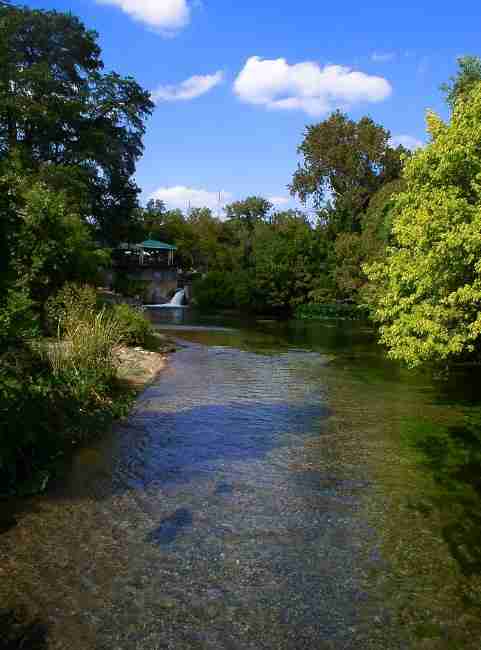
The San Marcos River begins at San Marcos Springs, located within the city of San Marcos in Central Texas. These springs rise from the Edwards Aquifer and form Spring Lake, a clear, tranquil body of water that marks the river’s starting point. The springs are among the most productive in the state, maintaining a steady flow measured in tens of millions of gallons each day. This reliable output feeds a river that runs approximately 75 miles southeast before joining the Guadalupe River near Gonzales.
A Constant Source of Life
One of the most remarkable qualities of the San Marcos River is its consistent temperature of about 72 degrees Fahrenheit (22 degrees Celsius) throughout the year. The spring-fed origin ensures a stable environment that supports both wildlife and human recreation. Because the river never runs dry, it sustains a rich and diverse ecosystem even during periods of drought. Its clear waters and lush surroundings make it a popular spot for swimming, tubing, canoeing, and fishing.
A Haven for Rare Species
The San Marcos River is a critical habitat for several endangered and threatened species found nowhere else on Earth. These include the Texas wild rice, the fountain darter, and the Texas blind salamander. The upper stretch of the river and its springs are protected as part of the San Marcos Aquatic Resources Center and other conservation efforts managed by state and federal agencies. Environmental protection remains a high priority because the river’s delicate ecosystem depends on maintaining both water quality and consistent flow.
A History That Spans Millennia
Archaeological evidence suggests that humans have lived along the San Marcos River for more than 10,000 years, making it one of the oldest continually inhabited areas in North America. Artifacts discovered near the springs show that ancient peoples depended on its constant fresh water for survival. Today, this long human connection continues through education, tourism, and conservation programs that honor the river’s historical and ecological legacy.
Recreation and Local Culture
Beyond its environmental significance, the San Marcos River is central to the community’s culture and recreation. Every year, it serves as the starting point for the Texas Water Safari, a legendary 260-mile canoe and kayak race to Seadrift on the Texas coast. Known as “The World’s Toughest Canoe Race,” the event celebrates endurance, teamwork, and the enduring relationship Texans have with their waterways. Visitors also enjoy the river’s calm stretches for leisurely tubing trips and its faster currents for kayaking adventures.
Conservation and Stewardship
The health of the San Marcos River reflects the collective effort of local residents, scientists, and environmental organizations committed to its preservation. Ongoing monitoring programs ensure that the water remains clean and that endangered species continue to thrive. Education centers, such as those managed by Texas State University, highlight the river’s importance to both the natural world and the people who rely on it.
Photos:
San Marcos River
Map:
Sorry, no records were found. Please adjust your search criteria and try again.
Sorry, unable to load the Maps API.
Kingsbury
Texas
78638
United States
Yes, pets are allowed on leashes.
Tubing, swimming, picnicking, and access to hiking trails.
Picnic tables, restrooms, and open green spaces.