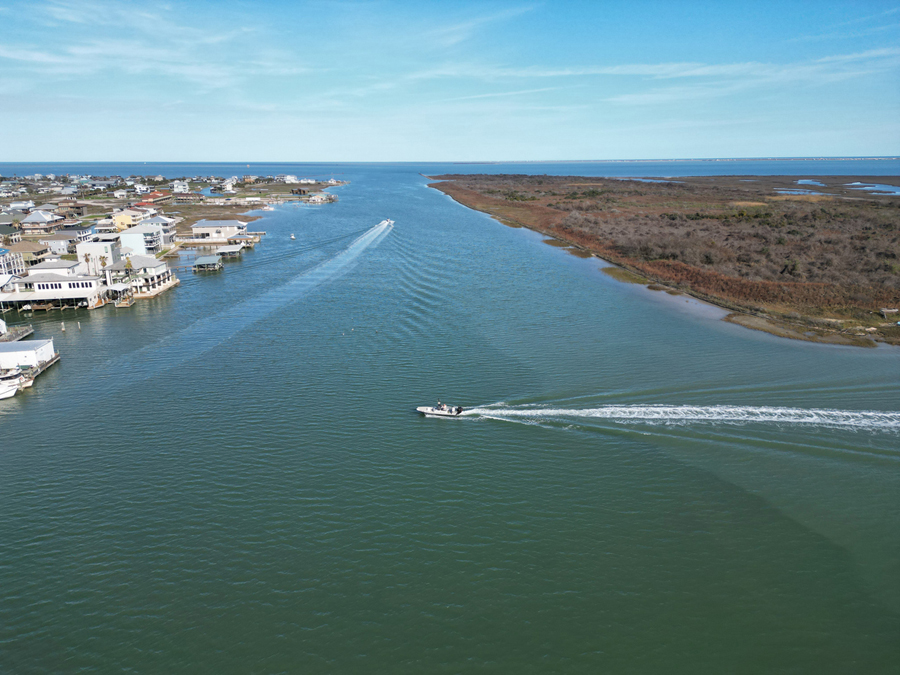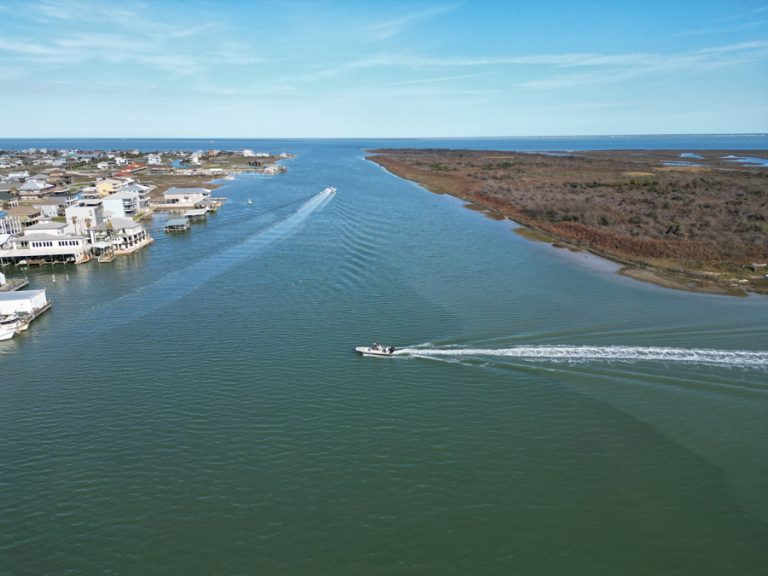
Port O’Connor is a small coastal community on the Gulf of Mexico, situated in Calhoun County in southeastern Texas. It lies on the shore of the Matagorda Bay system, roughly midway between Houston and Corpus Christi. The town traces its roots to a late-19th-century settlement and remains known today for its fishing, boating, and relaxed seaside character.
Fishing and Natural Environment

The waters around Port O’Connor provide excellent fishing opportunities throughout the year. The town has access to shallow flats, bay systems, jetties, and surf zones via Matagorda Bay and neighboring Espiritu Santo Bay, making it suitable for both inshore and nearshore fishing.
Some of the most commonly pursued species in the area include:
-
Redfish (red drum): Abundant in the flats and bays, they are among the most popular targets for anglers.
-
Speckled trout (spotted seatrout): Found in bay and flat waters, with Port O’Connor often noted as a good spot for larger catches.
-
Flounder: Seasonal runs and shallow-water habitats make this species accessible to both shore and boat fishermen.
-
Black drum: Common in the bay systems, sometimes reaching impressive sizes.
The area is also influenced by its proximity to the barrier island system, including Matagorda Island, which shelters portions of the bays from the open Gulf and supports diverse wildlife. Boating, kayaking, and bird-watching are common activities, as the calm bay waters and marshes attract wading birds and other coastal species.
History and Location Highlights
Location and Setting
Port O’Connor sits on the Gulf-coast estuarine system of Matagorda Bay, an area fed by rivers and connected to the Gulf of Mexico through natural inlets. One of the most notable inlets is Pass Cavallo, a historic channel that has long served as a maritime link between the bay and the Gulf.
Historical Notes
The area around Pass Cavallo played a notable role during the Civil War, as control of this inlet affected access to the bay and shipping. In the 17th century, the French explorer René-Robert Cavelier, Sieur de La Salle, led an expedition meant for the Mississippi River but landed instead along the Texas coast near Matagorda Bay. His ship, the La Belle, eventually wrecked in the bay in 1686 after navigating through Pass Cavallo.
The town of Port O’Connor itself was established as a fishing community in the late 19th and early 20th centuries. It was named for landowner Thomas M. O’Connor and grew gradually through fishing and coastal trade. The mix of rich water access, sheltered bays, and historic waterways has given Port O’Connor its enduring reputation as both a fishing destination and a peaceful retreat.
Why Visit and What to Expect
Visitors to Port O’Connor can expect a slower-paced coastal town. The main draw is fishing, but it also offers relaxed beaches, scenic marsh views, and opportunities for wildlife observation. Fishing lodges, local marinas, and charter services make it easy for visitors to enjoy guided angling trips or self-planned outings.
When planning a visit:
-
The inshore bays and flats are ideal for redfish, trout, and flounder.
-
The jetties and deeper channels provide access to larger fish and more challenging waters.
-
Local guides and outfitters offer expertise for first-time visitors.
-
Port O’Connor’s charm lies in its quiet, natural beauty rather than urban attractions.
Photos: