
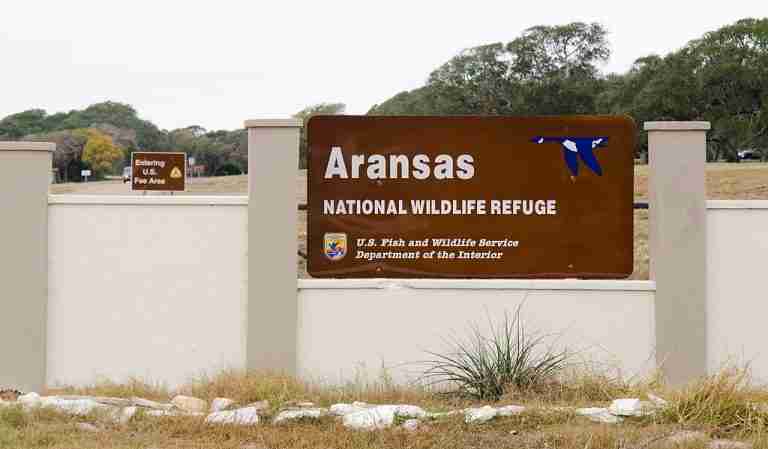
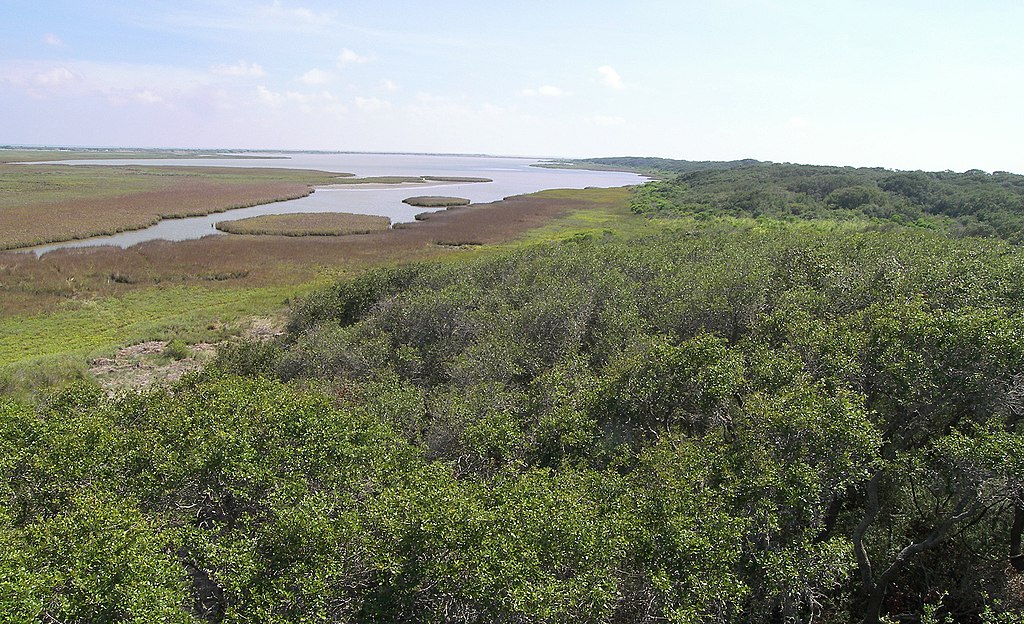
Established in 1937 by Executive Order 7784, the Aransas National Wildlife Refuge stretches across roughly 114,600 acres along the Texas Gulf Coast, near Austwell. Managed by the U.S. Fish and Wildlife Service, the refuge was created to protect coastal habitats that support countless wildlife species. It features a mosaic of landscapes including coastal prairies, freshwater and brackish ponds, oak woodlands, tidal flats, and salt marshes that blend seamlessly into the Gulf’s edge.
Home of the Whooping Crane
The refuge is world-renowned as the primary wintering ground for the endangered whooping crane, one of North America’s rarest birds. Each fall, these striking white cranes migrate over 2,500 miles from their breeding grounds in Canada’s Wood Buffalo National Park to the Texas coast. Their arrival draws birdwatchers and wildlife photographers from around the world hoping to glimpse them feeding on blue crabs and wolfberries in the marshes.
A Haven for Wildlife Diversity
Aransas hosts an extraordinary range of wildlife. More than 400 bird species have been recorded, including brown pelicans, great blue herons, snowy egrets, roseate spoonbills, and ospreys. The refuge’s wetlands and woodlands also shelter American alligators, bobcats, armadillos, collared peccaries, white-tailed deer, and raccoons. Its coastal marshes provide critical nursery grounds for fish and shellfish, while migrating monarch butterflies pass through each fall on their journey south.
Activities and Visitor Experience
Visitors can experience the refuge through a 16-mile auto tour loop that winds past tidal flats and scenic observation points. Several short hiking trails, such as the Heron Flats and Rail Trail, offer up-close views of native plants and wildlife. Elevated observation towers provide sweeping vistas of the coastal landscape, while a saltwater fishing pier offers a peaceful spot for anglers. Photography, hiking, fishing, picnicking, and birdwatching are all encouraged, with interpretive signs helping visitors appreciate the natural history and ecological importance of the area.
A Living Legacy on the Gulf Coast
The Aransas National Wildlife Refuge stands as one of Texas’s most valuable natural treasures, balancing recreation with preservation. It continues to play a vital role in protecting endangered species and maintaining the health of coastal ecosystems. Its vast wetlands, oak mottes, and prairies remind visitors of the wild Texas coast that existed long before development—and why safeguarding it for future generations remains essential.
Photos:
Map:
Sorry, no records were found. Please adjust your search criteria and try again.
Sorry, unable to load the Maps API.
Austwell
Texas
77950
United States
Yes, but they must be kept on a standard (4-6 foot) leash at all times.
-
Wildlife observation and photography
-
Hiking on designated trails
-
Fishing in designated areas
-
Picnicking
-
Visitor Center (open Wednesday–Sunday, 9:00 am–4:00 pm)
-
Observation towers and platforms
-
Picnic areas
-
Restrooms
-
Fishing piers
Larry D. Moore, Aransas national wildlife refuge1, CC BY 4.0