
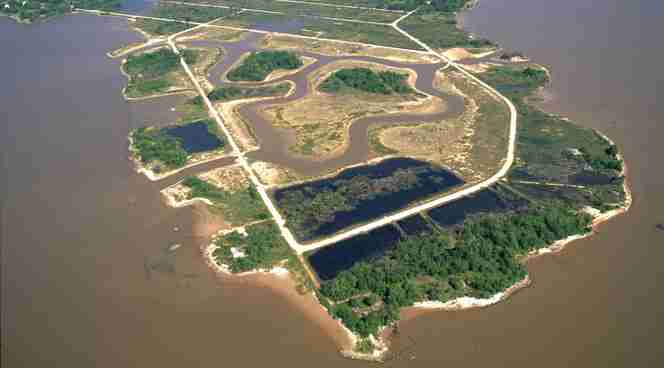
Baytown Nature Center is a roughly 500 acre peninsula in Baytown, Texas, about 20 miles east of Houston. It is surrounded on three sides by Burnet Bay, Crystal Bay, and Scott Bay along the upper reaches of Galveston Bay and the Houston Ship Channel. Operated by the City of Baytown, the site functions as both a public recreation area and a protected wildlife sanctuary, combining restored wetlands, shoreline, ponds, and upland habitats in a single coastal setting.
Habitats and Wildlife
The peninsula includes a mix of habitats such as hardwood uplands, tidal marsh, freshwater wetlands, ponds, and grassland and woodland areas. This variety supports a wide range of animals, including mammals, reptiles, and aquatic species. The site is especially important for birds, with more than 300 species of resident and migratory birds documented at the nature center. Wading birds, shorebirds, raptors, waterfowl, and songbirds all use the park for feeding, nesting, or as a stopover during migration along the Gulf Coast.
Baytown Nature Center is an official stop on the Great Texas Coastal Birding Trail. It has also been recognized as a nationally important bird area by the American Bird Conservancy because of its value as habitat for large numbers and a wide diversity of bird species. The surrounding shallow bays and marsh edges serve as nursery grounds for fish, shrimp, crabs, and other aquatic life, which in turn help support the rich birdlife and provide opportunities for anglers.
Recreation and Amenities
Visitors to Baytown Nature Center can walk or bike along miles of trails that wind through forested areas, marshes, and open shoreline. These routes connect a series of ponds, wetlands, and observation points where visitors can watch birds and other wildlife. Elevated areas and overlooks give broad views across the surrounding bays and toward local landmarks such as the Fred Hartman Bridge.
The nature center provides several amenities for day use. These include multiple fishing piers, picnic tables, benches, and sheltered areas for groups. Near the entrance, the Crystal Bay Butterfly Garden is planted with native flowers and shrubs that attract butterflies, bees, and hummingbirds. Designated kayak access and a floating kayak dock give paddlers a way to launch into the protected waters that surround the peninsula.
A major family attraction inside the park is the Children’s Nature Discovery Area. This large nature themed playground and learning space features climbing structures, animal sculptures, a prominent pirate ship play structure, and other interactive elements designed to introduce children to local wildlife and coastal ecosystems through play. Pets are not allowed anywhere in the park, a rule that helps protect sensitive nesting areas and easily disturbed wildlife. The Brownwood Education Pavilion, built on one of the higher points of land, offers a covered gathering space with sweeping views of the restored wetlands and bays.
Education and Programs
Baytown Nature Center hosts a variety of environmental education programs for schools, youth groups, families, and the general public. Staff and volunteers lead activities such as guided nature walks, evening and full moon hikes, and short “tyke hikes” designed for young children. Seasonal events highlight topics like bird migration, coastal ecology, and local plants and animals.
On site, a Wetlands Education and Recreation Center provides space for classes, exhibits, and indoor learning activities focused on the region’s ecosystems, conservation issues, and the history of the site. The nature center also works with partners, including bird conservation groups, to conduct regular bird surveys. These monthly counts help track long term trends in bird populations and document how different species use the site throughout the year.
From Brownwood Neighborhood to Nature Preserve
Before it became a nature center, this peninsula was the Brownwood subdivision, a waterfront residential neighborhood developed beginning in the late 1930s. Many of the homes were built for employees and executives of the nearby Humble Oil and Refining Company, which later became part of Exxon. Brownwood was known for its bayfront views and tree lined streets, and at its peak contained hundreds of houses.
Over time, heavy groundwater pumping in the region caused the land in and around Brownwood to subside. As the ground slowly sank, storm tides and even high tides reached farther inland. Flooding that had once been rare became more frequent. Major storms such as Hurricane Carla in 1961 and Hurricane Alicia in 1983 brought storm surges that severely damaged many homes and left parts of the subdivision repeatedly underwater. By the mid 1980s, the area was considered unsafe and uninhabitable because of its low elevation and repeated flooding.
Government buyout programs allowed homeowners to sell their properties, and most remaining structures were removed. The City of Baytown then began converting the abandoned neighborhood into a coastal nature preserve. Restoration efforts included cutting new channels, regrading low areas, creating tidal and freshwater wetlands, and planting native vegetation to stabilize the shoreline and provide habitat for wildlife. In the 1990s, the area reopened to the public as Baytown Nature Center, transforming a storm damaged residential peninsula into a regional site for conservation, recreation, and environmental education.
Photos:
Map:
Sorry, no records were found. Please adjust your search criteria and try again.
Sorry, unable to load the Maps API.
Baytown
Texas
77520
United States
No, pets are not allowed within the nature center.
-
Bird watching
-
Fishing
-
Hiking and biking
-
Kayaking
-
Educational programs and guided nature hikes
-
Children's Nature Discovery Area and playground
-
Butterfly garden
-
Fishing piers
-
Picnic tables and pavilions
-
Restroom
-
Trails and observation platforms
-
Amphitheater
-
Parking facilities