

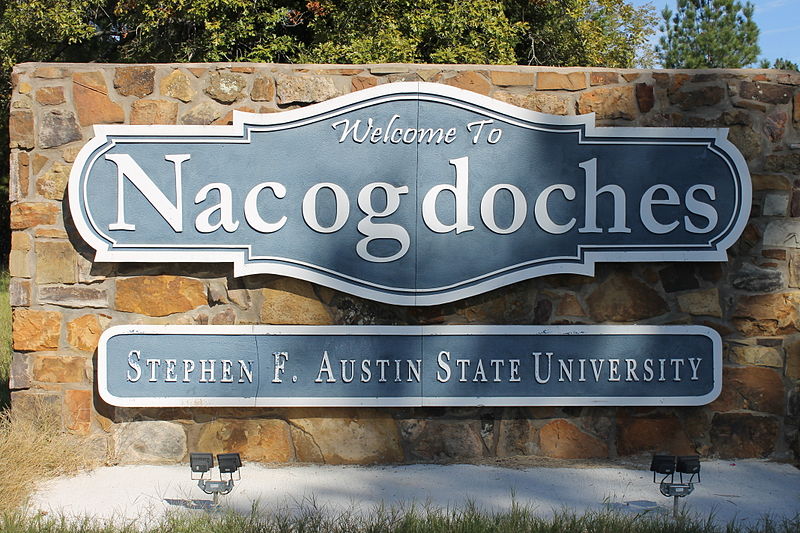
Nacogdoches is a small East Texas city with a big historical footprint. Official records recognize it as the county seat of Nacogdoches County, and the 2020 U.S. census lists its population at 32,147 residents. The city proudly uses the nickname “The Oldest Town in Texas,” a title supported by its long record of Indigenous, Spanish, Mexican, and American settlement in the same area.
Nacogdoches sits in the piney woods of East Texas and is closely identified with education, gardens, and historic architecture. Stephen F. Austin State University is located here, and the community also promotes itself as the Garden Capital of Texas because of its notable public gardens and seasonal floral displays.
Deep Historical Roots and Caddo Heritage
Long before Nacogdoches became a Spanish pueblo or an American town, the region was home to Indigenous peoples. Archaeological and historical studies suggest that human settlement in the area around present-day Nacogdoches stretches back roughly 10,000 years. The city lies on or near the former site of Nevantin, the primary village of the Nacogdoche, a Caddo tribe within the larger Caddoan cultural sphere.
The name “Nacogdoches” itself comes from this Caddo-speaking tribe. For many centuries, Caddo communities occupied the well-watered, forested lands of East Texas and maintained relatively stable settlement patterns. Spanish missionaries and explorers later entered the region, founding Misión Nuestra Señora de Guadalupe de los Nacogdoches in 1716 as the first recorded European construction in the area.
Founding of “The Oldest Town in Texas”
The modern town of Nacogdoches dates to 1779, when Spanish trader and colonial official Don Antonio Gil Y’Barbo led settlers back to the abandoned mission site and laid out a formal community. That same year, Spain officially recognized Nacogdoches as a pueblo. As lieutenant governor, Y’Barbo drew a street plan centered on the crossing of El Camino Real and North Street, a layout that still shapes downtown today.
Y’Barbo built a stone trading house on the plaza that later became known as the Old Stone Fort, a key commercial and political landmark on the Texas frontier. Over time, Nacogdoches served as a frontier outpost, a regional capital in Spanish and Mexican periods, and later a focal point for early Anglo settlers entering East Texas.
A Town under Many Flags
Nacogdoches is often noted for having flown more flags than the state of Texas itself. In addition to the familiar “Six Flags of Texas” (Spain, France, Mexico, the Republic of Texas, the Confederate States, and the United States), local history recognizes three more political banners: the Magee-Gutierrez Republic, the Long Republic, and the short-lived Fredonian Rebellion.
In 1832, the Battle of Nacogdoches saw residents fight to expel Mexican troops and support a more federalist form of government, helping set the stage for Texas independence. Nacogdoches also claims several early “firsts” in Texas history, including the publication of an early Spanish-language newspaper and later the state’s first English-language newspaper.
Stephen F. Austin State University
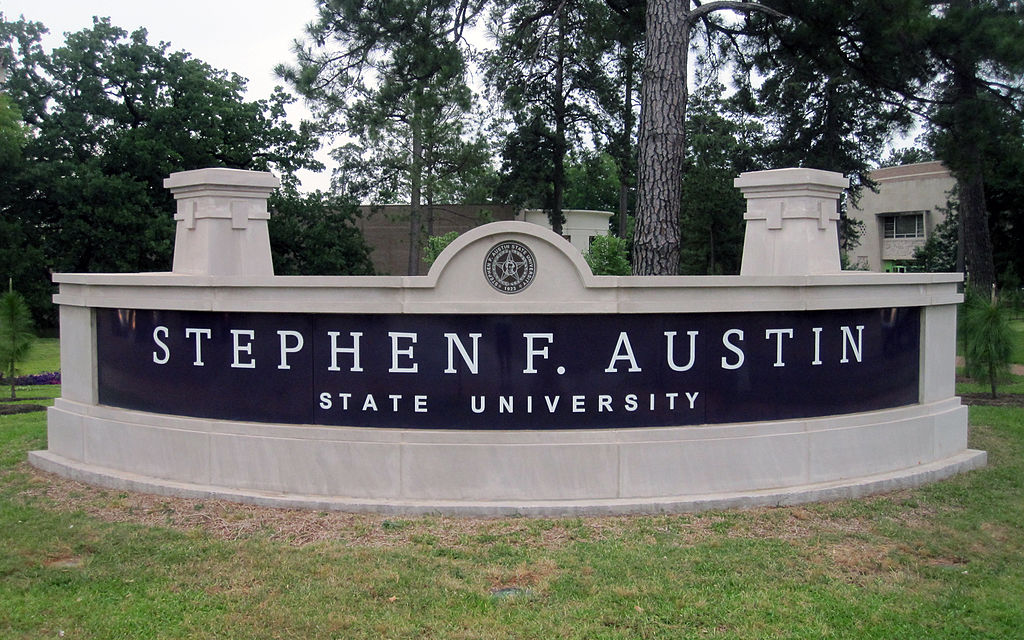
Stephen F. Austin State University (SFA) gives Nacogdoches a strong educational and cultural identity. Located within the city limits, the university is a public institution that offers more than 80 bachelor’s degrees, over 40 master’s degrees, and several doctoral programs across more than 120 areas of study.
Recent statistics show a total enrollment of about 10,888 students in 2023, including roughly 9,575 undergraduates and 1,313 graduate students. SFA is especially well known for its programs in forestry and agriculture, anchored by the Arthur Temple College of Forestry and Agriculture and supported by extensive field, research, and garden facilities surrounding the campus.
The Garden Capital of Texas
Nacogdoches promotes itself as the Garden Capital of Texas, a description backed up by the scale and quality of its horticultural attractions. The city’s climate and location in the East Texas piney woods make it an ideal setting for ornamental gardens, flowering shrubs, and diverse tree collections. Seasonal displays, particularly in spring, draw visitors who come specifically to see azaleas, camellias, and other showy plantings.
This garden identity is closely tied to Stephen F. Austin State University, which manages several major public gardens that double as teaching and research facilities. These gardens help define Nacogdoches as both a college town and a destination for plant enthusiasts.
Mast Arboretum
The Mast Arboretum, located along Lanana Creek on the SFA campus, is a 10-acre arboretum and botanical garden that began in 1985 as a student landscape project. Over time it has expanded into one of the key university arboreta in Texas, with collections built through exchanges with major institutions such as the Arnold Arboretum and the U.S. National Arboretum.
Today, the Mast Arboretum houses more than 3,000 plant species and about 20 themed gardens. These include butterfly, conifer, fern, herb, heritage, and holly gardens, as well as a pitcher plant bog, an Asian valley, a beehive exhibit, and a vine collection. The arboretum is open daily without charge, functioning as both an outdoor classroom and a public green space for residents and visitors.
Ruby M. Mize Azalea Garden
The Ruby M. Mize Azalea Garden, also on the SFA campus, is one of the city’s signature attractions. Created between the late 1990s and early 2000s in a former loblolly pine forest, the garden has grown into a major azalea showcase.
Covering roughly 8 acres, it contains around 7,000 azaleas, approximately 200 camellias, numerous Japanese maples, and a wide range of hydrangea varieties and other ornamental trees and shrubs. Its winding paths and layered plantings make it a focal point of Nacogdoches’ spring azalea season and a core reason the city leans into its Garden Capital branding.
Historic Downtown and Cultural Landmarks
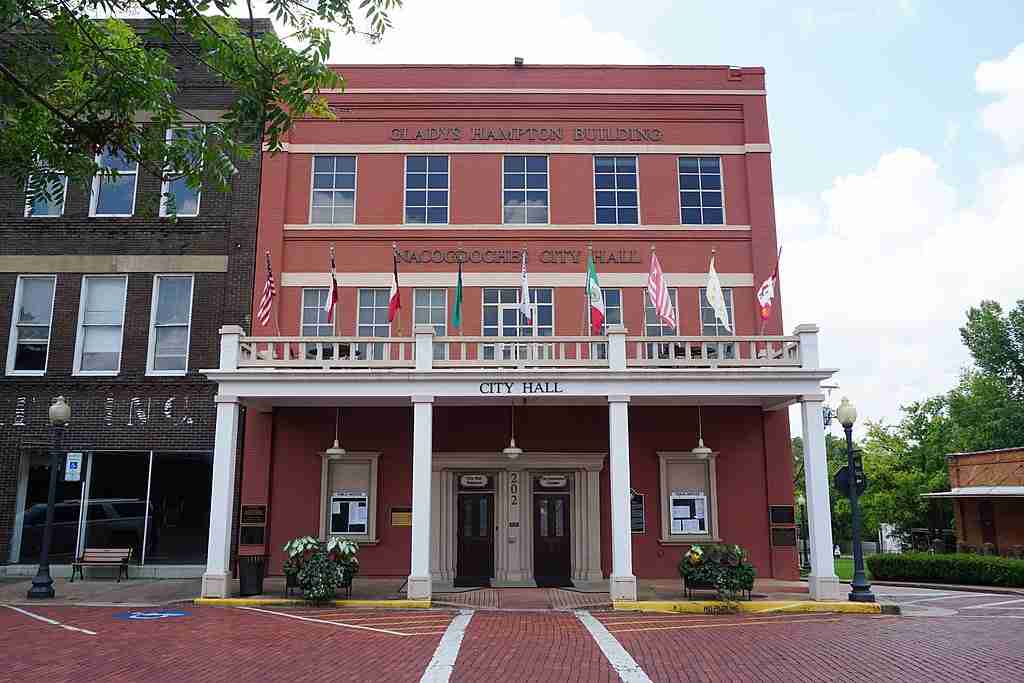
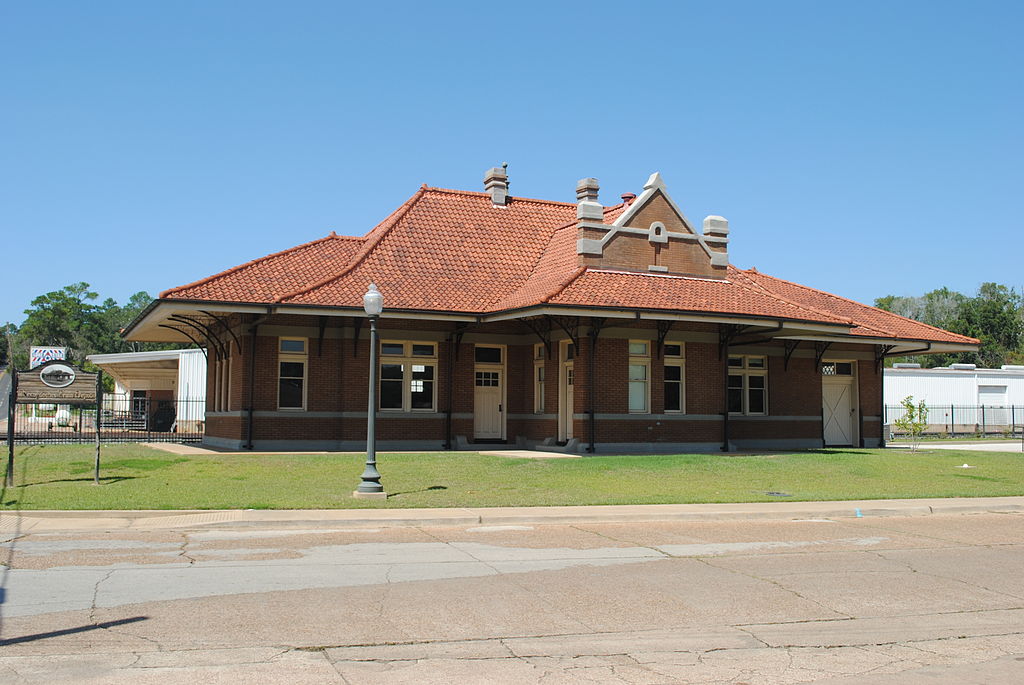
The entire downtown area of Nacogdoches is listed on the National Register of Historic Places, reflecting its long record of continuous occupation and preserved architecture. Visitors encounter brick streets, restored commercial buildings, and museums that highlight different eras of local history, including Spanish colonial, Mexican, Republic of Texas, and early statehood periods.
Points of interest include the Old Stone Fort Museum, the Sterne–Hoya House, and the Old Nacogdoches University Building, each telling a different part of the town’s story, from early trading and governance to education and daily life in East Texas. Together with the university and gardens, these sites help Nacogdoches combine small-town atmosphere with layered historical and cultural depth.
Photos:
Map:
Sorry, no records were found. Please adjust your search criteria and try again.
Sorry, unable to load the Maps API.
Nacogdoches
Texas
75961
United States
Policies regarding pets vary by establishment and public area; it's advisable to check specific locations for their pet policies.
-
Exploring historical sites such as the Old Stone Fort Museum.
-
Visiting the Mast Arboretum and Ruby Mize Azalea Garden for botanical experiences.
-
Enjoying local dining and shopping in the historic downtown area.
-
Various lodging options, including hotels and bed & breakfasts.
-
A range of dining establishments offering diverse cuisines.
-
Parks, walking trails, and recreational facilities.