
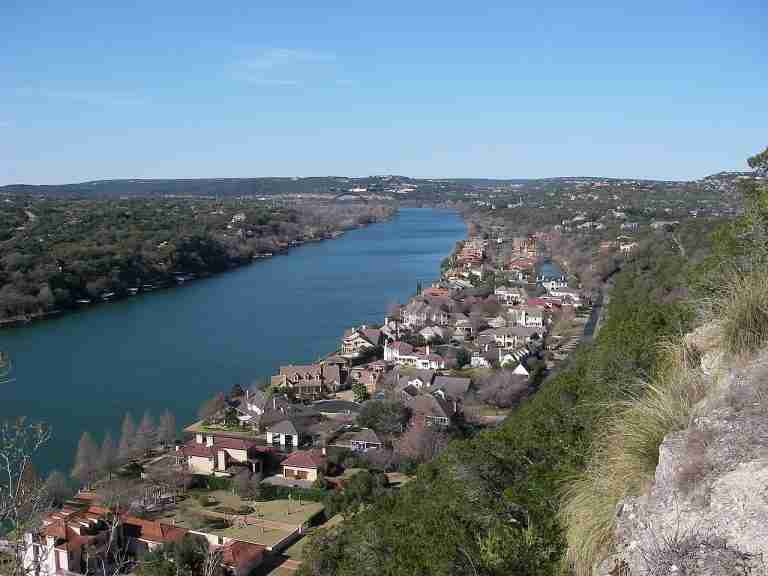
The Colorado River in Texas is the longest river that begins and ends within the state, stretching approximately 862 miles (1,387 kilometers). It begins on the Llano Estacado in Dawson County and winds southeast through Central Texas, passing through towns and cities such as Austin, Bastrop, La Grange, and Columbus before reaching its outlet at Matagorda Bay on the Gulf of Mexico. This river plays an essential role in the geography, ecology, and daily life of the region, serving as a major water source for both urban and rural communities.
Geography and Watershed
The Colorado River’s drainage basin covers nearly 40,000 square miles, accounting for about 15 percent of Texas. Its watershed contains thousands of miles of creeks and tributaries that flow into the main river channel. These waterways sustain a variety of landscapes, from semi-arid plains in West Texas to the more humid and green environments of the Gulf Coast. More than two million Texans live within the Colorado River basin, relying on it for drinking water, agriculture, and recreation.
The Highland Lakes System
A defining feature of the Colorado River is the Highland Lakes chain of reservoirs in Central Texas. Managed by the Lower Colorado River Authority (LCRA), this system includes Lake Buchanan, Inks Lake, Lake LBJ, Lake Marble Falls, Lake Travis, and Lake Austin. These reservoirs were built during the twentieth century to control flooding, supply water, and generate hydroelectric power. They are also among the state’s most popular recreational areas, offering boating, fishing, and swimming opportunities to residents and visitors.
Role in Recreation and Conservation
The Colorado River supports numerous parks, wildlife areas, and paddling routes that provide access to its scenic beauty. The Matagorda Bay Nature Park, located where the river meets the Gulf of Mexico, offers beaches, birdwatching, and camping opportunities. In Central Texas, paddling trails such as those near Bastrop and Columbus attract kayakers and canoeists year-round. Conservation programs coordinated by the LCRA and local governments focus on maintaining water quality, protecting wildlife habitats, and managing sustainable recreation.
Ecology and Environmental Importance
This river sustains a wide range of wildlife habitats along its course. Its upper reaches host species adapted to dry grasslands, while the lower stretches near the coast support wetlands and estuaries vital to migratory birds and marine life. The river’s flow is regulated by dams and reservoirs that help balance urban water demand with agricultural use and ecological needs. Maintaining that balance remains a central challenge as Texas grows and experiences frequent droughts.
History and Naming
Spanish explorers named the river “Colorado,” meaning “red,” because of the reddish color of its silt-laden waters. Historical records indicate that the river’s identity was sometimes confused with other regional waterways during early exploration, but the name “Colorado River” has been consistently used since the eighteenth century to describe this specific Texas river. Over the centuries, it has served as a lifeline for settlements, agriculture, and energy production across the state.
Cultural and Economic Value
The Colorado River has shaped communities across Central and Southeast Texas. In Austin, it has long been a defining feature of the city’s landscape, with Lake Austin and Lady Bird Lake (a dammed portion of the river) serving as recreation and event centers. Downstream, the river supports farming, ranching, and coastal fishing industries. Its contribution to the Texas economy extends far beyond water supply, influencing tourism, property values, and regional development.
Photos:
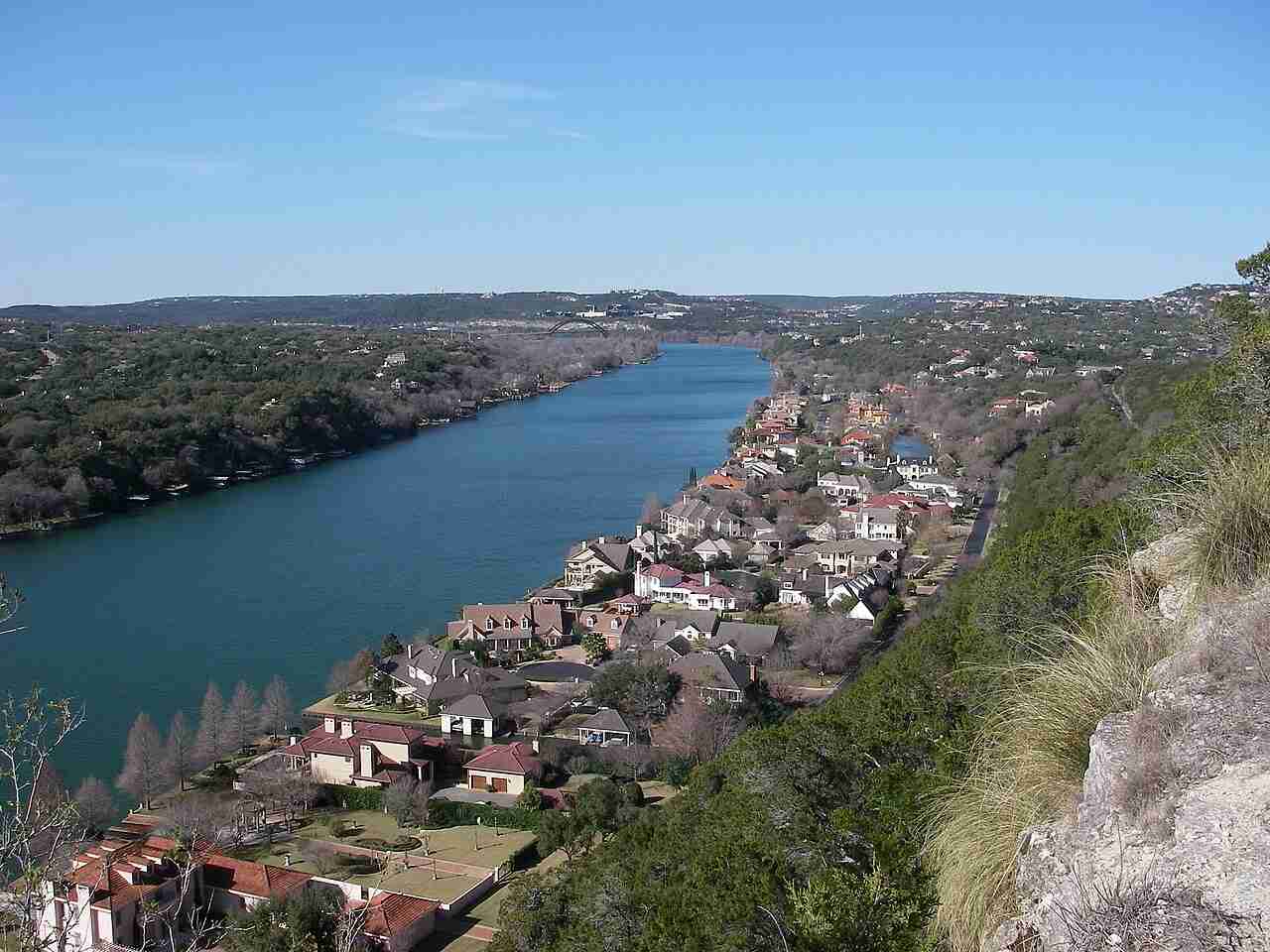
View from atop Mount Bonnell looking northwest toward Pennybacker Bridge in Austin, Texas.
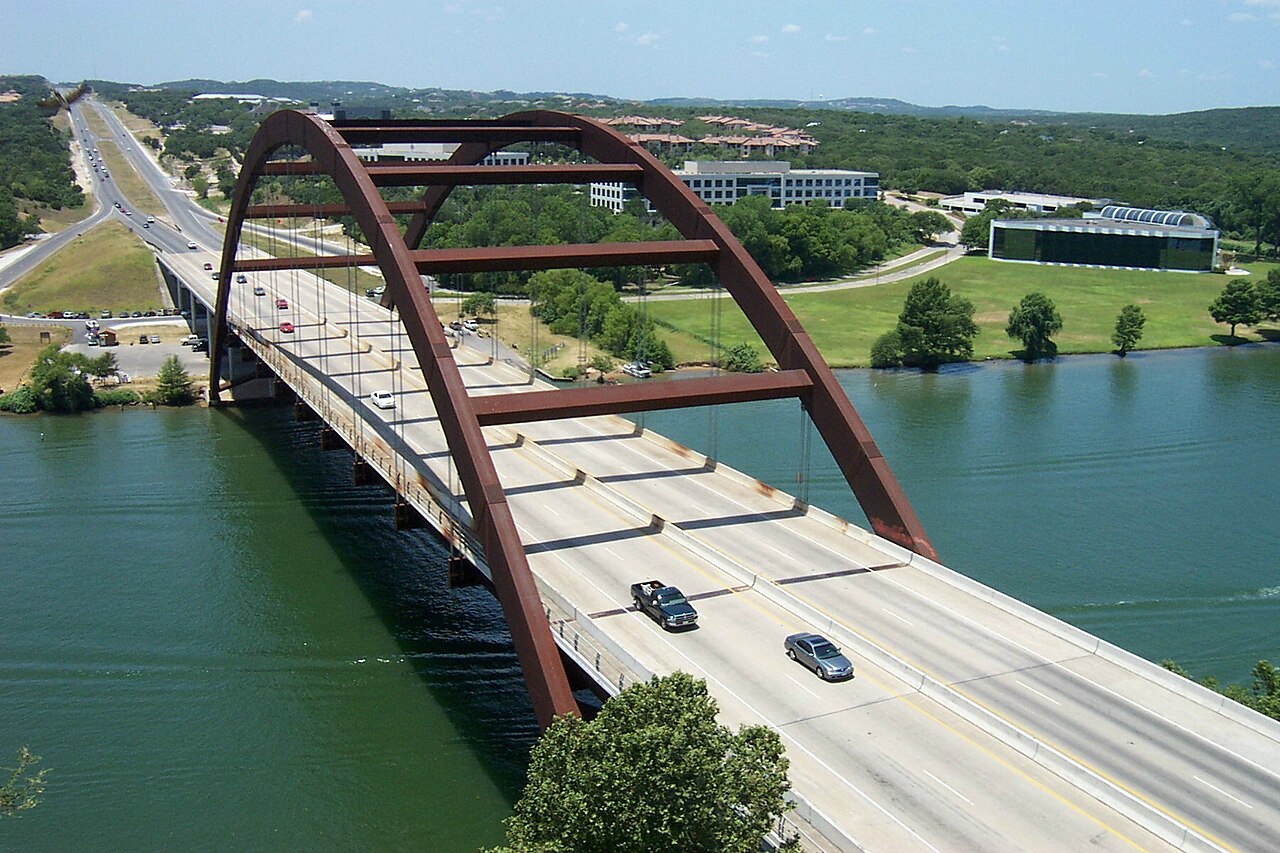
Pennybacker Bridge crossing the Lake Austin portion of the Colorado River
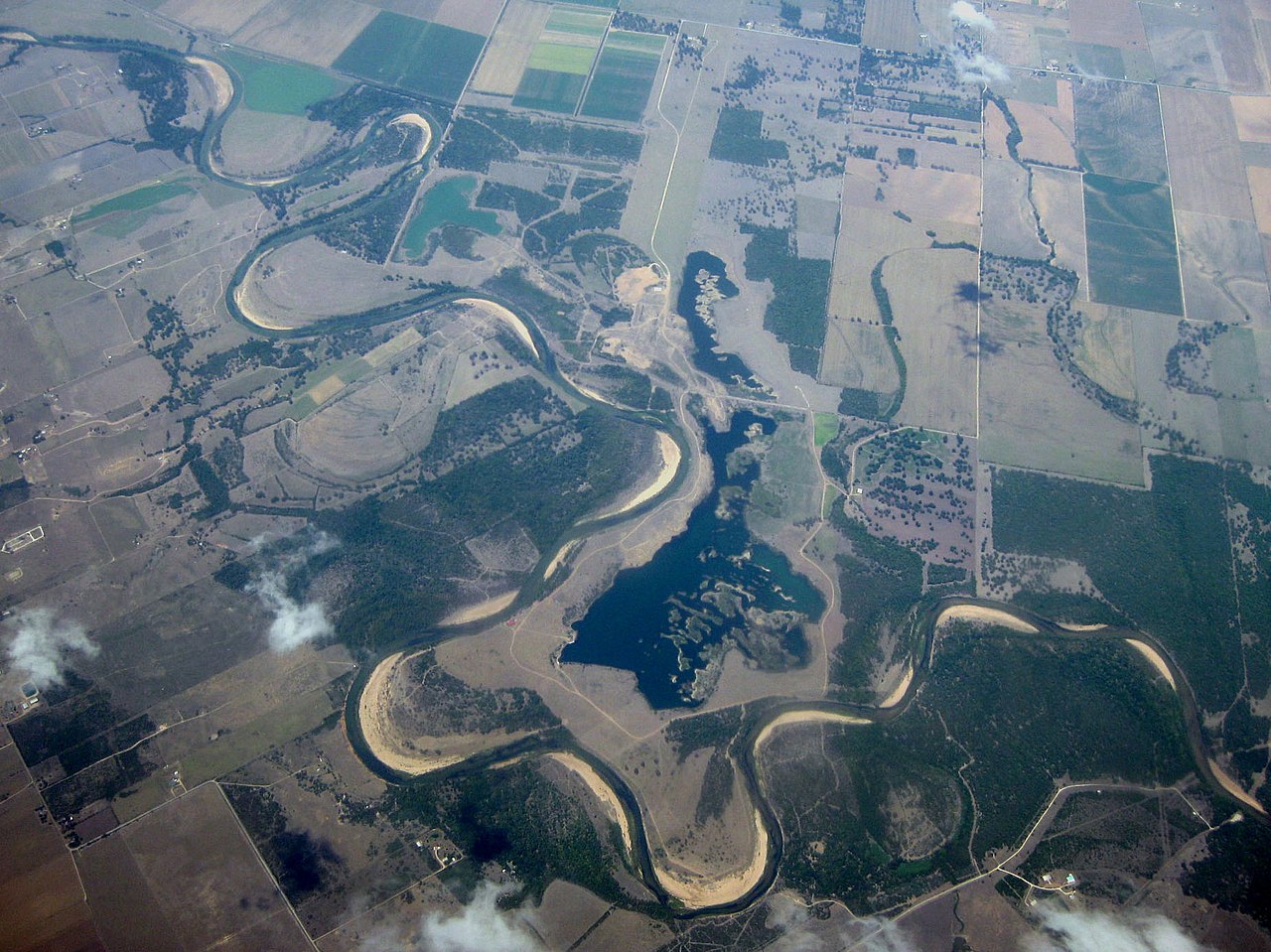
Oblique air photo of the Colorado River where it crosses from Colorado County into Wharton County near Nada.
Map:
Sorry, no records were found. Please adjust your search criteria and try again.
Sorry, unable to load the Maps API.
Austin
Texas
78702
United States
Policies vary by location. For example, pets are allowed at Matagorda Bay Nature Park, but must be kept on a leash.
-
Hiking
-
Birdwatching
-
Kayaking
-
Fishing
-
Tubing and camping are popular activities along the river.
Amenities vary by park and may include trails, picnic areas, boat launches, restrooms, and camping facilities.