
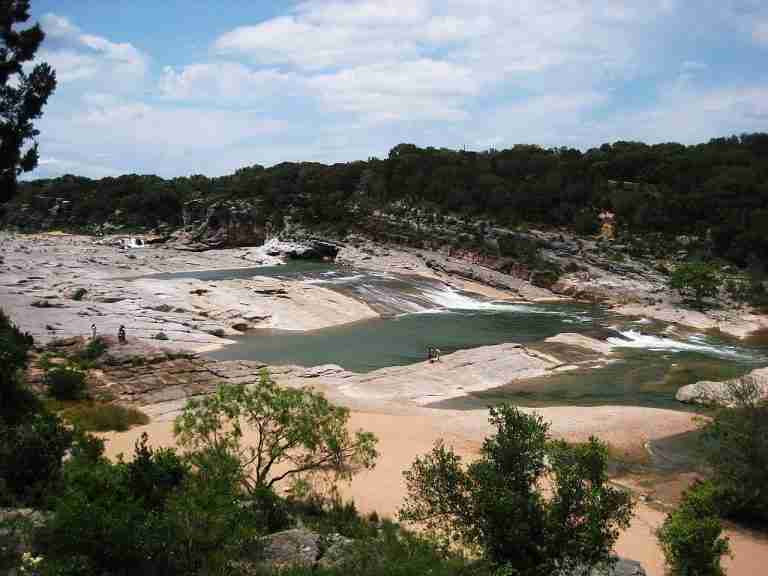
The Pedernales River is a 106-mile-long tributary of the Colorado River in central Texas. It begins from springs in northeastern Kerr County and flows eastward through Gillespie and Blanco counties before entering Lake Travis in western Travis County. The river’s name comes from the Spanish word pedernales, meaning “flint rocks,” a reference to the flinty stones found along its bed and banks.
Geography and Landscape
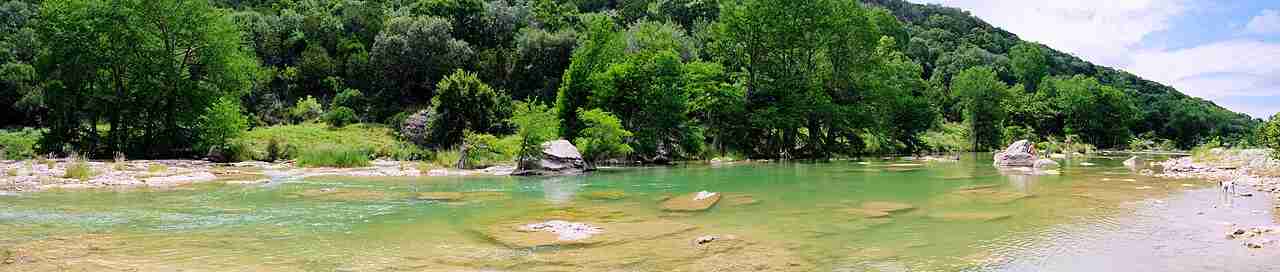
Flowing through the heart of the Texas Hill Country, the Pedernales River winds across rugged limestone terrain that defines much of this scenic region. Its path cuts through shallow canyons and rolling hills dotted with oak and cedar trees. The limestone riverbed contributes to the river’s clear, bluish-green water, which is often shallow in dry conditions but can rise rapidly after heavy rainfall.
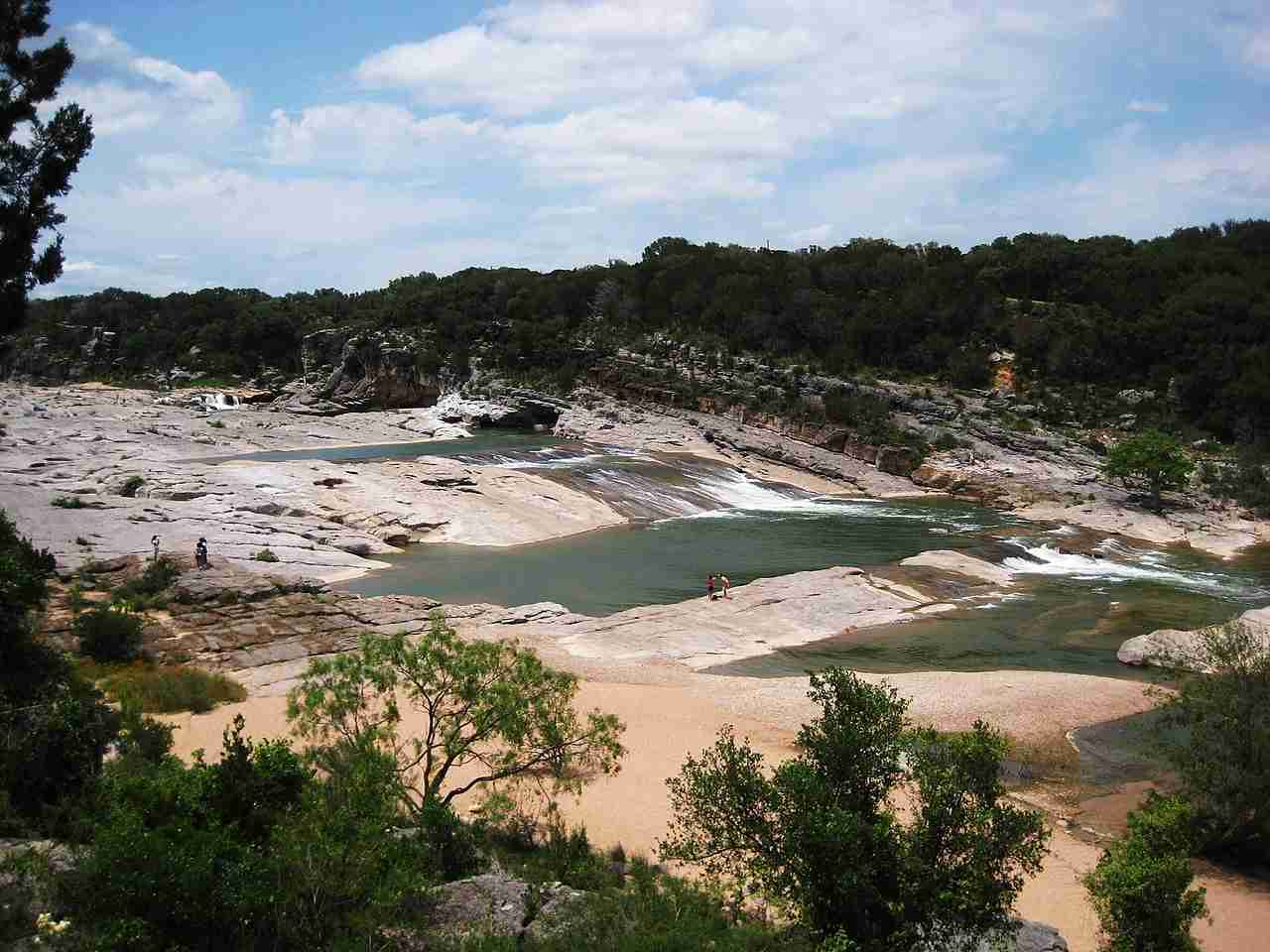
The river passes through several notable areas, including Pedernales Falls State Park near Johnson City, where the water cascades over wide stretches of limestone ledges. This park is one of the most visited natural attractions in the Hill Country, offering hiking, swimming, and camping opportunities. Farther downstream, the river borders the LBJ Ranch, once home to President Lyndon B. Johnson. The former president often referred to the river and surrounding landscape as a place of inspiration and peace.
Ecology and Environment
The Pedernales River supports diverse plant and animal life typical of the Hill Country ecosystem. Along its banks grow live oak, pecan, sycamore, and bald cypress trees, providing shade and stability to the riverbanks. White-tailed deer, raccoons, and numerous bird species thrive in the surrounding woodlands. The river itself is home to fish such as Guadalupe bass, catfish, and sunfish, making it a popular spot for anglers.
Water quality and flow levels vary throughout the year due to seasonal rainfall and the porous limestone beneath the river. Because of this, flash flooding is common. Water levels can surge dramatically within minutes of a heavy storm, transforming calm pools into rushing torrents. For this reason, visitors to the river and nearby parks are advised to remain alert to changing weather conditions.
Cultural and Historical Significance
For centuries, the Pedernales River has shaped the culture and economy of the Texas Hill Country. Early Spanish explorers named it for the flint stones found in abundance along its course. Indigenous peoples likely used the same flint to create tools and arrowheads. In the 19th century, settlers relied on the river for water, irrigation, and livestock.
The river gained national recognition through its connection to the LBJ Ranch. President Lyndon B. Johnson’s home sits near its banks, and the surrounding landscape influenced his deep appreciation for Texas and the environment. The river remains a defining feature of the Lyndon B. Johnson National Historical Park, where visitors can experience both natural beauty and presidential history.
Recreation and Safety
Today, the Pedernales River is a favorite destination for outdoor enthusiasts. Pedernales Falls State Park offers miles of hiking trails, picnic areas, and designated swimming zones. Visitors can enjoy fishing, birdwatching, or simply relaxing along the riverbanks. However, due to the region’s unpredictable weather patterns, caution is always necessary. Sudden storms can lead to rapid flooding, and park officials regularly monitor conditions to ensure visitor safety.
The river’s ever-changing nature, from tranquil pools to roaring rapids, reflects the essence of the Hill Country—beautiful, unpredictable, and deeply tied to Texas heritage.
Photos:
Map:
Sorry, no records were found. Please adjust your search criteria and try again.
Sorry, unable to load the Maps API.
Houston
Texas
United States
Pets are allowed in most areas of the park but are not permitted inside park buildings.
Visitors can enjoy camping, hiking, mountain biking, picnicking, bird watching, and horseback riding.
The park offers campsites, picnic areas, hiking and biking trails, and a park store that sells gifts and ice.