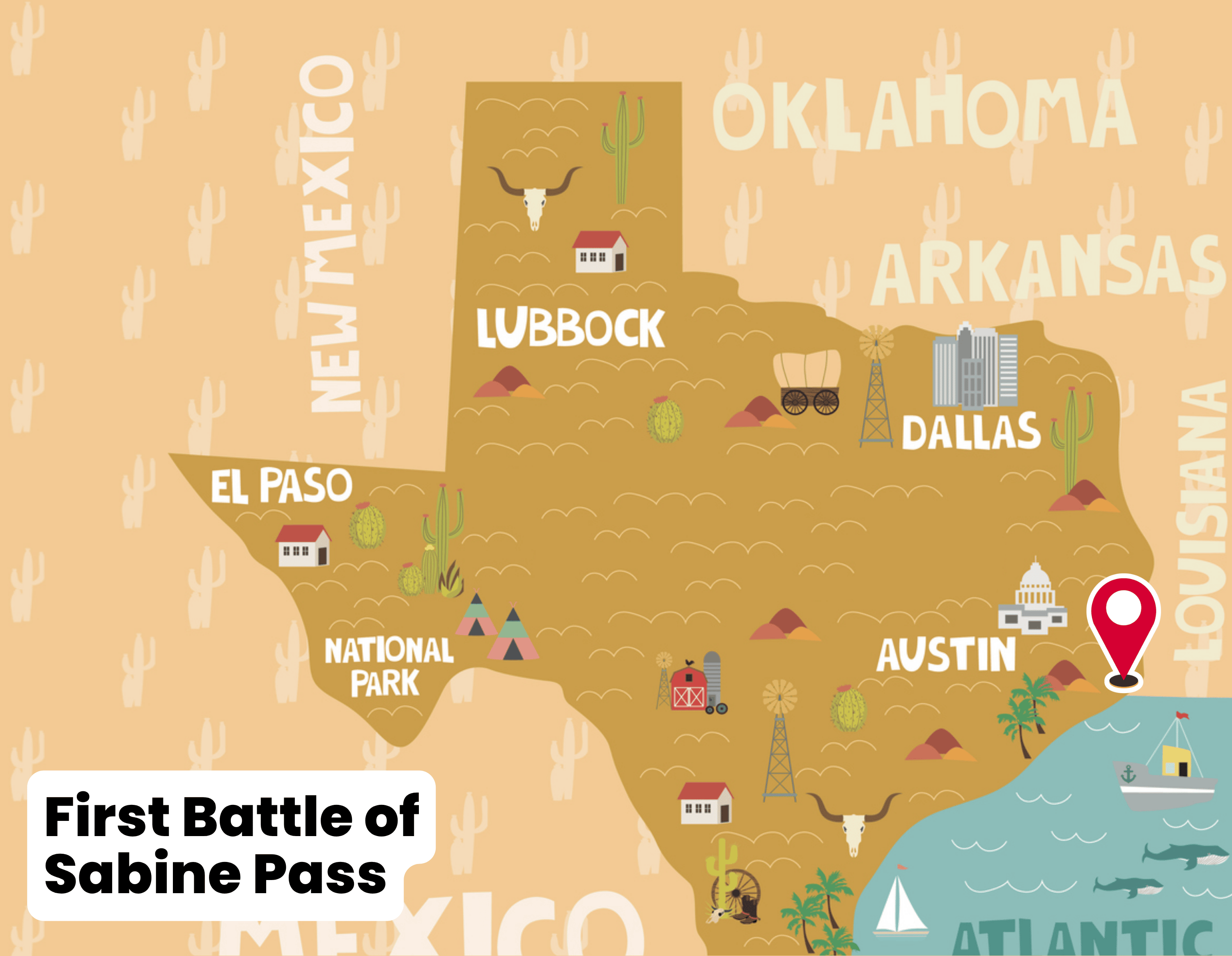
Sabine Pass, located where the Sabine River meets the Gulf of Mexico, was a strategic point during the Civil War. The narrow waterway marked the border between Texas and Louisiana and provided access to the Texas interior. By 1862, the Union Navy had begun a campaign to blockade the Texas coast as part of the larger Anaconda Plan. The Confederates built Fort Sabine (sometimes called Fort Sabine Pass) to guard the entrance with a small garrison and artillery.
Union Objective
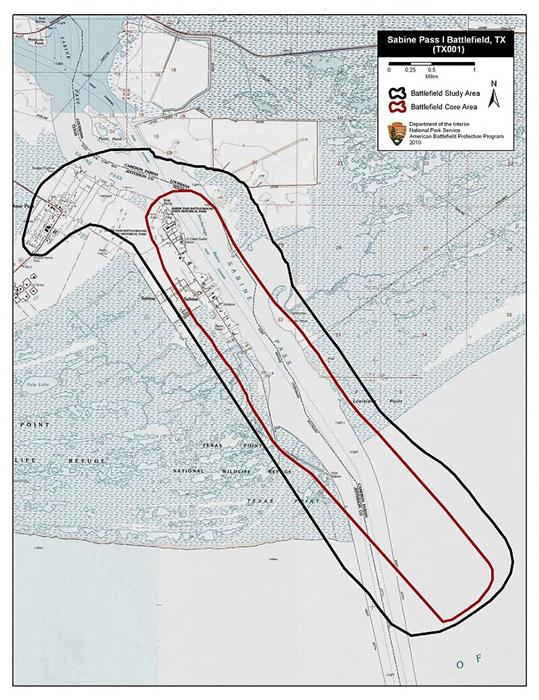
The Union Navy sought to close Sabine Pass to Confederate trade and supply lines and potentially create an entry point for Union incursions into Texas. With much of the Confederate coast under pressure, Sabine Pass represented one of the remaining accessible channels for blockade runners.
Forces Involved
-
Union:
-
Acting Master Frederick Crocker commanded the small fleet.
-
Union vessels included the gunboats USS Kensington (steamer), USS Rachel Seaman, and USS Henry Janes (schooners).
-
Several hundred sailors and Marines supported the operation.
-
-
Confederacy:
-
Confederate forces were commanded by Major Josephus S. Irvine of the Texas militia.
-
Defenders numbered about 28 artillerymen manning a few heavy guns, supported by roughly 30 cavalrymen nearby.
-
Fort Sabine was lightly fortified and had limited firepower compared to the Union ships.
-
The Battle
On September 24, 1862, Union vessels approached the pass and opened fire on the Confederate position.
-
The Confederates attempted to respond, but their artillery lacked the range to hit the Union ships effectively.
-
The Union fleet maintained a long-range bombardment throughout the day, keeping out of effective Confederate range.
-
By the night of September 24, the Confederate defenders quietly evacuated Fort Sabine, realizing they could not hold against superior naval firepower.
On the morning of September 25, Union forces landed at the abandoned fort and took possession without opposition. They raised the Union flag and secured Sabine City, giving the Union control over the pass.
Result
-
Outcome: Union victory.
-
Casualties: No losses reported on either side. The Confederates withdrew before heavy fighting could occur.
-
Significance:
-
The capture of Sabine Pass temporarily gave the Union a foothold on the Texas coast.
-
However, the Union did not commit to a sustained occupation, and Confederate forces eventually reoccupied the area.
-
This set the stage for the later Second Battle of Sabine Pass (September 8, 1863), where Confederate forces under Lt. Richard W. Dowling and the Davis Guards famously repelled a much larger Union invasion attempt.
-
Summary
The First Battle of Sabine Pass was a short engagement marked more by maneuver and evacuation than direct combat. It showed how naval firepower could quickly overwhelm poorly armed coastal defenses. Although a Union success, its long-term impact was limited, as the Confederates soon returned. The more famous Confederate victory a year later overshadowed this initial encounter, but the first battle remains an important part of the broader Union effort to control Texas ports.
Photos: