
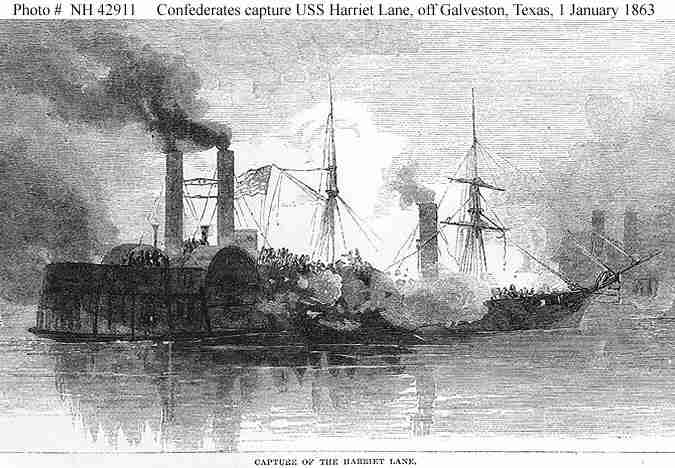
The Battle of Galveston was a key engagement in the American Civil War. It took place on January 1, 1863, when Confederate forces launched a coordinated attack by land and sea to recapture Galveston, Texas, from Union control. The battle ended in a Confederate victory, ensuring that Galveston remained in Confederate hands for the rest of the war.
Background
By late 1862, the Union Navy had captured Galveston, the most important port in Texas, as part of its strategy to blockade the Gulf of Mexico. The city was occupied by Union troops, and a small fleet of Union warships patrolled the harbor. Confederate leaders saw Galveston as too valuable to lose, since it was a hub for supplies, trade, and communication with the rest of the Confederacy.
To retake the city, Major General John B. Magruder devised a plan for a surprise New Year’s Day attack. His strategy involved a two-pronged assault: Confederate infantry advancing along the island and specially outfitted cottonclad gunboats striking the Union fleet.
Interesting Facts
-
The Confederate naval forces used converted steamers, the Bayou City and the Neptune, which were reinforced with cotton bales for protection. They were not ironclads, but their design allowed them to withstand small-arms fire and close in on Union ships.
-
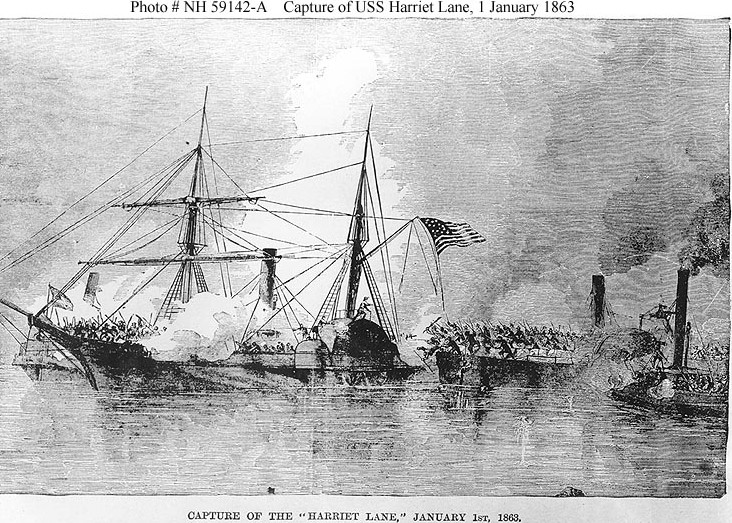
In one of the most daring naval moves of the war, the cottonclad Bayou City rammed and boarded the Union gunboat USS Harriet Lane, capturing it in hand-to-hand combat.
-
Union naval commander Commodore William B. Renshaw, aboard the USS Westfield, attempted to scuttle his ship to prevent its capture. The ship exploded prematurely, killing Renshaw and several crew members.
-
The battle is considered one of the very few Confederate naval victories of the war.
The Battle
In the early hours of January 1, 1863, Confederate troops under Magruder opened fire on Union positions in Galveston. At the same time, the cottonclads Bayou City and Neptune steamed into the harbor to engage the Union fleet.
-
Neptune was quickly disabled, but Bayou City managed to ram and board the USS Harriet Lane. After fierce fighting, Confederate sailors captured the vessel.
-
Union forces onshore, outnumbered and unsupported after the naval setback, withdrew.
-
Renshaw’s destruction of the USS Westfield left the rest of the Union squadron in confusion, and they abandoned the harbor.
By midday, Confederate forces had full control of Galveston.
Significance
The Confederate victory at Galveston was strategically and symbolically important:
-
It returned a major Texas port to Confederate hands and kept open a supply line for the Confederacy, even though the Union blockade limited its use.
-
The success boosted Confederate morale, particularly in Texas, at a time when the South was under increasing pressure.
-
The Union never regained Galveston for the remainder of the war, though their blockade continued offshore.
Result
-
Outcome: Confederate victory
-
Control of Galveston: Remained in Confederate hands until the end of the war in 1865
Belligerents
-
Union (United States)
-
Commanders: Commodore William B. Renshaw (navy), Colonel Isaac S. Burrell (army)
-
Forces: About 500 troops onshore and a small fleet including the USS Harriet Lane, USS Westfield, USS Clifton, and other vessels
-
-
Confederacy (Confederate States)
-
Commanders: Major General John B. Magruder, naval commander Leon Smith (cottonclad fleet)
-
Forces: Around 1,000–1,500 men and the cottonclad gunboats Bayou City and Neptune
-
Casualties and Losses
-
Union:
-
About 150–200 killed, wounded, or captured
-
Loss of the USS Harriet Lane (captured) and USS Westfield (destroyed)
-
-
Confederacy:
-
Approximately 26 killed and 117 wounded
-
Loss of the cottonclad Neptune (sunk during the battle)
-
Legacy
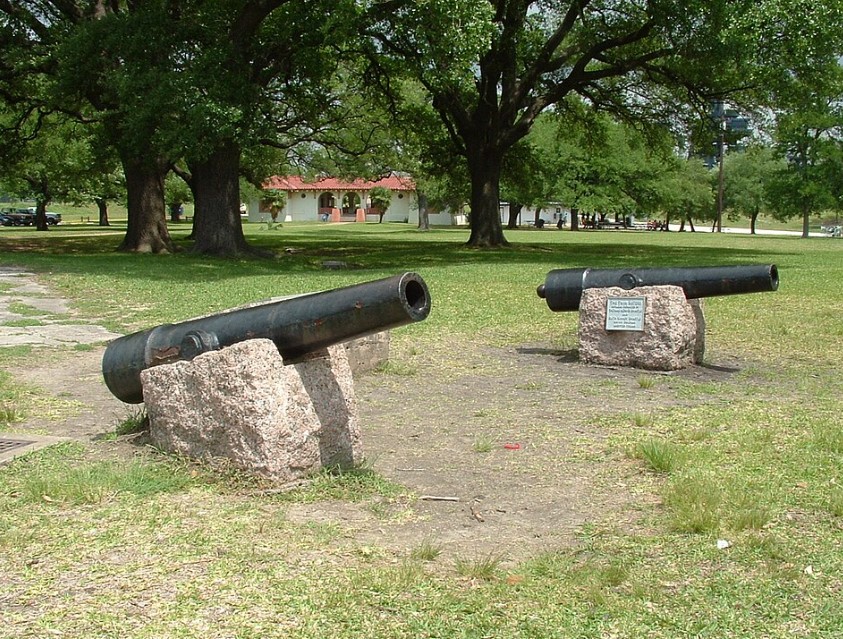
The Battle of Galveston remains notable as a rare Confederate naval triumph and a reminder of the adaptability of Confederate forces, who converted civilian steamers into warships that could challenge Union naval supremacy. Today, Galveston commemorates the battle with historical markers and events, recognizing its role in Civil War history and in Texas heritage.
Photos:
Battle of Galveston
Battle of Galveston
Battle of Galveston
Map:
Sorry, no records were found. Please adjust your search criteria and try again.
Sorry, unable to load the Maps API.
Galveston
Texas
United States
- Outdoor areas and sidewalks are pet-friendly. Leashed pets (6 ft max) are permitted, but animals are not allowed inside museums or historic buildings.
-
Marker viewing and photography; inscriptions explain the January 1, 1863 battle.
-
Self-guided walking tours of Galveston’s Civil War markers and the Historic Strand District.
-
Nearby exploration at the Galveston Naval Museum (Seawolf Park), featuring the USS Cavalla and USS Stewart.
-
Sidewalks and street parking near Harborside Drive.
-
Benches, restrooms, and restaurants are available in the Strand District and along the waterfront.
-
No dedicated visitor center or Civil War museum; naval and local history museums are located nearby.