
The Battle of Galveston was a significant engagement during the American Civil War, where Confederate forces successfully recaptured the port city of Galveston, Texas, from Union occupation. It was one of the few Confederate victories along the Gulf Coast and had lasting implications for control of Texas.
Background
-
By the fall of 1862, the Union Navy had extended its blockade of the Confederate coastline into Texas.
-
On October 4, 1862, Union naval forces under Commander William B. Renshaw captured Galveston without major resistance. The city and harbor became a Union stronghold, giving them control of an important Texas port.
-
For the Confederacy, Galveston was strategically vital. It served as a hub for blockade runners bringing supplies from Mexico and Europe. Losing it meant Texas was nearly cut off from trade.
Confederate Major General John B. Magruder, newly assigned to command in Texas, planned a bold counterattack to retake the city on New Year’s Day 1863.
The Battle
-
Date: January 1, 1863
-
Location: Galveston Harbor, Galveston, Texas
Confederate Plan
Magruder organized a joint land and naval assault. His forces included:
-
Land troops supported by artillery positioned near the waterfront.
-
A small fleet of cottonclads (steamers armored with compressed cotton bales), commanded by Commodore Leon Smith. These included the Bayou City and Neptune.
Union Defenses
The Union held the harbor with six vessels:
-
USS Westfield (flagship, Commander Renshaw)
-
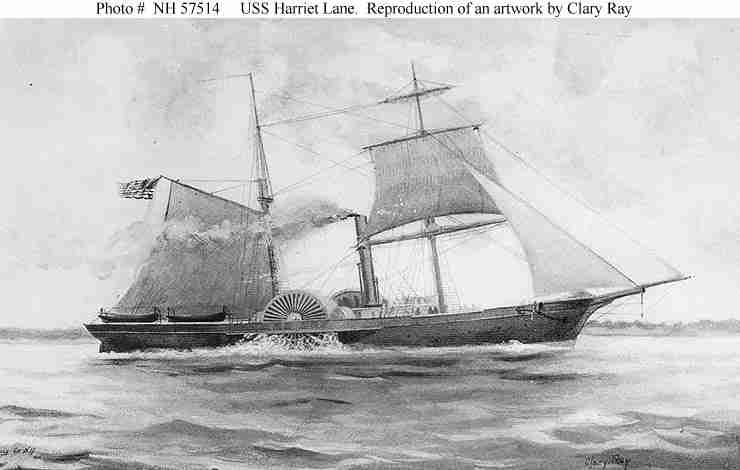
USS Harriet Lane
-
USS Owasco
-
USS Clifton
-
USS Sachem
-
USS Corypheus
They had occupied Galveston since October 1862.
The Fighting
-
Before dawn on January 1, Confederate artillery opened fire from the shore while troops moved to retake the city.
-
The Confederate cottonclads steamed into the harbor.
-
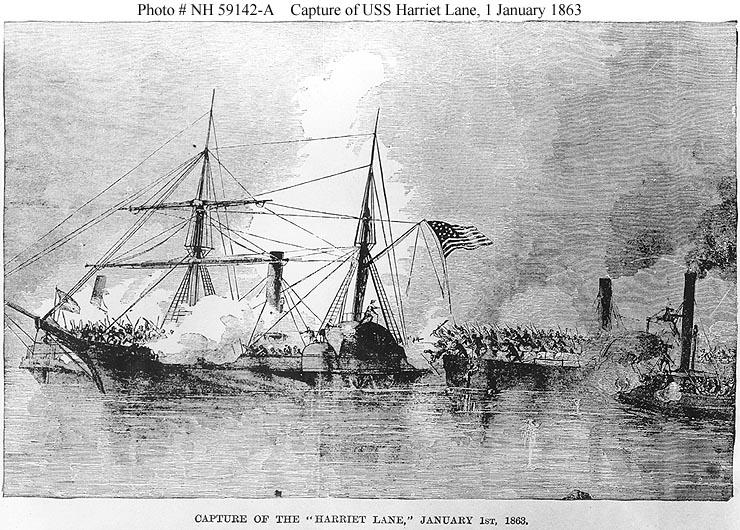
The Neptune was disabled early, but the Bayou City successfully rammed and boarded the USS Harriet Lane, capturing her after close combat.
-
Union flagship USS Westfield ran aground. Commander Renshaw ordered her destroyed to avoid capture, but he was killed when the explosives went off prematurely.
-
The remaining Union vessels withdrew to sea, leaving Galveston in Confederate hands.
Casualties and Losses
-
Union:
-
USS Harriet Lane captured.
-
USS Westfield destroyed.
-
Around 150–200 killed, wounded, or captured.
-
-
Confederacy:
-
Light casualties compared to the Union.
-
Cottonclad Neptune sunk.
-
Significance
-
The battle was a major Confederate victory in the Gulf of Mexico.
-
It restored Confederate control of Galveston, which they held until the end of the Civil War in 1865.
-
The port remained an important center for blockade-running operations, keeping supplies flowing into Texas and beyond.
-
The victory boosted Confederate morale, particularly in Texas, at a time when Confederate fortunes were declining elsewhere.
-
It also showed the effectiveness of improvised Confederate naval tactics, using cottonclad steamers to challenge Union warships.
Commanders and Leaders
-
Confederate States:
-
Maj. Gen. John B. Magruder (overall commander)
-
Commodore Leon Smith (cottonclad fleet)
-
-
United States (Union):
-
Commander William B. Renshaw (killed in action)
-
Cmdr. Jonathan M. Wainwright Jr. (Harriet Lane, killed in action)
-
Outcome
The outcome of the Battle of Galveston was a clear Confederate victory. Galveston remained under Confederate control for the rest of the war, ensuring the city’s continued role as a hub for blockade runners and supply lines. While the Union blockade in the western Gulf of Mexico was weakened by the loss, it was not entirely broken. The battle came to symbolize Texan resilience and highlighted the Confederacy’s ability to use ingenuity and improvisation, such as cottonclad steamers, to overcome a stronger naval opponent.
Photos: