The Battle of Coleto was a key engagement during the Texas Revolution, fought on March 19–20, 1836 near Coleto Creek, just outside present-day Goliad, Texas. The battle ended in a Mexican victory and directly led to the tragic Goliad Massacre.
Background
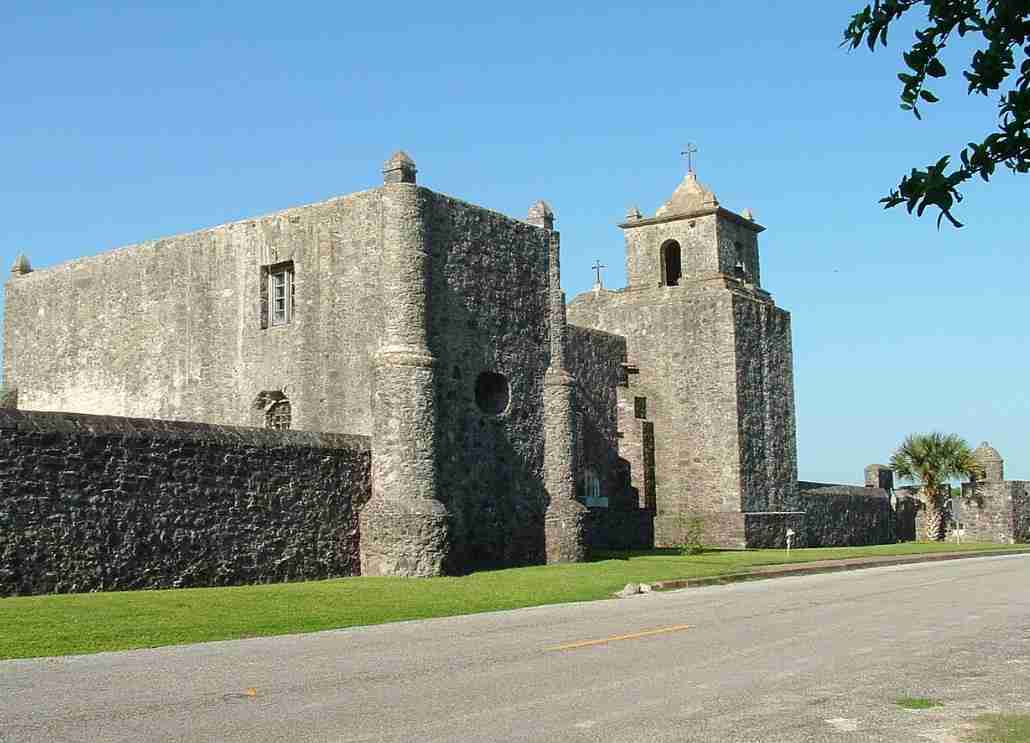
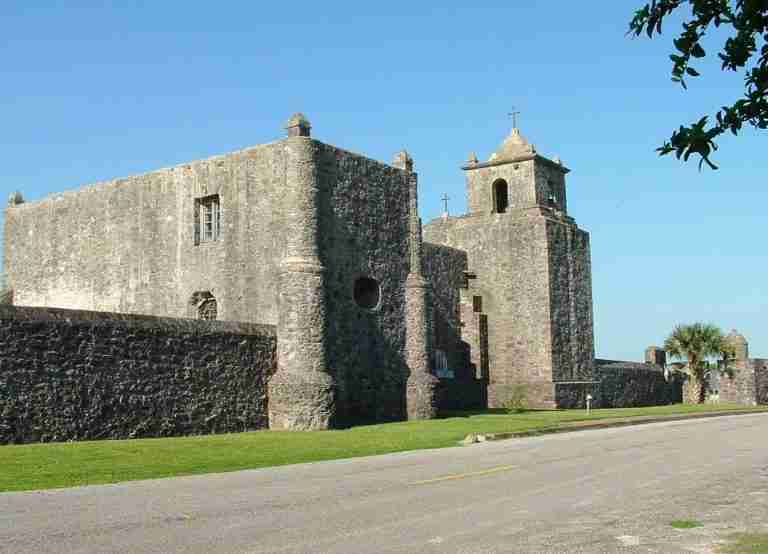
In March 1836, Texan forces under Colonel James W. Fannin occupied Presidio La Bahía (in Goliad). When ordered to retreat to Victoria and link with other Texian units, Fannin delayed his withdrawal. His troops moved slowly across the open prairie, burdened with heavy cannons and wagons. This lack of speed gave Mexican General José de Urrea the chance to catch up with the Texans near Coleto Creek.
The Battle
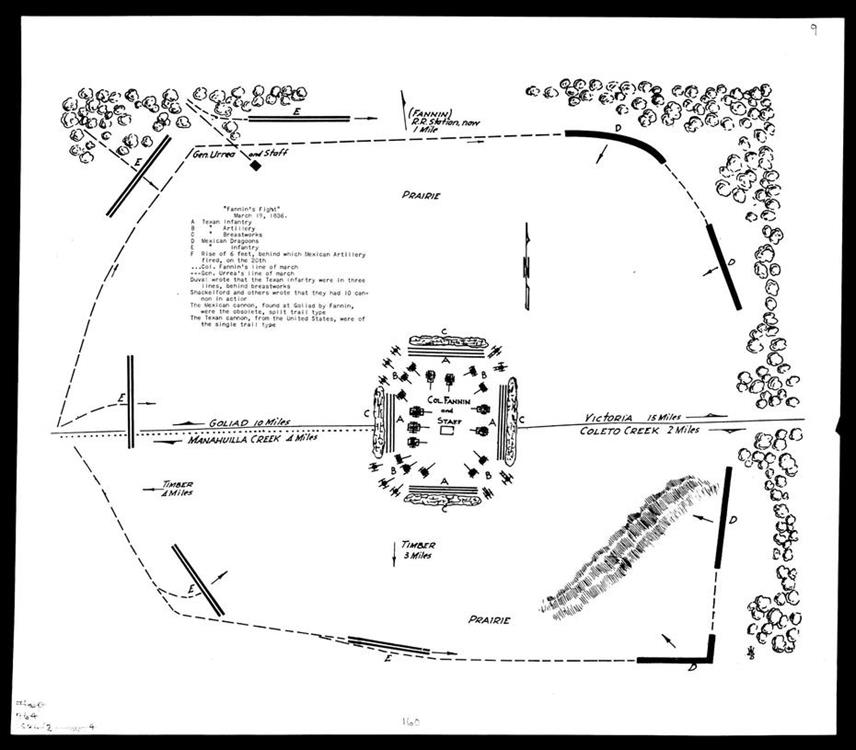
On March 19, Fannin’s force of about 342 men was surrounded by Urrea’s army of roughly 1,200 soldiers. With little cover on the flat, grassy plain, the Texans formed a defensive square.
-
Day 1 (March 19): Fighting raged for several hours. The Texans inflicted casualties on the Mexican cavalry but were outgunned and exposed. They suffered heavy losses, including many wounded.
-
Day 2 (March 20): Realizing they were low on water, ammunition, and medical supplies, and with no reinforcements in sight, Fannin agreed to surrender. He believed his men would be treated as prisoners of war under honorable terms.
Aftermath
Urrea, who respected Fannin’s surrender, opposed harsh treatment of the prisoners. However, the ultimate decision rested with General Antonio López de Santa Anna, the overall Mexican commander. Santa Anna ordered the execution of the Texian prisoners, overriding Urrea’s protests.
On March 27, 1836, about 342 Texian soldiers were marched out of Presidio La Bahía and executed in what became known as the Goliad Massacre. A handful survived, either by escaping during the confusion or being spared by sympathetic Mexican officers.
Casualties
-
Texians: About 9 killed and 60 wounded during the battle. Nearly all survivors (about 342) were executed days later.
-
Mexicans: Around 50 killed and 140 wounded.
Significance
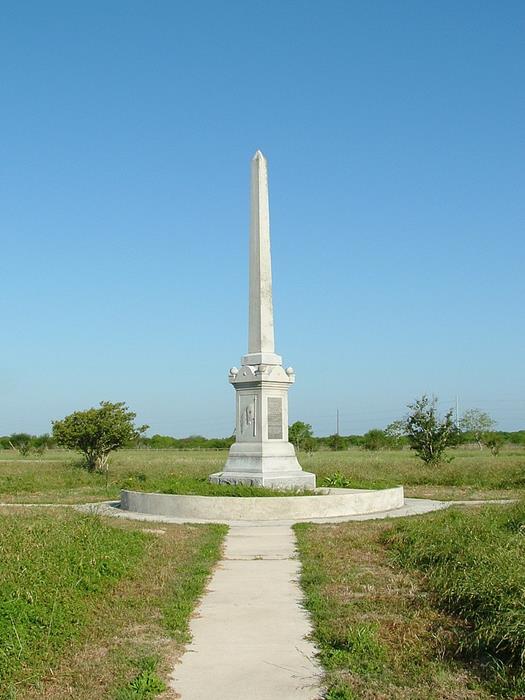
The Battle of Coleto and the subsequent Goliad Massacre became a defining moment in the Texas Revolution. Along with the fall of the Alamo, it fueled Texian anger and resolve. “Remember Goliad!” joined “Remember the Alamo!” as a battle cry at the decisive Battle of San Jacinto on April 21, 1836, where Texian forces defeated Santa Anna and secured independence for Texas.
Legacy
Today, the Presidio La Bahía in Goliad serves as a historic site and museum, preserving the memory of the soldiers who fought and died. The battlefield at Coleto Creek is part of the Goliad State Park & Historic Site and remains a place of remembrance for one of the Revolution’s most tragic yet pivotal events.
Photos: