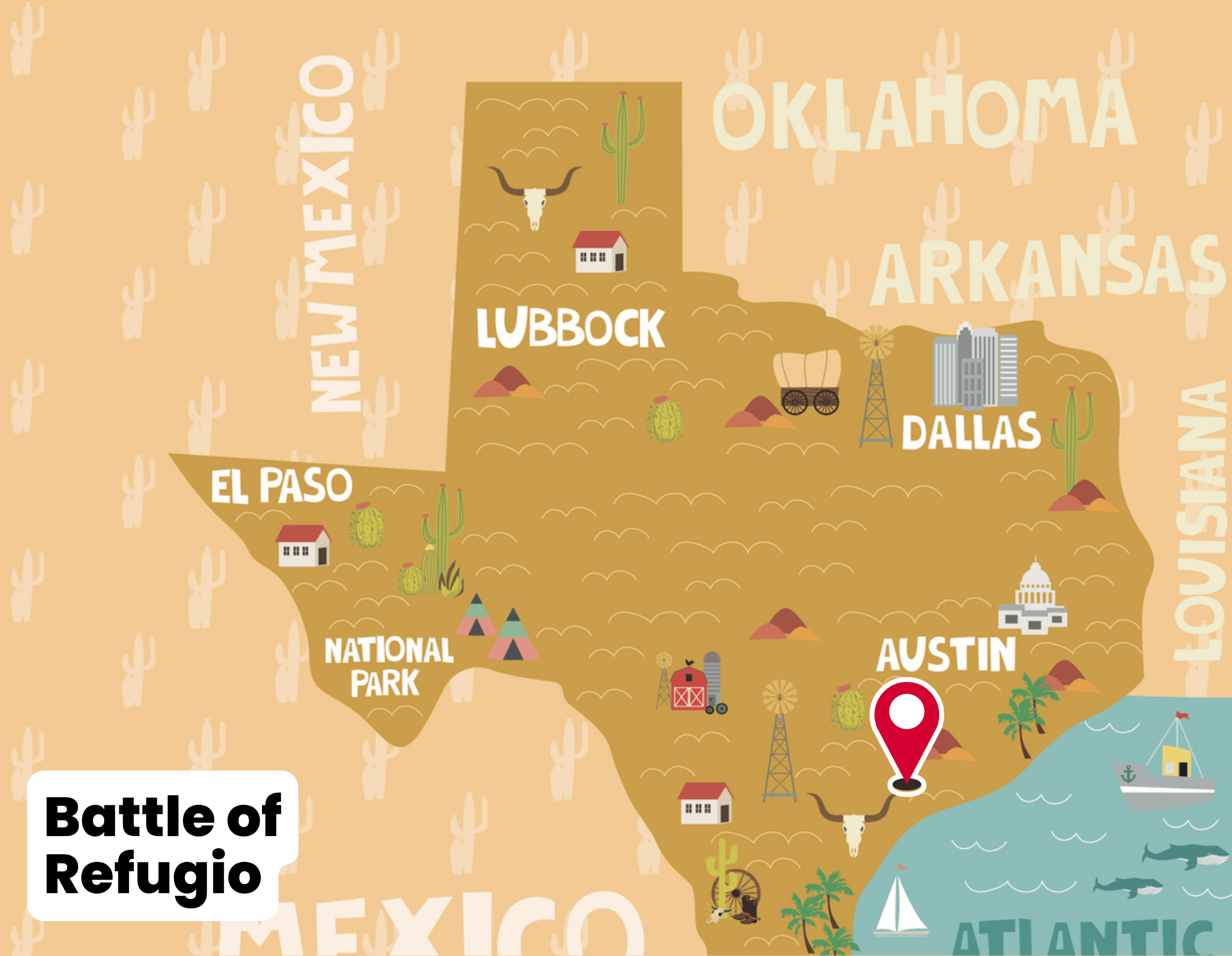
The Battle of Refugio was a military engagement during the Texas Revolution, fought from March 12 to March 15, 1836, near the town of Refugio in present-day Refugio County, Texas. It was part of the Goliad Campaign, in which Mexican forces under General José de Urrea sought to suppress Texian resistance in the coastal region. Despite a determined stand by Texian volunteers, the battle ended in a Mexican victory and contributed to the chain of events leading to the infamous Goliad Massacre.
Background
In early 1836, Texian forces had taken control of several Mexican outposts in Texas, but General Antonio López de Santa Anna and his commanders launched a counteroffensive to retake the territory. While Santa Anna advanced on San Antonio (leading to the Battle of the Alamo), General José de Urrea moved north along the Texas coast.
By March, Urrea had successfully engaged Texian detachments at Refugio and other sites, aiming to cut off Texian reinforcements and weaken their hold on Goliad, where Colonel James Fannin commanded a large Texian force.
The mission settlement at Refugio became strategically important, both as a staging point and a haven for Texian families fleeing advancing Mexican troops.
Texian Forces
Two groups of Texians defended Refugio:
-
Captain Amon B. King commanded about 28 volunteers, originally sent to evacuate civilians from the area.
-
Lieutenant Colonel William Ward led the Georgia Battalion, consisting of around 120 men.
These forces were relatively small, poorly supplied, and isolated from Fannin’s main command at Goliad.
Mexican Forces
The Mexican army was commanded by General José de Urrea, one of Santa Anna’s most capable and respected officers. Urrea fielded an estimated 1,500 troops, a mix of infantry, cavalry, and artillery. His orders were to sweep through the region, eliminate Texian resistance, and restore Mexican control.
The Battle (March 12–15, 1836)
-
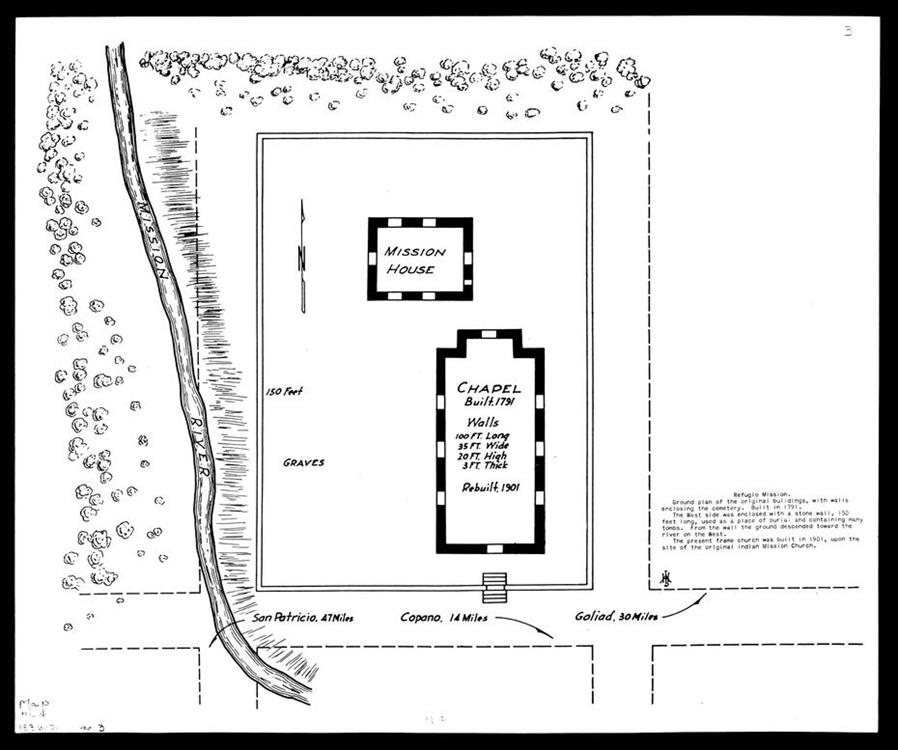
March 12: King and his men took position in the Refugio mission to defend settlers. Mexican troops quickly surrounded them.
-
March 13–14: Ward’s battalion joined the fight, reinforcing King. Skirmishes flared around the mission and nearby woods. Despite being heavily outnumbered, the Texians held out for two days, inflicting losses on Urrea’s men.
-
March 15: Out of ammunition and surrounded, the Texians attempted to retreat. Many were captured in the running battle that followed. King and several of his men were taken prisoner and executed shortly afterward. Ward and his remaining force were also captured.
Casualties and Captives
-
Texian losses:
-
Approximately 16 killed in battle
-
15 executed during or after the engagement
-
81 captured, most of whom were later executed in the Goliad Massacre on March 27, 1836
-
-
Mexican losses:
-
Exact numbers remain unknown, though contemporary accounts (including Urrea’s reports) suggest significant casualties, reflecting the Texians’ fierce resistance.
-
Outcome and Significance
The Battle of Refugio was a Mexican victory. It temporarily secured the coastal region for Mexico and prevented Texians from maintaining a stronghold there. However, the defeat also deepened Texian resentment and strengthened the resolve for independence.
Most importantly, the battle set the stage for the Goliad Massacre. Many of the Texians captured at Refugio were marched to Presidio La Bahía in Goliad, where Santa Anna ordered the execution of hundreds of prisoners. This atrocity galvanized Texian support and became a rallying cry alongside the Alamo.
Commanders
-
Texian forces: Captain Amon B. King; Lieutenant Colonel William Ward
-
Mexican forces: General José de Urrea
Legacy
The site of the battle is marked today near Our Lady of Refuge Catholic Church in Refugio, Texas. While overshadowed by the Alamo and San Jacinto, the battle represents the determination of small Texian detachments and highlights the brutality of the Goliad Campaign.
Historians often note that Urrea himself opposed Santa Anna’s harsh execution orders, but his protests were overruled. This contrast in leadership styles adds complexity to the historical memory of the campaign.
Photos: