
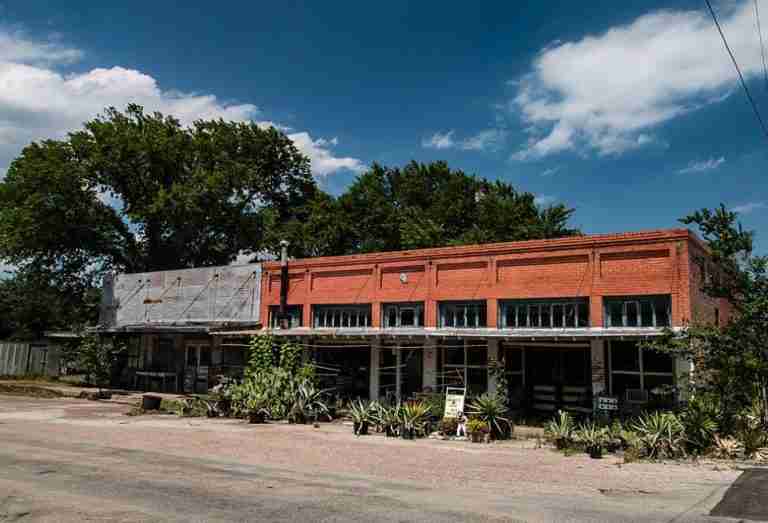
Tehuacana is a small town in Limestone County, Texas, with deep historical roots. First settled around Tewockony Springs, once home to the Tawakoni people, it became known as Tehuacana Hills in the mid-1800s. The town gained prominence in 1869 when Trinity University was founded there, later succeeded by Westminster College, with the imposing Texas Hall as its centerpiece. Although the college and railroad are long gone, Tehuacana remains notable for its role in Texas education and history, including the 1844 Treaty of Tehuacana Creek, and today it is valued as a quiet rural community with a proud heritage.
Early Settlement and Tewockony Springs
Tehuacana, located in Limestone County, has roots that stretch back before Anglo settlement. The area was once home to the Tawakoni (or Tewockony) Indians, a branch of the Wichita tribe. Their settlement near the springs gave the area its first recorded name: Tewockony Springs. When a post office opened there in 1847, it carried that name, even as new settlers began moving into the region.
By the 1850s, the community grew with the arrival of farmers, missionaries, and educators. In 1852, the Tehuacana Academy opened, and the settlement became known as Tehuacana Hills, though the post office continued using “Tewockony Springs” for several more years.
Trinity University and Westminster College
The most transformative moment for Tehuacana came in 1869, when Trinity University was founded there by the Cumberland Presbyterian Church. John Boyd, a wealthy landowner, donated 1,100 acres to establish the campus. Trinity became the educational, cultural, and economic anchor of the town.
-
Texas Hall, the university’s main building, was begun in 1871 and expanded over the next two decades. Originally designed in a Gothic Revival style, it was later remodeled into the distinctive Second Empire style by architect James E. Flanders in the late 1880s.
Trinity remained in Tehuacana until 1902, when it relocated to Waxahachie and later moved permanently to San Antonio in 1942. After Trinity’s departure, the campus was transferred to the Methodist Church, which established Westminster College.
Westminster operated under different forms:
-
It merged with Southwestern University in 1942.
-
It closed in 1950.
-
It reopened in 1953 as Westminster Junior College and Bible Institute.
-
The school continued into the 1970s before closing permanently.
These institutions kept Tehuacana an educational hub for nearly a century.
Texas Hall: A Landmark Under Threat
Texas Hall, the grand red-brick structure that defined the Trinity and Westminster campuses, remains standing. Built in stages between 1871 and 1892, it became one of the most imposing examples of academic architecture in Texas at the time.
-
In 1978, Texas Hall was added to the National Register of Historic Places.
-
Unfortunately, the building has suffered neglect. In 2021, part of its roof collapsed, placing it on preservation watchlists. Local advocates and preservation groups continue efforts to stabilize and restore it, viewing it as a key symbol of Tehuacana’s history.
Railroads and Decline
Tehuacana also experienced the rise and fall of rail service. In 1903, the Trinity and Brazos Valley Railway built a line through the community, giving residents new access to markets and travel. However, by 1942, the line was abandoned when steel was diverted for World War II needs. Losing the railroad deeply affected the town’s long-term economy.
Population trends reflect this shift. Tehuacana reached a peak of more than 600 residents in the 1920s but steadily declined afterward. By the early 1980s, the population was around 265, and the 2020 U.S. Census recorded 228 people. Despite its small size, the town has remained incorporated and active in preserving its heritage.
The Treaty of Tehuacana Creek (1844)
Before Tehuacana developed into an educational center, it played a role in Texas frontier diplomacy. In October 1844, the Treaty of Tehuacana Creek was signed nearby between the Republic of Texas and several Native tribes, including the Comanche, Waco, and Tawakoni.
The treaty was intended to establish peace and cooperation, but like many frontier agreements, it was fragile and ultimately short-lived. Still, the treaty remains a notable event in Texas history, and its association with the area adds to Tehuacana’s historical significance.
Tehuacana Today
Although Tehuacana no longer has a college or railroad, it has not disappeared. Instead, it has transitioned into a small rural community that takes pride in its past. Preservation groups, historians, and local residents have worked to highlight its historic importance, particularly through efforts to save Texas Hall and maintain other historic structures.
Rather than being remembered as a ghost town, Tehuacana has earned recognition as a community with deep historical roots—from its Indigenous heritage and frontier treaty, to its role in higher education in Texas.
Interesting Facts
-
Trinity Roots: Trinity University was founded in Tehuacana in 1869 and remained there until 1902. The campus later hosted Westminster College until the mid-20th century.
-
Texas Hall Landmark: Built from 1871 to 1892, Texas Hall stands as one of Texas’s most impressive surviving college buildings. It was listed on the National Register of Historic Places in 1978 and partially collapsed in 2021.
-
Historic Treaty Site: The Treaty of Tehuacana Creek (1844) was signed nearby between the Republic of Texas and multiple Native American tribes, marking an important episode in Texas diplomacy.
Photos:

Tehuacana
Map:
Sorry, no records were found. Please adjust your search criteria and try again.
Sorry, unable to load the Maps API.
Tehuacana
Texas
76667
United States
- Yes—leashed pets are welcome in public and outdoor areas
-
Tour historic Texas Hall and former college buildings (externally or during occasional tours)
-
Visit Tehuacana Cemetery—historic graves dating back to 1847
-
Attend cultural events like the Tehuacana Heritage Festival, held every couple of years
-
Explore walking routes around old downtown and the scenic Tehuacana Hills
-
Town hall and picnic-friendly green space
-
Heritage Society offices and informational signage
-
Public restrooms occasionally open during events
-
Nearby dining and shopping in nearby towns (Mexia, Groesbeck)